People love to speculate about how we’d ever communicate with aliens. Radio signals. Pulses of light. Some elegant message fired into the dark and decoded by a distant intelligence. The underlying question stays the same. If we ever hear back, what could we possibly have in common?
The surprising answer might already be buzzing around Earth.
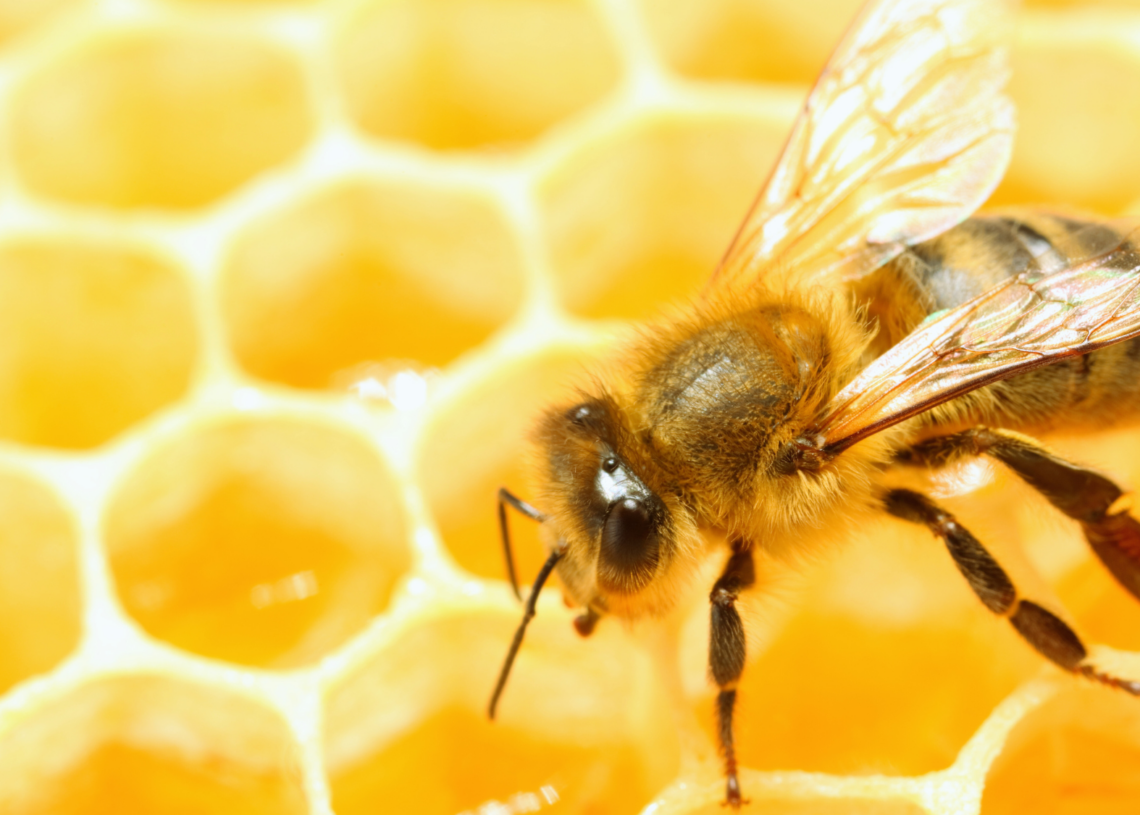
Recent research suggests that honeybees may offer clues about whether mathematics could function as a shared communication system between radically different forms of intelligence. Not because bees are mystical stand-ins for extraterrestrials, but because they’re one of the best examples we have of minds that evolved completely outside anything resembling human language.
That work was formally published in the journal Leonardo, where researchers frame bees as a practical test case. Humans and honeybees diverged more than 600 million years ago. Our brains differ in size, structure, and architecture. Bees don’t speak, write, or symbolize in the way we do. Yet they communicate with insane precision.
Honeybees use the waggle dance to convey where food is located, including distance, direction, and angle relative to the sun. That alone pushes the limits of what many people think nonhuman animals can do. But the experiments went even further.
Between 2016 and 2024, researchers worked with freely flying honeybees that voluntarily participated in outdoor cognitive tests in exchange for sugar water. Over time, bees demonstrated the ability to perform simple addition and subtraction, recognize zero, distinguish odd from even quantities, and associate symbols with numerical values. These weren’t reflexes. They were learned relationships.
That matters because math doesn’t depend on shared culture. It depends on structure. If two species with no common history can grasp numerical relationships, math may emerge wherever intelligence does.
The idea has long fascinated scientists and philosophers. Galileo Galilei famously described the universe as written in mathematical language. Space agencies have acted on that assumption. The Voyager Golden Records, launched in 1977, include mathematical and physical diagrams meant to communicate basic information about Earth. The 1974 Arecibo message relied on binary numbers to convey concepts like counting and DNA.
The challenge has always been testing the idea without extraterrestrials.
Bees offer a workaround. They function as an insect-scale proxy for alien cognition. If math works across that divide, it strengthens the argument that numbers could form the backbone of any interstellar conversation.
That doesn’t mean every intelligent species would approach math the same way. The researchers acknowledge that different intelligences could develop different mathematical frameworks, similar to dialects. Still, the core point stands. Intelligence seems to reach for order.
If anything answers us from across the universe, math may be the closest thing we have to a shared starting point. Bees figured that out long before we started looking up.
The post Do Bees Hold the Key to Communicating With Aliens? appeared first on VICE.