In the final weeks of his 2021 campaign for Virginia governor, Glenn Youngkin (R) tapped into a national vein of parental grievance. He criticized what and how schools should teach about race. He railed against mask mandates. He decried the state’s test scores and promised to expand charter schools.
Youngkin promised supporters that he would be the “education governor” and reverse what he saw as declines under his Democratic predecessor.
But as he prepares to leave office Saturday to make way for his Democratic successor, Abigail Spanberger, interviews with more than a dozen people who worked with the governor in his administration, schools and universities show a mix of opinions about Youngkin’s education legacy. Some say he made fundamental changes that improved schools, while others say he also injected politics into policy, which made it harder to fully realize his agenda.
He churned through three state superintendents, at times leaving the Virginia Department of Education in turmoil, critics say. He promised to deliver more charter schools, but instead he launched and frequently touted partnerships with universities to run special lab schools. Some critics worry about the funding for those lab schools once he leaves office.
Youngkin and his top education leaders argue that any hiccups that came during his four years don’t matter because the governor achieved nearly everything on his education agenda.
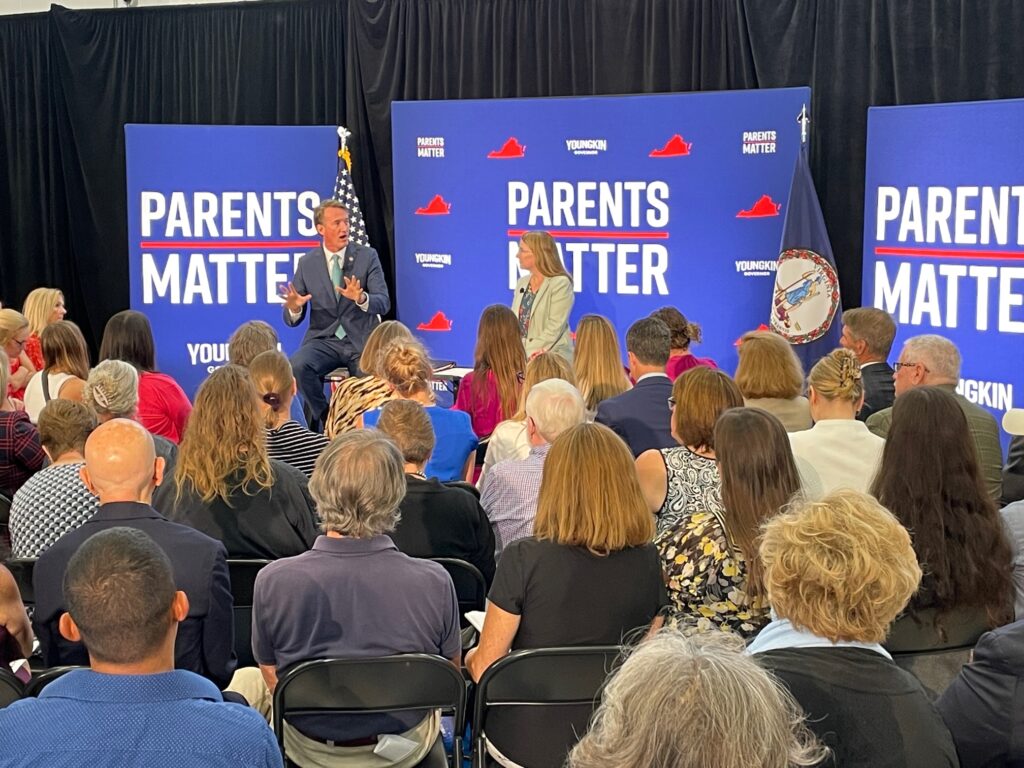
“Restoring excellence in education has been our collective North Star,” Youngkin said during his final State of the Commonwealth address Wednesday. “It started with putting parents back at the head of the table in their children’s lives because Parents Matter!”
Here are four ways Youngkin impacted education in the state:
1. With tip lines and executive orders, he focused on ‘culture wars’
Youngkin acted quickly to put some changes into action.
On his first day in office, Youngkin signed 11 executive orders, three related to schools. He banned “the use of divisive concepts, including Critical Race Theory, in public education,” despite little evidence that academic concept was being taught in Virginia schools. He removed a mandate requiring students to wear masks in schools, leaving the decision up to parents, and also launched an investigation into high-profile sexual assault incidents at two Loudoun County high schools.
Soon after, he also launched a “tip line” for parents to report teachers who discussed “divisive” topics. It was met with immediate backlash, with critics calling on residents to flood the tip line with jokes and tongue-in-cheek complaints. Just months after it opened, the Youngkin administration discreetly sunset the project.
There was a months-long debate over new social studies standards that characterized Indigenous people as “immigrants,” and omitted references to the Martin Luther King Jr. Day and Juneteenth holidays. Youngkin also rolled back recommended protections for transgender students in schools — guidance rejected by many districts — and sparred with schools in Northern Virginia.
The moves often made a splash, raising the political profile of the governor. Supporters said the focus on “culture wars” delivered on Youngkin’s campaign promises. Critics said it detracted from work that they say really mattered and also frustrated education policy experts who worked closely with the governor.
“His campaign for governor leveraged a divisive conversation about public schools, and I think that will be part of the legacy,” said Loudoun schools Superintendent Aaron Spence, whose district has faced intense scrutiny from Youngkin, Virginia Attorney General Jason Miyares and other conservatives.
“I find that sad and somewhat disheartening,” Spence said. “But also I’m hopeful that we can begin to turn the conversation back toward the right things.”
2. He changed how Virginia measures student and school success
Youngkin’s most concrete change will be felt in the way that school performance is measured and rated.
The state board of education, now composed entirely of Youngkin appointees, overhauled the state’s accountability model in response to concerns from the governor that nearly 90 percent of Virginia schools were fully accredited despite large dips in student test scores during the pandemic. Youngkin wanted a new system that would close what he and others called an “honesty gap” in performance.
The new system uses test scores and other metrics to award a school performance score, split them into four categories and send extra resources to lower-performing schools.
The Joint Legislative Audit and Review Commission, a watchdog for the General Assembly, said in a report that the new system was more effective than the previous method, but still needed refinements such as changes to the labels used to categorize schools and measure performance of students whose first language is not English — echoing concerns raised by stakeholders as the changes were considered.
“Gone are the days of Virginia having the lowest proficiency baselines in the country, cheating our students by shuffling them along, or worse, lying about whether they could read or do math at grade level,” Youngkin told state lawmakers Wednesday.
Still, the governor is largely leaving student performance at the levels he found it. Scores on standardized tests improved nominally in the past four years, but still lag significantly compared to before the pandemic.
This past fall, Youngkin’s board also approved a plan to raise the scores needed to pass state standardized tests to help better align with the National Assessment of Educational Progress, a federal test used to measure career readiness and student achievement. However, last year’s NAEP scores showed that Virginia had lost the most ground in the country from 2019 to 2024 in fourth-grade math, and remains the furthest behind in recovery for the same subject since the pandemic.
“As a result of what we did over the four years, Virginia’s education system is stronger,” Education Secretary Aimee Guidera said. “We have more students and schools on track for success. And this is work that I hope the Spanberger administration will continue because it’s the right agenda for Virginia.”
3. He shook up governance of Virginia colleges
Virginia governors appoint members to the boards of public universities, replacing or reappointing a quarter of the members each year. Youngkin appointees now make up every filled board seat.
Supporters say Youngkin brought responsible, sensible governance to universities, and appointed people who aligned with his policies to cut diversity, equity and inclusion programs, balance schools’ finances and keep costs low for students.
But critics say the governor upended the way the bodies operate, naming partisans who they felt were beholden to the Youngkin administration, and cared more about culture war issues — such as dissolving DEI offices or restricting gender transition care — than good governance. In response, Democrats in the state Senate rejected some of Youngkin’s picks last year, and at times also threatened funding.
Critics say efforts by Youngkin appointees have left three of the state’s top public universities — the flagship in the University of Virginia, the largest four-year university in George Mason and the Virginia Military Institute — reeling after leadership changes and pressure from state and federal leaders.
“This is not a testimony for success,” said one university president, who like other people quoted in this article spoke on the condition of anonymity to talk frankly about the governor. “It’s a testimony for failure.”
Youngkin said in an interview that “there was no political agenda” with his appointment picks. He said he sought qualified people who he believed could help the universities be great and had a demonstrated track record of leading and understanding complicated institutions — expertise he felt would help college presidents run multibillion-dollar enterprises.
Andy Smarick, a senior fellow at the conservative Manhattan Institute who focuses on education, said he felt Youngkin was more methodical and restrained than other Republican governors who pushed changes in higher education.
“This is what responsible governing looks like,” he said. “I think Youngkin’s approach was much more effective in the long term than someone like [Gov. Ron] DeSantis in Florida.”
Democratic state lawmakers have pledged to change the way university boards operate, including potentially altering term lengths and requiring that appointees be confirmed by the General Assembly before they can begin serving. They also have proposed allowing universities to hire their own counsel, rather than being assigned lawyers by the state attorney general’s office, a policy that preceded the Youngkin administration.
State Sen. Jennifer Carroll Foy (D), a VMI graduate, said state Democrats plan to ensure the institutions aren’t used as “pawns to exert political influence.”
“Some of the damage that the partisan and politically motivated boards have undertaken are permanent and can’t be undone,” she said, such as losing presidents she saw as effective. “Their reputations have been impugned.”
4. His style drew concerns of micromanaging
Youngkin brought a businesslike approach to the state’s education work, but the often hands-on, in-the-weeds nature of the administration rubbed some the wrong way.
Guidera said the Youngkin administration set four top prioritiesin higher education: to define success for universities, students and taxpayers as a graduate’s ability to get a high-demand job; to keep costs low and tuition at or below inflation; to ensure campuses are safe and allow for diversity of thought; and to foster stronger partnerships with K-12 schools.
Youngkin sought to meet once a quarter with the public university presidents — with few, if any, advisers in attendance — in what he and other top officials called CEO-to-CEO meetings.
Some presidents said they appreciated his attention to colleges and willingness to speak with presidents directly. Some praised Youngkin for taking extensive notes throughout each meeting about whatever topic they discussed.
“We were always able to have good conversations,” one president said, adding that Youngkin was respectful during the meetings even when he disagreed.
Several presidents praised the governor’s focus on internships and pushing schools to supply the Virginia job market with workers for high-demand jobs in technology and health care. But other leaders said he made demands of the presidents that were not realistic — or that his own appointees didn’t follow, such as pledging not to comment on political issues in statements of institutional neutrality.
“He liked stunts,” one former official said, speaking like others in this article on the condition of anonymity to comment frankly about the governor.
In K-12 schools, the Youngkin administration’s heavy-handed management style also led, at times, to dysfunction within the state education department. Those who worked closely with the department said the agency saw high levels of turnover.
Staff members were asked to deliver projects at unrealistic speeds, said one top official. They said staff were surprised to receive directives directly from the governor’s office — something education department employees had not experienced before.
“He works in private equity, things move fast and that was his expectation,” the official said. “He finally listened to someone, somewhere to slow down.”
Gregory S. Schneider contributed to this report.
The post Youngkin ran on culture war issues. Here’s how he changed Virginia schools. appeared first on Washington Post.