The FBI’s early wake-up call at a Washington Post reporter’s Virginia home and subsequent seizure of her phone and two laptops has sent chills through the Fourth Estate.
Even non-journalists should be worried by what happened to Hannah Natanson, who found FBI agents at her front door at 6 a.m. Wednesday, wielding a search warrant. They were looking for classified information in a case against Aurelio Perez-Lugones, a government contractor recently charged with keeping national defense information, which he allegedly passed on to Natanson.
Even though we’re accustomed to President Donald Trump’s contempt for the “fake” media, this unusually aggressive act felt Gestapo-like. The Post, too, received an FBI subpoena Wednesday requesting information.
The alarm is justified. This was plainly the work of an increasingly draconian federal government bent on curbing free speech through intimidation. The stifling effect it could have on reporting and the danger posed to sources can’t be overestimated.
Historical perspective is also appropriate.
This isn’t our government’s first square dance with the press, nor is Trump the first president to view the media as an enemy. Even the media-kissed Barack Obama was tough on the press once the initial honeymoon grew stale, as was “war president” George W. Bush.
This isn’t to minimize what happened this week. In the absence of illegal activity, it was inexcusable. It is helpful, however, to consider how previous presidents handled cases of reporters and leakers, as well as legitimate concerns about collateral damage when secrets go public. With a free press comes responsibility, including the burden of weighing the public’s right to know against other compelling interests.
Reporters and editors generally lean toward sharing what we know with the public, regardless of the consequences. Occasionally, editors will honor a request to hold information that would damage war efforts, national security or assets on the ground. But such cases are rare.
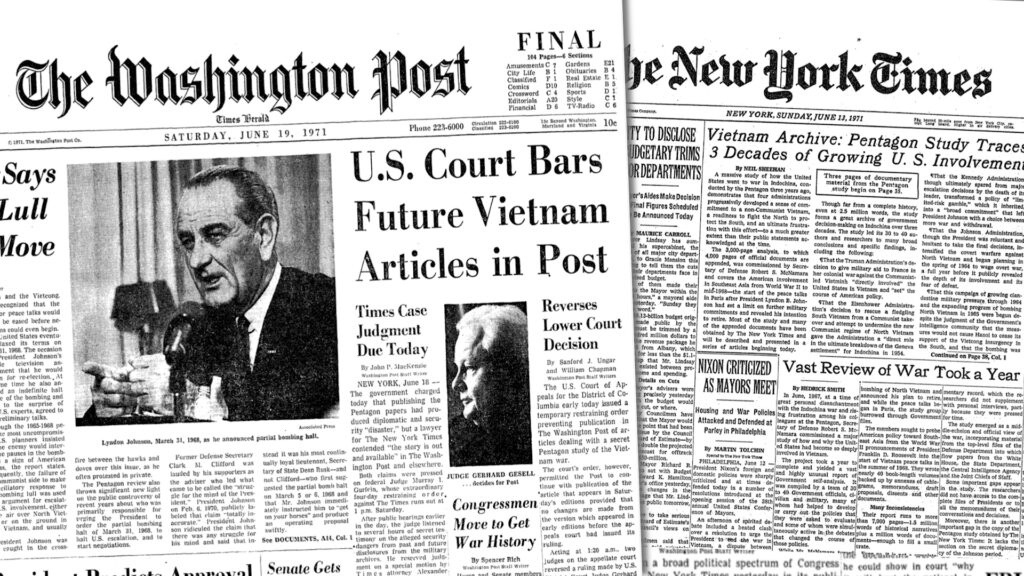
In 1971, President Richard M. Nixon’s folks begged the New York Times and The Post not to print the Pentagon Papers, saying lives were at stake. They did it anyway, got hauled into court and won on First Amendment grounds. Lives, in fact, were saved when public outcry led to the end of our participation in the doomed Vietnam War, though too late for the 58,000 American troops who died.
Fast-forward to 2007, during the Iraq War, when John Kiriakou was the first CIA official to report that waterboarding was used on prisoners at “black sites,” mainly on three high-value detainees. This revelation was incendiary. Not only did American interrogators break our laws and trample our values but they also tarnished the country’s reputation. Kiriakou disclosed his knowledge of the waterboarding, which he said was torture, during an ABC News interview.
He was arrested, charged and pleaded guilty to disclosing classified information, specifically confirming the identity of a covert agent in emails. He was sentenced to 30 months in prison. Here was a case of a whistleblower and a media avalanche that followed. But Kiriakou’s revelations got people talking. A Senate Intelligence Committee report concluded that nothing was gained from torturing the prisoners that couldn’t have been gleaned from softer questioning. Strangely, Kiriakou was the only person to serve time for the waterboarding history he told.
The Obama administration was nobody’s sweetheart either when it came to national security leaks. It aggressively prosecuted whistleblowers and pursued journalists under the Espionage Act. Obama’s Justice Department secretly seized Associated Press phone records for more than 20 phone lines over two months. And Fox News reporter James Rosen was treated as a co-conspirator in an investigation of government adviser Stephen Jin-Woo Kim, alleged to have leaked information to Rosen about the likelihood that North Korea would respond to U.N. sanctions with more nuclear tests.
The accusation stemmed from suspicion that Rosen had used a “covert communications plan” for passing information between the two men. Smart guy. Sort of like those parking garage meetings between “Deep Throat” and Bob Woodward? Or, perhaps, like the covert communications strategies reporters are now likely devising in the U.S. and elsewhere.
Reporters, editors and sources are probably safe from prosecution, as long as the Constitution stands up in court and no laws are broken. The Post has Natanson’s back. And everyone’s talking about press freedom being more important than ever. Not a bad result. Too many people died 250 years ago so that the American people in 2026 could hold their elected officials accountable. For their sakes and our own, let’s keep that going.
The post Press freedom has always been fragile appeared first on Washington Post.