The death of Renee Good in Minneapolis has put a spotlight on the aggressive tactics of Immigration and Customs Enforcement agents operating in U.S. cities, and it has spotlighted the groups organizing to observe and protest immigration enforcement.
I’m really interested in these small-scale efforts. They have led to people standing on street corners, blowing whistles to alert neighborhoods to ICE’s presence and following and recording agents while they are conducting operations and making arrests.
It seems like a very effective style of protest in certain ways, especially since it generates footage of ICE’s overreach and abuse, but it’s also fraught with risk, especially when it tempts protesters to interfere with law enforcement directly.
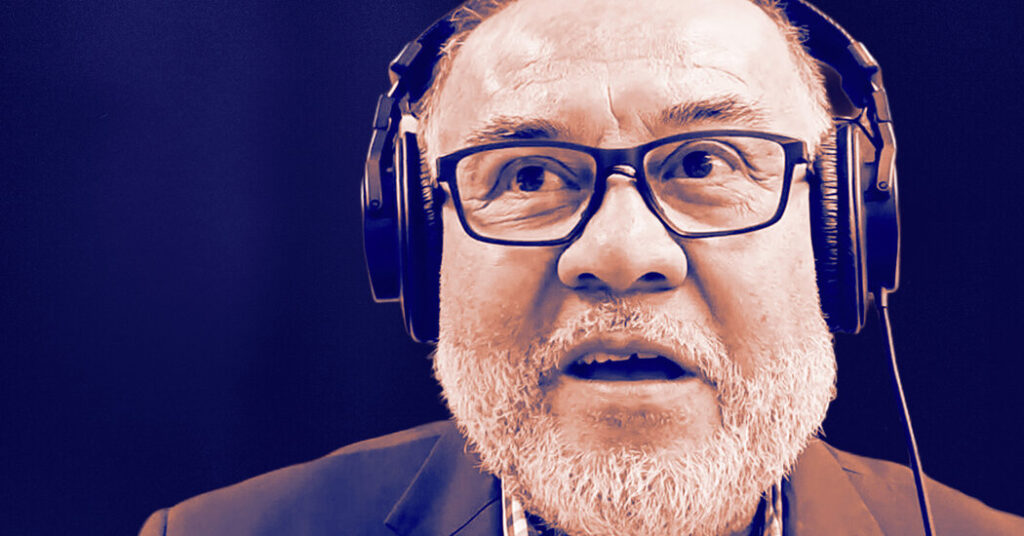
My guest today, Francisco Segovia, is training people for this kind of activism. He is the executive director of a Minneapolis nonprofit that’s on the front lines of anti-ICE operations. I wanted to talk to him about how he trains people for interactions with ICE agents, the risks it carries for protesters and what he wants to see from immigration policy.
Below is an edited transcript of an episode of “Interesting Times.” We recommend listening to it in its original form for the full effect. You can do so using the player above or on the NYTimes app, Apple, Spotify, Amazon Music, YouTube, iHeartRadio or wherever you get your podcasts.
Ross Douthat: Francisco Segovia, welcome to “Interesting Times.”
Francisco Segovia: Thank you for having me here.
Douthat: I want to start by getting something immediate from you about the situation in Minneapolis.
We’re taping this on Wednesday. It’s about a week out from when Renee Good was shot and killed. Can you just describe what you see as the current dynamic on the ground, both with ICE agents and with protesters?
Segovia: It is a scary moment for thousands of families in Minnesota. We see ICE agents all over the city driving their cars and stopping people, and we see people chasing them as well — people whistling, alerting others that ICE is present. There are a lot of videos of ICE arresting people and people crying, car windows being broken. It’s like being, maybe, in the middle of a civil war.
Yesterday, for instance, right outside my office, we saw a woman running — I think she was telling businesses to close doors because ICE was around — and we all, from the office, ran out, put on our vests to see what was happening. And immediately ICE came to the corner, stopped a vehicle and arrested two people.
That’s what we are going through right now.
Douthat: How many people do you think are involved in the different kinds of protests?
Segovia: It depends. If there is a march, hundreds or thousands of people will show up. But when there is an ICE action — what we have noticed is, for instance, yesterday, a lot of people came out of their houses. People go into the street, become present and chant things like “Shame.” In just a matter of minutes, you can see 30, 50, 100 people coming to witness and chant, saying various things to ICE agents.
Douthat: What is COPAL? What does the organization do in normal times?
Segovia: COPAL stands for Communities Organizing Power and Action for Latinos. We came about in 2018, and what we did — or what we created — was to better the quality of lives of Latino families in Minnesota. But then right after we began, Covid came in, and then we created the help line that we have now, supporting families across the state to keep healthy.
But our main mission is to better our communities through a range of activities that we do.
One of them is a worker center. We have a worker center where people come to look for jobs, careers. Both youth and adults. We also support people who have been victims of wage theft, which is pretty common in some industries. We have offices, as well, that we have opened in two other cities: Rochester and Mankato.
Douthat: And what about immigration work prior to the current protests? Obviously, there was immigration enforcement in Minneapolis before the current wave. If somebody called your help line, having been taken into custody by ICE, four years ago, would you have done something?
Segovia: The most that we could have done is to refer that person to a lawyer. We didn’t have, obviously, the level of ICE activity that we have now, but most of our work would have been: Someone was arrested, what do we do? OK, let’s connect that family or that person with a lawyer, and a lawyer will take it from there.
Douthat: Give me just a little bit of your own biography. You’re from El Salvador originally. Tell me your story of coming to the United States.
Segovia: My country was going through a civil war. I am a teacher by trade. In 1989, there was a major military offensive, and some priests were killed by the army. That situation was unbearable.
I couldn’t be in El Salvador anymore because many people, including teachers, were targets of the government. Then, with my ex-wife, who was expecting — she was six months pregnant — we had to migrate.
I looked for the Canadian Embassy and looked for political asylum, but there was no Canadian Embassy. Then a relative said: Why don’t you come to the United States? I hesitated a little bit about coming to the United States because I understood the role of the United States in El Salvador, but eventually we didn’t have any other options.
Like many millions of people and many Salvadorans in the ’80s, we traveled north without documents, crossed three borders, including the United States border, without documents.
Douthat: How did you cross the U.S. border specifically?
Segovia: At that point in the ’90s in Tijuana, there was no fence. I do remember that.
Basically we went to the border, and we just crossed. There were hundreds of people trying to cross, and the agents were chasing many people. There were so many people trying to cross. That’s what happened to us.
Douthat: OK. You just sort of carefully walked across.
Segovia: Right. And then we went to Florida, where our family lived, and eventually another friend who used to live in Minnesota said: You should come to Minnesota. And that’s how we ended up in Minnesota with a 2-month-old baby.
There were some nuns who offered us shelter. And at that moment, we didn’t speak English, didn’t have documents and were fearful of a lot of things, and Minnesota became home.
Douthat: What happened then, in terms of your legal status?
Segovia: I eventually was able to get legal representation. And I had to leave the country, go back to El Salvador to get the visa and enter again. By 1991, I had a green card.
Douthat: It’s now been 35 years. There have probably been infinite changes in the immigrant legal experience, but what are the biggest changes that you’ve observed between then and now?
Segovia: You know, when I came, I heard that the Reagan administration had given amnesty to a lot of people. Historically there has always been hostility toward immigrants. Mexicans had already been deported in massive numbers before.
But at least when I came, there was a different perspective. I think the wars in Central America — even the Republicans had a different perspective. You had people like George Bush and others with different perspectives of immigrants than what we have now.
What I see is that we have seen more waves of immigrants from Africa, for instance, from Latin America in Minnesota. When I came, there was hardly anyone that spoke Spanish. Over many years, I have seen the community grow. The Latino business community has grown. Which is something good.
Douthat: Had you ever been involved in any kind of direct protests on immigration before the second Trump administration?
Segovia: Immigration — human rights, civil rights — is something that has always been important. I am a teacher, as I said before, and as a person who had grown up in a country where the government was so abusive, your level of consciousness is awakened.
I also think that people deserve a good life. Probably one of the most relevant moments was, I think it was after 9/11, when immigrants were seen as the enemy, and here in Minnesota they removed access to driver’s licenses. Personally, I wasn’t impacted because I already was a U.S. citizen — I became a citizen in 1998 — but I saw a lot of people that were impacted.
Also, I noticed immigrants became the scapegoat for a lot of other issues that were impacting the society.
And you know, as a first-generation immigrant, you feel like: No, we’re not. And it has been, for 20 years, trying to restore the access to driver’s licenses was key for me.
Douthat: That was the main political cause.
Segovia: Yeah.
Douthat: What happened after the last election? What has it meant to turn your organization into a group that is active in helping people who want to protest?
Segovia: In 2024, when we saw the results of the election and we obviously knew the promises that were made back then by candidate Trump —
Douthat: Promises to do mass deportations.
Segovia: Correct. So we began the process of thinking: Can we create something that will allow us to teach people about their rights? And it’s not that we’re teaching people to protest, although protesting peacefully is a right that we all have. But it was about: How do we teach people their rights? How do we ask people who are not impacted by immigration issues to participate?
That was the core of this work that we do. Eventually we created the Immigrant Defense Network. We had to work on issues of narratives and challenge the dominant narrative about immigrants. We needed to create a counternarrative that we’re not the problem, but we’re part of the solution. How do we train our people so they utilize their rights? And so that was the core of what we have been doing.
The way that we frame it is: Know your rights and use them to do what the Constitution allows you to do.
Douthat: And do you use the term “constitutional observer”?
Segovia: Yes, we do.
Douthat: What is a constitutional observer?
Segovia: Basically, under the Constitution of the United States, we all have rights. Obviously, the rights for people without documents are more limited, although we still have rights to due process and representation and all those things.
The constitutional observer became a tool for people who wanted to document the actions of ICE, and by documenting that — not obstructing an ICE action but documenting — it was a tool that we had been using, and we relay that information to either lawyers or anyone else who can follow up on behalf of the person that has been arrested.
Douthat: Let’s say I call you up or I come to your offices and I say: I’m concerned about ICE’s presence in Minneapolis, I want to become a constitutional observer or I want to be trained in how to be present at ICE actions. Just give me a précis of what kind of training or instructions you would give.
Segovia: First, I will thank you for expressing your interest, and then I will suggest you show up to the next training that we have. It is a 90-minute training, where you go through various presentations. One is: What is a constitutional observer? What is it that we do and don’t do? The importance of documenting.
When ICE asks you to step back, step back, do not obstruct. When ICE tells you to turn your camera off, you don’t have to obey that, because it’s your right to video record what your government is doing. Do not point to the face of the person who is being arrested. Pay attention to details like the actions of ICE, which division of the D.H.S. they are representing, the process and the procedures in which they do their work.
And then once the raid has happened, submit that information to our network, the Immigrant Defense Network, with all the documentation that you did. Then the next step is to support the family that was impacted — sometimes there are children, sometimes there are other vulnerable people — and support them. That’s where the support system kicks in.
Sometimes we help people with paying their rent, especially if the person who was arrested is the one who provides the food. And if there is a lawyer needed. Although the situation with lawyers is pretty difficult right now because many lawyers are busy. Many lawyers who would provide this for free are busy.
Douthat: Let’s go back to something you said at the very start. You talked about the scenes in Minnesota, and you talked about people blowing whistles, running around warning businesses that ICE is coming. Is that part of the training? Is that something that you urge people to do?
Segovia: Actually, we don’t, but we provide whistles, and we provide vests, and we have a booklet that is the constitutional observer booklet. You can find that online on our website. We provide copies of those books, and that’s part of the training. The whistle is part of that.
.op-aside { display: none; border-top: 1px solid var(–color-stroke-tertiary,#C7C7C7); border-bottom: 1px solid var(–color-stroke-tertiary,#C7C7C7); font-family: nyt-franklin, helvetica, sans-serif; flex-direction: row; justify-content: space-between; padding-top: 1.25rem; padding-bottom: 1.25rem; position: relative; max-width: 600px; margin: 2rem 20px; }
.op-aside p { margin: 0; font-family: nyt-franklin, helvetica, sans-serif; font-size: 1rem; line-height: 1.3rem; margin-top: 0.4rem; margin-right: 2rem; font-weight: 600; flex-grow: 1; }
.SHA_opinionPrompt_0325_1_Prompt .op-aside { display: flex; }
@media (min-width: 640px) { .op-aside { margin: 2rem auto; } }
.op-buttonWrap { visibility: hidden; display: flex; right: 42px; position: absolute; background: var(–color-background-inverseSecondary, hsla(0,0%,21.18%,1)); border-radius: 3px; height: 25px; padding: 0 10px; align-items: center; justify-content: center; top: calc((100% – 25px) / 2); }
.op-copiedText { font-size: 0.75rem; line-height: 0.75rem; color: var(–color-content-inversePrimary, #fff); white-space: pre; margin-top: 1px; }
.op-button { display: flex; border: 1px solid var(–color-stroke-tertiary, #C7C7C7); height: 2rem; width: 2rem; background: transparent; border-radius: 50%; cursor: pointer; margin: auto; padding-inline: 6px; flex-direction: column; justify-content: center; flex-shrink: 0; }
.op-button:hover { background-color: var(–color-background-tertiary, #EBEBEB); }
.op-button path { fill: var(–color-content-primary,#121212); }
Know someone who would want to read this? Share the column.
For instance, if you, as a citizen, observe the presence of ICE in your neighborhood, you can call the help line and say: I have witnessed this. That information comes to us. We assess the facts, and then we activate constitutional observers. If you become a constitutional observer, we may say, “Ross, there is ICE presence in your neighborhood. Will you show up to your constitutional observer duty?” That’s how we activate you.
Douthat: If you’re giving me a whistle, the expectation is: I will be documenting in some way with a camera, but I will also be doing things to alert the neighborhood. You don’t insist on it, but it’s clearly part of what people are doing.
Segovia: All we have are whistles. They have guns.
Douthat: Yes, they do have guns. I want to talk about what that has meant in a minute. At the end of one of these incidents or observation periods, someone comes back to you, and they deliver the documentation, and in most cases now it’s going to be video?
Segovia: Yes.
Douthat: Are you guys responsible, then, for what I think is one of the most important features of the protest, which is clips getting edited, cut up and put on the internet? Are you guys doing that? Are you guys doing curation?
Segovia: No.
Douthat: What is the transmission of the clips from documentation to social media, which is where they’ve been huge?
Segovia: We don’t do that. We work closely with the A.C.L.U. We had a family, for instance, whose dad was taken. We ask the lawyer of the family if they want access to those documents. We don’t make any changes, because what we want is to have factual information, and that’s what we give to either the lawyer or A.C.L.U. or any institution that may follow up on the case. We don’t go online and post anything.
Douthat: OK. Let’s talk then about risks, about the guns. When you give a hypothetical person a training, how much time do you spend telling them what not to do?
Segovia: The whole training is 90 minutes. For instance, yesterday when I went to do a training, there were about 300, mostly teachers, on the training. The situation, I believe, is that many of us are driven by a lot of emotions when we see someone taking abuse in front of our eyes. What do we do?
It is essential for us to keep ourselves together. Yesterday there was a gentleman who was there, and I came close to the car. I don’t know exactly what happened there, but ICE agents came out and arrested him. He was not affected because, I’m assuming, he was just a citizen tired of what he’s seen.
Douthat: He did something physical.
Segovia: He did something that I —
Douthat: You would not advise people to do.
Segovia: Exactly. Yes. And that’s why it is key for us to say your job is to observe, not to obstruct. Keep distance from the agent and just document. Again, we’re not there to condemn what people do or don’t do.
We’re there to observe. And that’s what we ask the people who come to our training — to just be an observer.
Douthat: Can we just talk for a minute about the specifics of the Renee Good shooting?
Segovia: Yes.
Douthat: I’m very confident that you think the shooting was unjustified and wrong. I’m curious what — as someone who trains activists, trains people for observation — what you see when you watch the video and watch what she was doing and what her partner was doing.
Because, to me, just watching it, it just seems like there’s a sense that neither of them had a clear sense of the gravity of the situation that they were in. I don’t think that, based on what I’ve seen, she was trying to run the ICE officer over. I do think she was trying to drive away, peel away from law enforcement and there’s this moment where her partner is telling her to drive.
And all I can think, watching it, is: Someone should have told her that this is a very serious situation. You’re dealing with armed officers of the state involved in some kind of ongoing operation. And you want to behave as if it is a dangerous situation. I’m curious what your reaction is to what you saw in those videos.
Segovia: As a principle, I don’t think anyone should kill another person. I believe that law enforcement has to use it in extreme cases, but to pull out your gun and just kill someone because you’re the law enforcement — I don’t think a civil society should tolerate that.
So that is the principle.
Douthat: Yeah.
Segovia: Guns shouldn’t be used because you have a green uniform. That’s the principle. When you look at the video, it reinforces the idea that a video is so essential because it allows us to see a lot of things that otherwise we wouldn’t have seen.
Let’s keep in mind that that street is a one-way street. And many of us were wondering: Was Renee being an observer? Was Renee someone from the community who was doing something else? There are still so many unknowns to us that it is hard to say anything else.
What I saw on the video is someone leaving. You can see the tires turning to the right and the officer — I don’t know if he was touched. I don’t see that. But obviously that officer pulled out the gun and shot a very short distance. That’s what we see, and everyone sees it.
We know that the administration immediately said that the officer was injured and taken to the hospital, which — many other videos showed that he was walking.
Douthat: Right. I’m curious about — we don’t know for certain exactly the details of what she was trying to do or what her partner was trying to do.
Segovia: Yes, exactly.
Douthat: But they’re interacting with the officers. They’re filming them and so on. I’m just wondering, when you talk to people in the aftermath of something like that, how focused are you on making sure that protesters behave with caution?
Segovia: In my training yesterday, I said: Listen, if you have this vest that says, “Immigrant Defense Network” and somebody else shows up with the same vest, coordinate with that person, keep an eye on that person. And if someone is in a place, like, behind an ICE car, make sure that the person is not behind a vehicle. In our booklet we suggest to keep eight feet away from the agent and keep yourself safe.
Douthat: So using cars for protests is a bad idea.
Segovia: Yeah. Again, the scenario was unique, I think. Our assumption and guidance is: You walk into the place, you use your phone, you document, and you keep yourself safe. Those are some of the things. And in spite of that, we have several legal observers that have been impacted in following all those procedures.
So we said: This is a risky thing that you’re doing. So do it at your own risk and comfort. Not everyone that is trained is willing to do it, so it’s fine, too.
Douthat: Are there any other groups out there that are doing this kind of thing that you’re worried about? I ask this because — again, these things are uncertain — but one of the claims was that Renee Good had been involved with a group called ICE Watch, and if you go online, you can find images from their alleged training that are very different from your own, that are sort of encouraging people, potentially, to intervene when they see arrests being made and so on.
Do you have a sense that there’s kind of a range of different activist strategies? Are those groups outliers? What do you think is going on?
Segovia: I believe that in the landscape you will find many, many different people doing many different things. It is up to the discretion of the group that provides training, and it is up to the discretion of the people who decide to participate.
I don’t have a number. I have seen a lot of different groups doing different things, and that’s what the landscape is.
Douthat: I want to ask more about specific ICE tactics, but just to underline that last point: You don’t have any control over ICE, but you are in a position of training in some kind of leadership. What do you do to make sure that protesters protest safely and don’t make bad decisions? How much influence can you have, do you think?
Segovia: I don’t know how much influence I have. That is hard to know.I know that we have a lot of emotions. And again, last night in my presentation to this group of people, I said: Listen, I understand we have a lot of emotions, but we have to work on keeping our emotions together.
Because our emotions are not going to be useful. And if we make a mistake, the consequences can be greater. So we keep relying on the use of the legal means that we have. And we encourage you to keep doing that as well. That’s how much we can say, because at the end of the day, we don’t want another death to happen.
Douthat: Agreed. Let’s segue from there a little bit just into larger political and legal questions.
I’m curious: I know we’re not calling them protests. We’re calling them observations. But the work you’re doing clearly has the function of a kind of political protest against this kind of immigration enforcement. I want to try to separate different things that ICE is doing.
How much of the backlash, the community fear, all of this, is based on the kind of paramilitary presentation of ICE? The fact that they’re masked, the fact that they are dressed in what looks more like military gear than police gear. If ICE were doing the same general kinds of things — going into neighborhoods, looking for people — but was presenting as normal police, would that create a different environment in Minneapolis, do you think?
Segovia: Immigration has been detaining people for a long time. This is not new. They go after people. They detain the person. But what we see now is a whole show. We have the head of D.H.S. coming to town with cameras and rifles and going after communities, after people. It’s a whole show, and the show is pretty risky because it’s dehumanizing to begin with but also doesn’t look to create a safer community. Enforcement has been happening all the time. But also think about, for instance, the president of the United States called the Somali community “garbage.”
The Somali community in Minnesota is a very large diaspora. Right after he said they are garbage, then you see a bunch of agents coming into town to go to Somali businesses. So it seems that it’s mostly a political show to —
Douthat: I agree it was a political move, but it was also, I think, a specific reaction to stories about fraud related to the Somali community. That was what made Minneapolis a target, and the president’s rhetoric is sort of downstream of those issues.
Segovia: Fraud that is not only done by a segment of the Somali community. So that’s part of the game.
Because you know, the person, for instance, who was the mastermind of the $250 million was not a Somali person. Those are some —
Douthat: This was the Feeding Our Futures scandal, just so listeners are aware.
Segovia: Exactly.
Douthat: I guess what I’m trying to get at a little bit here is the country’s having a debate about immigration enforcement. And I’m trying to figure out how much of the debate is about tactics and the show and the rifles and how much of it is about just the legitimacy of enforcement itself. Because if you talk to a spokesman for the administration, an advocate for these things, the person would say: Look, the primary goal of what we’re doing is deporting people who have criminal records. Liberal cities and liberal states have not cooperated with the federal government.
And from their point of view, essentially they’re doing legitimate law enforcement work, and they’re being followed by people with whistles who are filming them, which you would not presumably do if you had the federal government doing drug raids. Even if you thought there were problems with drug laws, you wouldn’t urge people to go follow them with whistles, right? I guess I’m asking: What kind of immigration enforcement is legitimate in your view?
Segovia: That’s a good question. It’s a pretty tricky question. Let’s not be naïve. The administration has an agenda and has an anti-immigrant agenda. Obviously it’s going to use all the institutions under his power to execute his agenda, to demonstrate to whoever he promised that he was going to fulfill that promise.
Like I said before, this is not the first time that immigration enforcement arrests people. It has been happening all the time. What we are seeing right now is heavily armed individuals wearing masks, as you said, going to places and stopping people based on their appearance. And no civil society should allow that. Assuming that because you are brown-skinned, you are undocumented. There are documented cases of going into a Target store, arresting two U.S. citizens.
Douthat: Just to pause there, because I think it’s a good case study in some of this stuff. You can find video online of the beginning of that arrest.
One of the guys, the U.S. citizens, is filming an ICE agent as they enter Target. I’m not sure for exactly what purpose. And then they have a kind of altercation in the doorway that people have been arguing about online. Like, who started the altercation? And then both of the men are arrested. They’re not arrested for not being U.S. citizens, as far as I can tell. They’re arrested for the altercation and then released. Again, it’s an example of how it’s a kind of Rorschach test of whether you think the person observing the agent went too far or whether you think the agent went too far. Maybe they both went too far. But I just wanted to stipulate that. I’m interested in stabilization.
Segovia: Yes.
Douthat: And I say this as someone who, I think, has a pretty strong understanding of why voters became especially concerned about immigration under the Biden presidency, where you had an unprecedented level of what I would call illegal and you would call undocumented immigration into the United States. But then I, too, recoil from some of the ICE behavior that I see in the videos.
I think walking around in masks in an American city, the way they’re doing it, is un-American in some way. And I’m just trying to figure out if there’s a balance that can be struck. If there is a form of enforcement that is livable for people in the immigrant community that also satisfies people who are concerned that the U.S. essentially opened its borders under the Biden presidency and something had to be done about that.
That’s a statement, not a question. [Segovia laughs.]
But if you’re talking to someone — and you must know people who are skeptical of illegal immigration, who don’t hate Latinos or Hispanics but thought the Biden policy was a failure — what do you say to people who voted for Donald Trump and want a secure border and expect some kind of enforcement?
Segovia: No. 1, I will say to everyone, including you: Know your history. Know the history of the United States. Understand the role of the United States around the world, particularly in Latin America, and how the U.S. policy in Latin America has been to play the role of being a destabilizing force that provokes migration.
If the United States has a pretty good memory, they wouldn’t repeat the same thing that they do oftentimes. But we don’t teach enough or good history. We don’t teach how — for instance, just a recent example, the situation in Venezuela. Regardless of Maduro being a good or bad person, Venezuela was going through some challenges. The United States participated in creating more chaos in Venezuela. Thousands of Venezuelans left home to different places, including the United States. Venezuelans came to the border; they were put in places to process them. My understanding is that the United States — like many other societies, first-world countries, as they’re called — they have this process where you can ask for political asylum.
Some of them were allowed to get into the United States. So the issues of Latin America, the constant migration of Latin Americans has also a level of connection between U.S. policy.
I wouldn’t say 100 percent of the U.S. is responsible, because we have local governments in our countries that are very responsible as well. But there is a link between those two factors. All these things create instability, and instability creates migrations. And also, the receiving economy needs people.
And so we have a broken immigration system that needs people, that needs their labor but doesn’t want to see people. People want to eat their tacos but don’t want to see the ones who put them together. People want to see their houses clean or hotels clean but don’t want to see the labor that produces that.
That’s, I think, something that the United States people need to understand — that you cannot have the labor without the person.
Douthat: Last question off that: Is there any limiting principle on that view? Is there any place where it’s reasonable for someone who disagrees with you politically to be able to say: Here is a just way for the U.S. to limit immigration.
Segovia: I believe so. And I don’t think — no one speaks about open borders. I mean, at least the people that I understand and myself wouldn’t say open the borders.
Douthat: Well, no one wants to use the term “open borders,” I agree. But what I see from activists is people will say, “I’m not for open borders,” but it then is very hard for them to define a limit on any form of sympathetic migration. Is there a just limit that you could set?
Segovia: For instance, let’s say I’m from El Salvador.My country was going through political situations in that moment. So the idea that I can show up to an embassy and say, “Hey, I feel persecuted. What can I do? Can you help me?” That is the vehicle that many opportunities can open up for situations like that. But let’s say the situation is economics.
Would it be better for the United States to have a visa program that would allow workers to come safely and legally to the United States and work and produce and participate? That I think can be one way.
Believe me, the Democrats and Republicans are equally responsible for not fixing this issue. For a long time, we have been fighting for immigration reform, understanding that there are a lot of people here that are already absorbed by the economy. The economy needs it. Why don’t we fix that issue? And then if there are still workers needed, why don’t we have a visa program that allows companies to hire people, and they have, obviously, rights, because people have to have human rights.
That can be a perspective, but there is not the political will to solve that.
Douthat: Right. There’s also, though, the question of where the limits come in. Because if you are an American company, there will always be some incentives to hire people from poorer countries because they will, for totally understandable reasons, work for lower wages.
I think there is still this question from a pro-immigrant perspective of how you set limits. Do you think it’s legitimate to deport immigrants who commit crimes? Which is, again, the core justification that ICE is offering. That’s not, obviously, the only thing they’re doing. But when ICE says, “We’re deporting this person who had a drunk-driving infraction,” do you think that’s a legitimate function of government?
Segovia: There are very different levels of crimes, right? I don’t want to say, “Don’t deport someone who has committed a crime.” Let’s define crime within the theme of what is a criminal offense that deserves a deportation.
I wouldn’t defend someone who committed a murder or anything like that. Many of us wouldn’t be like, “Oh yeah, let’s defend this person.” That wouldn’t be the case.
Douthat: The question is the gravity of the crime.
Segovia: Exactly. I wouldn’t encourage anyone to drive drunk. That’s not a smart decision. Did this person get into an accident? If no one got killed, for instance, and was in an accident, would that be a reason to be deported? Those are some of the things that I think are key for a civil society — to be able to put that in a different perspective.
Douthat: Well, that’s obviously something that we’re going to continue having a political debate about for some time to come. I just want to say before I let you go that I sincerely wish you good luck in keeping people on the streets of Minnesota safe.
Francisco Segovia, thank you so much for joining me.
Segovia: Thank you so much for the opportunity to speak with you and your audience.
Thoughts? Email us at [email protected].
This episode of “Interesting Times” was produced by Sophia Alvarez Boyd, Victoria Chamberlin and Emily Holzknecht. It was edited by Jordana Hochman. Mixing and engineering by Pat McCusker and Sophia Lanman. Cinematography by Marina King. Video editing by Arpita Aneja and Steph Khoury. The supervising editor is Jan Kobal. The postproduction manager is Mike Puretz. Original music by Isaac Jones, Sonia Herrero, Pat McCusker and Aman Sahota. Fact-checking by Kate Sinclair and Mary Marge Locker. Audience strategy by Shannon Busta, Emma Kehlbeck and Andrea Betanzos. The executive producer is Jordana Hochman. The director of Opinion Video is Jonah M. Kessel. The deputy director of Opinion Shows is Alison Bruzek. The director of Opinion Shows is Annie-Rose Strasser. The head of Opinion is Kathleen Kingsbury.
The Times is committed to publishing a diversity of letters to the editor. We’d like to hear what you think about this or any of our articles. Here are some tips. And here’s our email: [email protected].
Follow the New York Times Opinion section on Facebook, Instagram, TikTok, Bluesky, WhatsApp and Threads.
The post Minneapolis Feels ‘Like Being in a Civil War’ appeared first on New York Times.