“Scientists find new clues to why female fertility declines with age,” announced a front-page headline on Jan. 10, followed by a tell: “New studies are shedding light on one of the biggest mysteries of human reproduction and what can be done to combat it.”
“Combat.” War language. As if menopause — a natural process that happens to every woman who lives long enough — is an invading force requiring intervention to repel it.
Long postmenopausal lifespans are special to humans. Among primates, only we live decades past our reproductive years (along with a few whale species). Evolutionary biologists have shown this is adaptive, not a design flaw. Women evolved to stop reproducing because continuing pregnancy into older age becomes increasingly dangerous: The maternal mortality rate for women over 40 is about six times higher than for women under 25.
Yes, some women experience early menopause that disrupts their reproductive timeline and need care. And people who want children later should have options. But the bigger problem is a medical system that struggles to distinguish between supporting women’s health and treating women’s bodies as broken. The medical establishment should focus on quality care for menopause symptoms and preparing women for this transition (and the great life ahead) — not pathologizing half the population for reaching a life stage our species evolved to experience.
Women’s bodies aren’t malfunctioning when they stop ovulating. They’re working exactly as designed.
Dawn Laguens, Austin
The writer is former executive vice president and chief brand officer of Planned Parenthood.
Save Iran, for America’s sake
Regarding Marc A. Thiessen’s Jan. 15 op-ed, “There is no U.S. downside to striking the Iranian regime”:
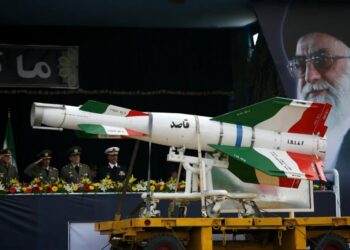
We, the people of Iran, understand that national interests take priority for every country. However, even if the United States chooses to ignore the killing machine the Islamic Republic has unleashed against its own people — as seen in 2017, 2019, 2022 and again today on our streets; even if you remain indifferent to reports that thousands of people have been killed during the regime’s crackdown over the past two weeks; and even if you care little for the gallows being prepared in kangaroo courts — then at least consider your own strategic priorities.
Iran can no longer be viewed as merely a “sanctioned and weak” state whose controlled tensions provide legitimacy for U.S. and Israeli regional policies. The Islamic Republic has become a card in Vladimir Putin’s hand. Its continued existence guarantees not just the persistence and escalation of insecurity, chaos and fundamentalism across the Middle East. As Russia’s devoted vassal, it has evolved into major security threat to the European Union and the broader West.
Tracing back to its establishment of Hezbollah in Lebanon and Palestinian Islamic Jihad, its fingerprints are on nearly every source of insecurity across the Middle East, from the killing fields of Syria to the tragedies in Yemen. It dismisses international sanctions as “worthless scraps of paper,” relenting only in the face of imminent threats to its survival.
As long as the head of the Iranian hydra remains intact in Tehran, these tensions will only intensify. Do not test the already tested.
Babak Khatti, Duisburg, Germany
What a shooting drowns out
“After fleeing the Taliban, they felt safe in America,” read a front-page headline on Jan. 11, followed by the secondary headline: “But a shooting in D.C. has changed everything for Afghan refugees.”
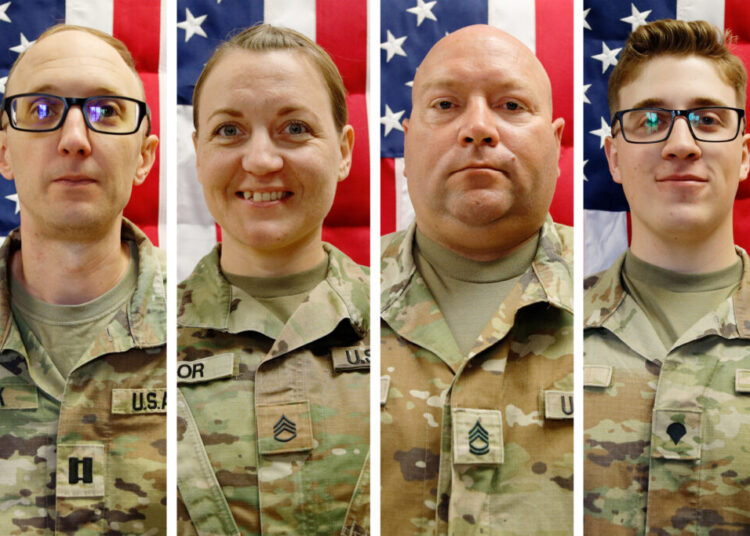
Two things can be true at once: The recent shooting of two West Virginia National Guard members in D.C. was horrific and the perpetrator must face justice, and we must not allow this tragedy to create a false narrative about the thousands of Afghan allies we welcomed to this country after the fall of Kabul.
I spent 20 years in the U.S. Army, including tours in Iraq and Afghanistan, and was eager to help an Afghan ally, Latifa, who served as an interpreter alongside U.S. forces, find refuge in the United States. Not out of charity but because America made her a promise. For a time, she and her family lived in my duplex in Northern Virginia as she worked to rebuild her life in safety. The pain of the D.C. shooting and the subsequent political blowback have drowned out quieter, more powerful stories of the community bonds that Latifa and others like her have built in the places they now call home.
Today, Latifa continues her service to our country through her work in the medical field. Her strength and resilience continue to inspire me. Through my continued involvement in refugee resettlement, I have witnessed hundreds of stories just like ours — stories of courage, generosity and mutual support. We must not allow the terrible act of one person to twist our sorrow into something unrecognizable.
Mariah Smith, Arlington
The writer is a board member for No One Left Behind.
Sounds and silences
I enjoyed the Jan. 10 letters package, “The most incredible concert of 2025? It’s no contest.,” in response to Marc A. Thiessen’s Dec. 26 op-ed, “The Who, Chicago and ’80s galore: My favorite concerts of 2025.”
Like Thiessen, I am trying to see my favorites while they are still performing, though the ’60s, not the ’80s, are my wheelhouse decade for music. My first concert was the Beatles at JFK Stadium in Philadelphia on Aug. 16, 1966. (Thank God that Mom was a Beatlemaniac and took her four kids. Dad was not pleased.)
My best concerts for 2025: Burton Cummings, Toast (Bread tribute band), Grass Roots/Lovin’ Spoonful, Little Anthony (best vocal of the year)/Vogues/Cowsills/Gary Puckett/Ron Dante on the Happy Together tour, New Stylistics (don’t miss Russell Thompkins Jr. if you ever get a chance)/Intruders/Bloodstone/Heatwave at the Valentine’s Soul Jam, and Beginnings (Chicago tribute band that’s better than the remaining Chicago shell).
My biggest disappointment was being sick and eating my tickets to the Outlaw Music Festival with Bob Dylan, Willie Nelson and Sheryl Crow. News reports said the show went past midnight, which is after my bedtime anyway.
Dave Griffiths, Frederick
Paul Simon’s voice is weaker now, but that did not detract or distract from his concert at Wolf Trap in June.
His first set was a performance of his latest album, “Seven Psalms.” Though I was not familiar with those songs — nor, I suspect, were most of those in the audience — I was moved by their intelligence and quiet dignity. His second set consisted of what he termed “hits” and “deep cuts” from his catalogue. He had a full band that met the moment.
He finished the show alone. After playing “50 Ways to Leave Your Lover” and “The Boxer,” he received yet another standing ovation. The set lists for previous shows on the tour had him doing “The Sound of Silence” as his final encore. Instead, moved by the crowd’s embrace of him, he announced he would finish with two songs. The crowd roared. He played the opening chords of “Old Friends” from the “Bookends” album, which I came close to wearing out as a callow youth — a song that, I was later to read, he had not played by himself in concert since 2001.
He started singing but had to stop due to a “frog” in his throat. He took a slug of water and tried again, but his voice failed him again. The crowd sensed the mortality and cheered the effort. He said, “I’ll play one more.” He labored a bit on “The Sound of Silence,” but it did not matter. The brilliance of that song transcended — as did the brilliance of his long career. He raised his arms in exultation and thanks, leaving to a thunderous ovation.
We will not see the likes of him again.
John Hoellen, Alexandria
Following Sarah Fletcher’s Jan. 4 Sunday Opinion essay, “The magic has gone out of flirting. Maybe this infamous book had a point.,” Post Opinions wants to know: What should flirting look like in 2026? Send us your response, and it might be published as a letter to the editor. wapo.st/flirting
The post Menopause isn’t a disease appeared first on Washington Post.