
Five people have died in ICE custody in the first 15 days of 2026—putting the agency on track to smash a grim record amid mounting scrutiny of its actions.
The agency recorded a total of 30 deaths in its custody last year, but at the current rate it would see that number reached by April—and a grim record of 120 set for the whole of 2026.
Advocacy groups say Congress—now debating whether to fund yet more beds—must launch a full investigation into why detainees are dying at such a staggering pace inside a system the Trump administration has supercharged and kept shrouded in secrecy.
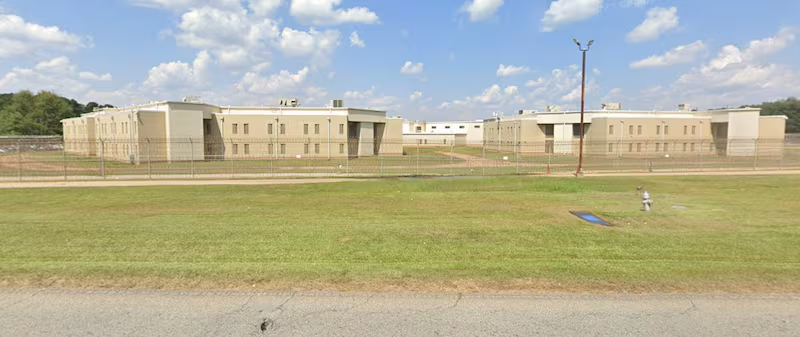
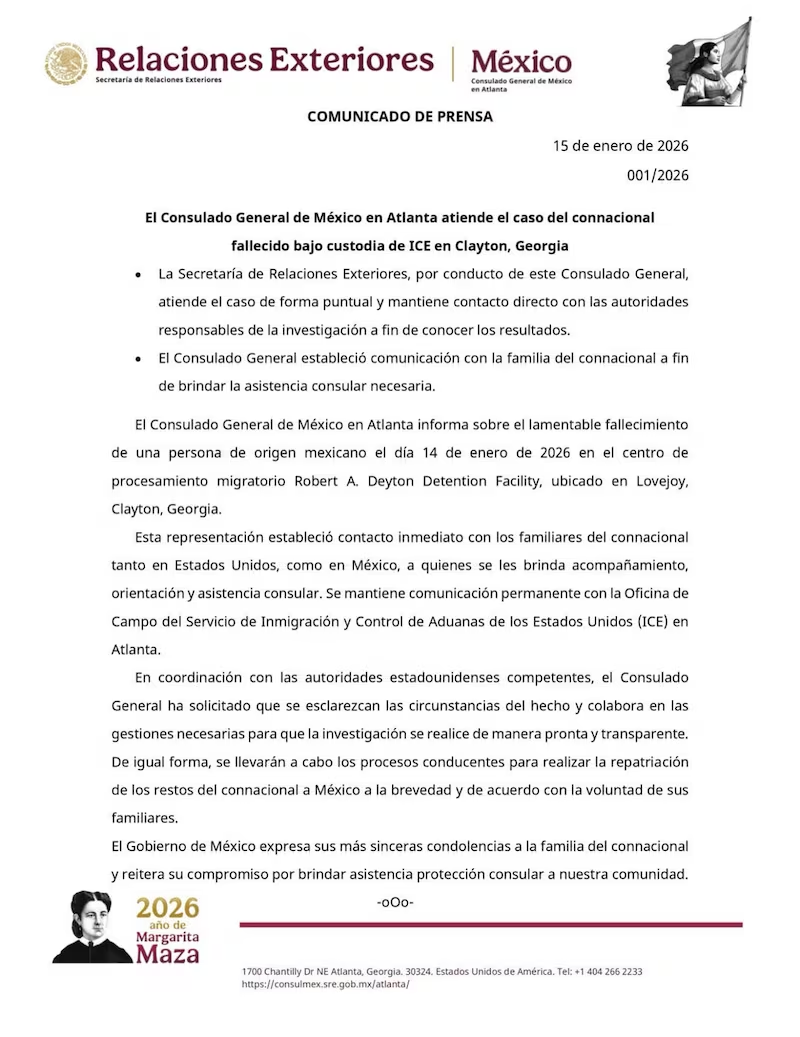
The latest victim was a Mexican national who died on Wednesday at the Robert A. Deyton Detention Facility in Lovejoy, Georgia.
The Mexican consulate in Atlanta said in a statement Thursday that it had contacted the man’s relatives in the United States and Mexico, requested a transparent investigation, and begun arrangements to repatriate his remains “as soon as possible” in line with the family’s wishes.
ICE had still not acknowledged the death on its public detainee-deaths page as of Friday, leaving the public to learn about it from a foreign government and specialist researchers such as American University academic Austin Kocher, who first flagged the case on his Substack.
That Georgia case brings to five the known deaths in ICE custody so far this year. Detention Watch Network says four migrants died between Jan. 3 and Jan. 9 alone. They were Parady La, 46, at the Federal Detention Center in Philadelphia; Luis Beltran Yanez-Cruz, 68, at the Imperial Regional Detention Facility in California; Luis Gustavo Nunez Caceres, 42, at the Joe Corley Processing Center in Texas; and Geraldo Lunas Campos, 55, at the Camp East Montana complex near El Paso.
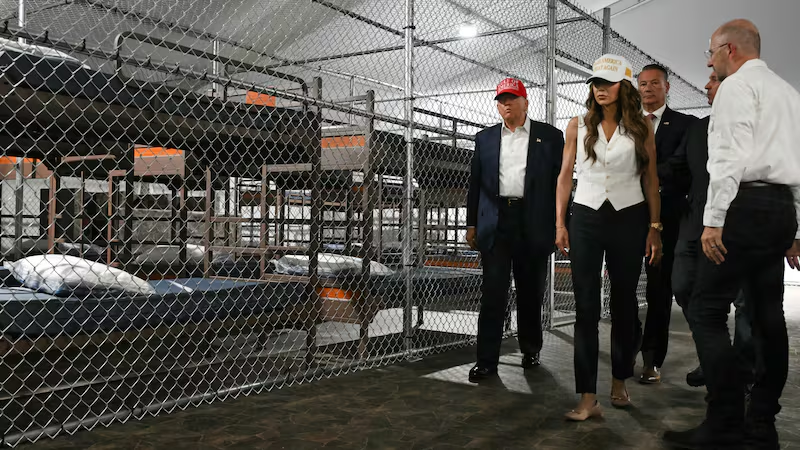
In perhaps the most disturbing case, the Washington Post reported that local medical examiners in Texas are likely to classify Lunas Campos’ Jan. 3 death at Camp East Montana as a homicide, with preliminary findings pointing to asphyxiation from neck and chest compression. An eyewitness said he saw guards restraining Lunas Campos while the Cuban immigrant cried out that he could not breathe.
DHS responded to his death with a statement which said he was “a criminal illegal alien and convicted child sex predator,” and claimed that he was trying to take his own life but “violently resisted the security staff and continued to attempt to take his life,” and therefore, “stopped breathing and lost consciousness.”

This month’s carnage comes on the heels of a grim 2025, which saw at least 30 people die in ICE custody—among the highest totals on record and the worst non-COVID year since the mid-2000s.
“The current rate of death will escalate as the administration plans to dramatically increase detention over the year, and it plans to use substandard warehouse-style facilities unsuited for safe detention,” David Bier, Director of Immigration Studies at Cato Institute, told the Daily Beast.
“Rather than show regret for deaths, the administration has repeatedly shown contempt for detainees who die by raising irrelevant details about their legal history. We cannot expect them to oversee these facilities responsibly.”
Setareh Ghandehari, of Detention Watch Network, told The Hill: “Under the Trump administration’s massive expansion of the detention system, loss of life in ICE custody is truly staggering. It’s devastating, enraging, and must change now.”
In December, Homeland Security Secretary Kristi Noem, 54, was grilled on Capitol Hill after four detainees died in just four days, pushing the Trump-era death toll beyond the entire Biden administration in under a year.
Those deaths are unfolding inside a system that has ballooned under Trump, Noem, and White House Deputy Chief of Staff Stephen Miller. When Trump returned to office in January 2025, immigration detention held roughly 40,000 people.
By late November, that figure had jumped by nearly 75 percent to almost 66,000, with ICE publicly reporting daily populations of around 69,000 and capacity approaching 70,000 beds—the highest in history.
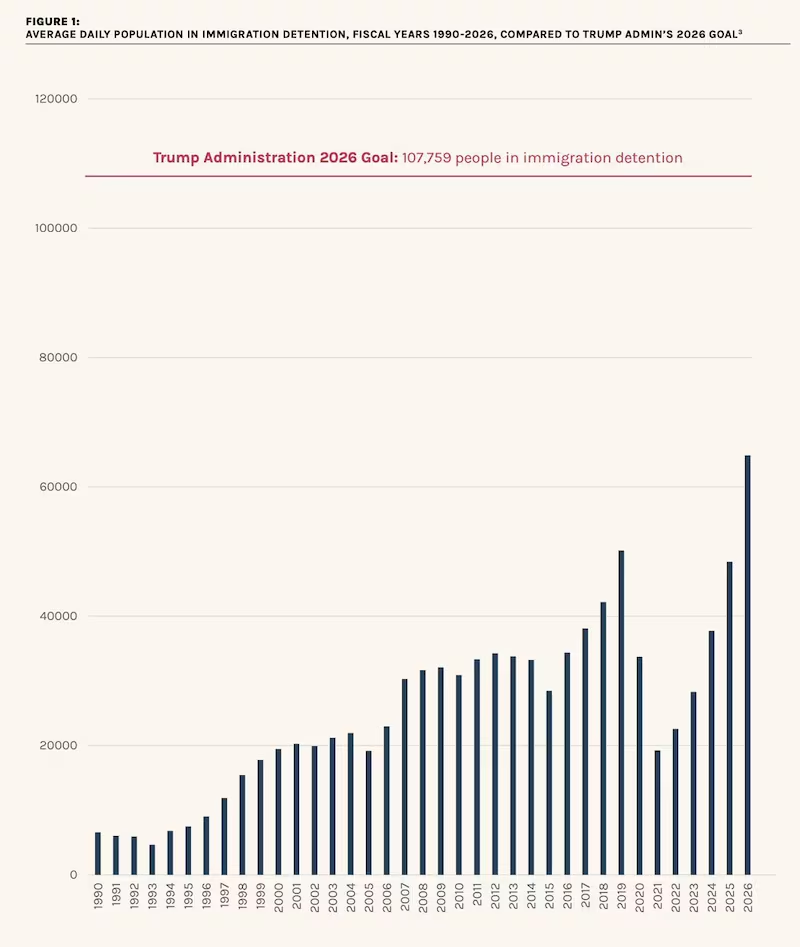
The American Immigration Council calculates in a report out this week that ICE has added 104 facilities since early 2025, nearly doubling the detention network. New sites range from county jails offering a handful of beds to mothballed prisons, tent cities on military bases, and even state-run centers like the infamous “Alligator Alcatraz.” Most are run by private contractors.
With help from Trump’s “One Big Beautiful Bill Act” and a $45 billion multi-year appropriation, ICE now has close to $15 billion per year available for detention through 2029—enough, the report says, to build capacity for about 135,000 detainees at once.
Who is being locked up has also changed. The Council finds that aggressive “at-large” arrests in communities, mass worksite raids, roving patrols, and surprise re-detention at court hearings have helped drive a 2,450 percent increase since last January in the number of people with no criminal record held by ICE on an average day. Most of the growth in detention since October has come from people with no convictions.
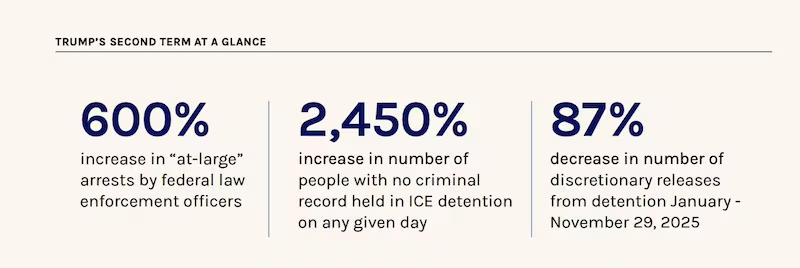
Meanwhile, getting out is far harder than ever. The report notes that after Trump ordered ICE on Jan. 20, 2025, to “maximize” use of detention, discretionary releases fell by 87 percent in just a few months. New legal rulings have barred immigration judges from granting bond to broad categories of migrants, locking more people into mandatory detention while their cases crawl through the system.
The American Immigration Council concludes that the Trump administration is not primarily targeting serious public-safety threats but building mass detention facilities to pressure migrants to give up their cases and go home of their own accord.
The Daily Beast has contacted DHS for comment.
The post ICE Kicks Off 2026 With Record-Setting Detainee Death Toll appeared first on The Daily Beast.