LAS VEGAS — Nevada Democrats are making a forceful case to Democratic officials to shake up the current nominating process by putting them first, taking veiled swipes at New Hampshire as too homogenous and South Carolina as too conservative to host the nation’s first presidential primaries.
“We cannot afford to have overwhelmingly college-educated, White, or less competitive states kick off the process of selecting our party’s nominee,” the Nevada party’s leaders write in their proposal, obtained by The Washington Post, which notes that the Democratic Party is “facing a critical moment” where it must be strategic in its efforts to win back Latino and working class voters and “craft an economic message that resonates with across the country.”
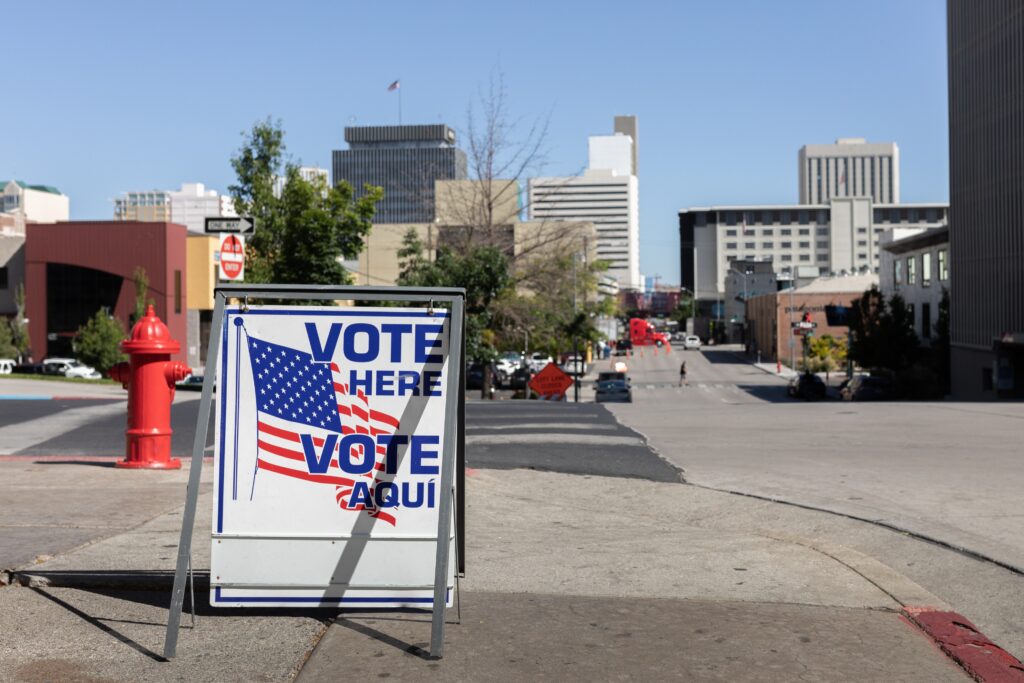
The lobbying campaign is one of the most aggressive in a battle royal among states seeking to get early spots in the party’s 2028 nominating calendar. The fight over the order formally begins Friday when about a dozen states are expected to submit proposals to the Democratic National Committee to get early spots, a privilege that gives their voters and politicians added influence and attention.
The contest is not only important to the party and individual states involved but also exemplifies the broader debate among Democrats over how — both in its policies and its process — to improve their positioning for presidential contests.
Many Democratic insiders argue that their viability could hinge on designing an early state gauntlet that better pressure-tests their 2028 nominee and more accurately reflects the racial, socioeconomic and geographic makeup of the party. The decisions of where to campaign affect which voters get to shape the conversation and the set of issues that candidates prioritize. Iowa’s longtime hold on the nation’s first caucuses, for example, is credited with helping farmers preserve subsidy programs, while South Carolina’s large population of Black Democrats helped Joe Biden overcome earlier losses in Iowa and New Hampshire in 2020.
This year, Nevada, New Hampshire and South Carolina are among the states pushing hardest for the first spot, according to interviews with more than a dozen DNC members, party strategists and state chairs. Michigan, Georgia, North Carolina, Iowa and Virginia are also vying for either the first spot or at least a spot in the early window, before a busy day of state contests known as Super Tuesday. And the lobbying — which includes a fair amount of state-on-state jousting — has been going on behind-the-scenes for several months.
The deciders, 49 members of the Democratic National Committee’s powerful Rules and Bylaws committee, are expected to set the lineup later this year after a series of meetings to debate the proposals and allow top contenders to present their case in person. They will hold their first public discussion during a meeting in Puerto Rico at the end of this month.
Democrats for many years kicked off their nominating process in Iowa, a heavily White, mostly rural state that held low turnout caucuses with barriers to participation. A 2020 contest plagued by technical glitches led to complaints that the state had outsize influence, even though the demographic composition of its electorate bore little resemblance to voters the party needed to win elections. The debacle helped fuel the party’s shift toward rethinking its process.
Nevada is among several states that already had an early spot on the calendar in prior election cycles, but wants an even earlier jump.
“We are microcosm of who America is and when you look at the demographics and the groups that we have to win back — that is Nevada,” the state’s party chair Daniele Monroe-Moreno said in an interview at a Las Vegas coffee shop this week, arguing that Nevada is best suited to launch a national conversation about rising costs, the housing crisis and how to engage voters who feel like the political system has failed them. “It’s time for us to put our big boy pants on and do something different.”
New Hampshire — which brands itself as the first in the nation — has never backed down easily. Biden’s allies bypassed the Granite State in 2024 to highlight his strength among Black voters by putting South Carolina first. But the state persisted in holding its primary first anyway, incurring a penalty from the national Democratic Party that rendered it meaningless.
New Hampshire Democratic Party Chair Ray Buckley noted in an interview that the sole authority to choose the state’s primary date rests not with the party, but with the secretary of state.
Still, Buckley argued that strength of New Hampshire’s case comes from its uniqueness as a “small purple state with an exceptional track record of civic engagement” — one with an open primary that will test the candidates’ appeal with independent voters, who are allowed cast ballots in partisan primaries.
“Our candidates, right from the get-go, will have to craft a message that is appealing to those [independent] folks that live across the country that are the deciders in any presidential race,” said Buckley. “And our level of engagement with our grass roots is second to none.”
And South Carolina, where Democratic Rep. James E. Clyburn marshaled the state’s Black voters to rescue Biden’s flailing candidacy in 2020, is vying to keep its influential role by pointing to the state’s diversity and the state’s compactness. “The smallness of the state matters when you’re trying to pick up momentum and get your message out,” said South Carolina Democratic Party Chair Christale Spain, who advised the presidential campaigns of Sen. Bernie Sanders (I-Vermont) in 2016 and Sen. Cory Booker (D-New Jersey) in 2020. “We don’t want to set our candidates up for failure and we don’t want to bankrupt our candidates either.”
But there are also notable drawbacks for each state. Nevada, for example, will have to overcome the fact that it is far from the East Coast — and relatively isolated from other likely primary states — with two major cities separated by sparsely populated areas, making the traditional bus tours and town-to-town hops more difficult. Georgia and Michigan have faced questions in the past about if GOP lawmakers could prevent the states from moving up their dates.
Donna Brazile, who has been a member of the Rules and Bylaws committee for decades, said she sees the process as an opportunity to rebrand and rebuild the party.
“I’m not wedded to the past,” Brazile said. “I want to make sure that the party and the next nominee can compete, not just to win the Democratic primary voters, but independents and others who are so crucial to winning the general election.”
But another committee member, who spoke on the condition of anonymity to discuss the party’s internal deliberations, said there is “definitely anxiety about shaking things up too much, because they feel like we shook it up last time and it didn’t help.”
Like Nevada, Georgia and Michigan have hinged their early state pitches on the imperative to road test their presidential hopefuls in states that are competitive in the general election. Georgia officials are pointing to their state’s racial diversity and large numbers of young voters. Nevada notes in its proposal that it has a majority-minority population and the highest concentration of noncollege educated voters — who have been drifting away from the Democratic Party — of all the battleground states.
Kamala Harris won the vast majority of Black voters in 2024, but Trump won about 15 percent of that demographic group — almost doubling the share he won four years earlier. Trump’s support among Hispanic voters rose from 36 percent in 2020 to 48 percent in 2024 and he gained 10 points with Asian American voters, according to the Pew Research Center’s validated voter survey released last year.
If Democrats care about winning, advocates in those battleground states argue, they need to focus on the states where the election will actually be decided.
“Candidates being here early and building teams here, building relationships, is positive for the general election,” said Michigan Democratic Party Chair Curtis Hertel.
The chairs from both Michigan and Georgia made it clear they want to be part of the early window, but unlike New Hampshire, Nevada and South Carolina are not explicitly fighting to be first. Several other states that have not typically been part of the early process — including Illinois, Delaware and Oklahoma — are also likely to submit proposals to be included in the early window.
The committee has said it will decide the lineup by looking at three criteria: affordability for the candidates to campaign and advertise, the ability of states to run fair and transparent contests, and an order that will test potential nominees with diverse groups of voters necessary to win the general election. The committee plans to select four to five states for the early window, including at least one state from the East, Midwest, South and West.
Democratic leaders in Nevada, Michigan, Georgia are eager to stress their deep organizing infrastructures that have delivered past victories for Democrats in the general election.
They’re just as eager to strike a balance when it comes to selling the diversity and geographic makeup of the their states, rattling off statistics about the demographics of their voters.
At times, the state party officials can sound like they are selling luxury SUVs, condos or cruise vacations.
“We’re not huge, but we’re big,” said Charlie Bailey, chair of the Georgia Democratic Party. “We check pretty much every box.”
After the disastrous Iowa caucuses in 2020, when technical problems delayed the results for days, that state was effectively stripped of its traditional first presidential nominating contest on the Democratic side.
Iowa is reapplying, Democratic Party Chair Rita Hart said in a statement, stressing that Republicans will start their process in the state and that they should not let them go “unanswered.” But the state has faced increasing skepticism from Democrats as it has become more reliably Republican in general elections and the Democratic Party has moved to highlight more diverse states.
To win “big, sustainable majorities again, our candidates need to show they can compete in states like Iowa,” Hart said.
The post Democrats battle over who votes first in 2028, a proxy for the party’s future appeared first on Washington Post.