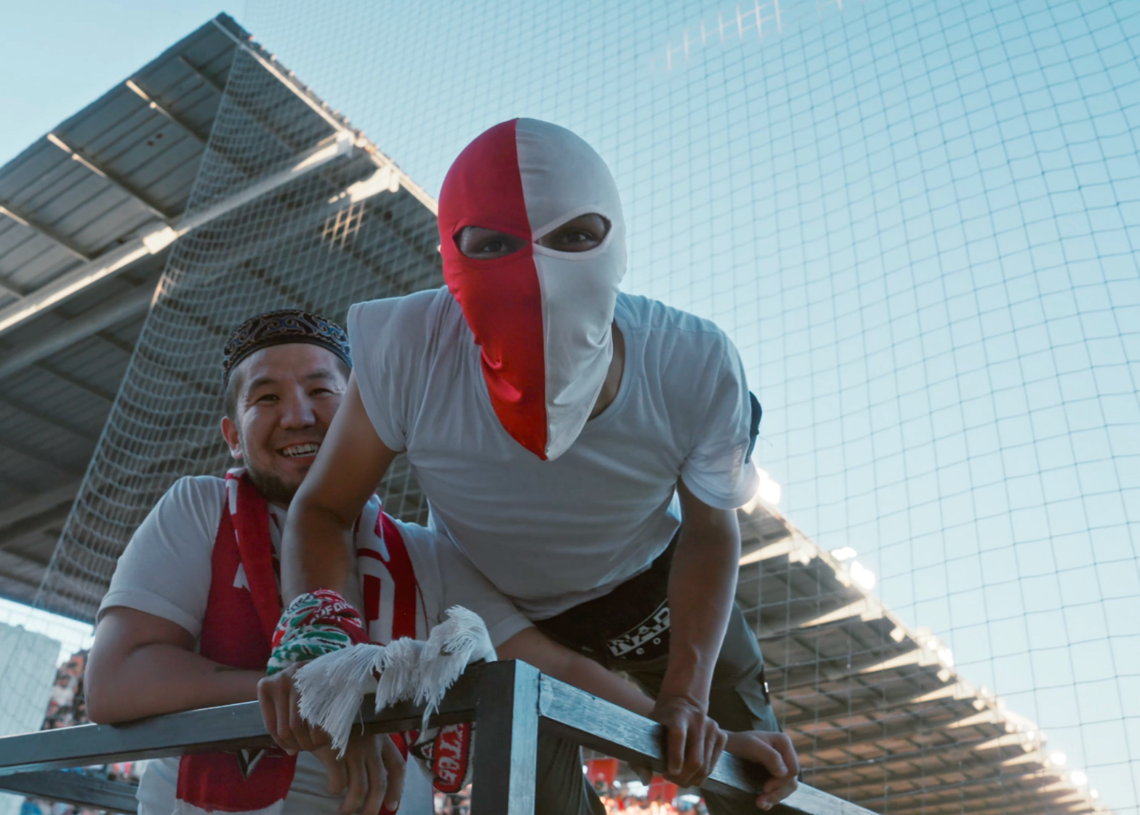
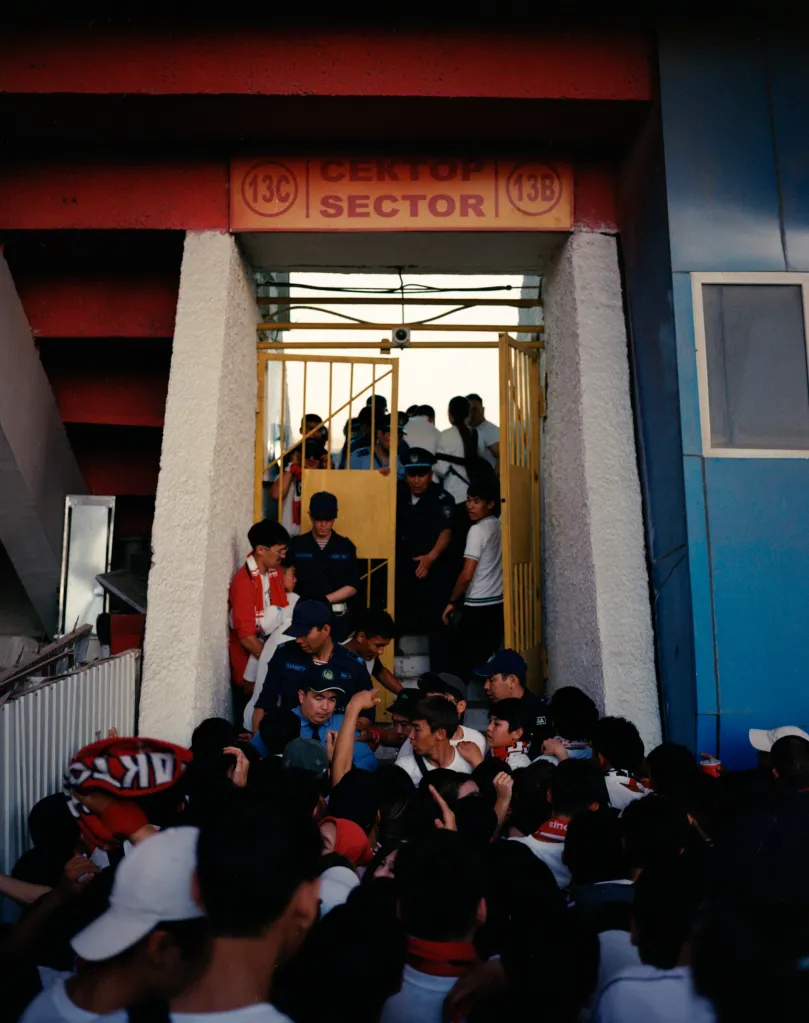
Aktobe is a curious city. The vast industrial hub is home to the first planetarium in Kazakhstan, was the birthplace of a female WWII sniper called Aliya Moldagulova who took out dozens of Nazi soldiers before dying in a landmine blast at the age of 18, and boasts a huge meteorite crater considered to be the most recent impact event of a magnitude large enough to usher in another nuclear winter (it didn’t, obviously). It’s also home to 13 Sector—the most notorious football hooligan firm in the country.
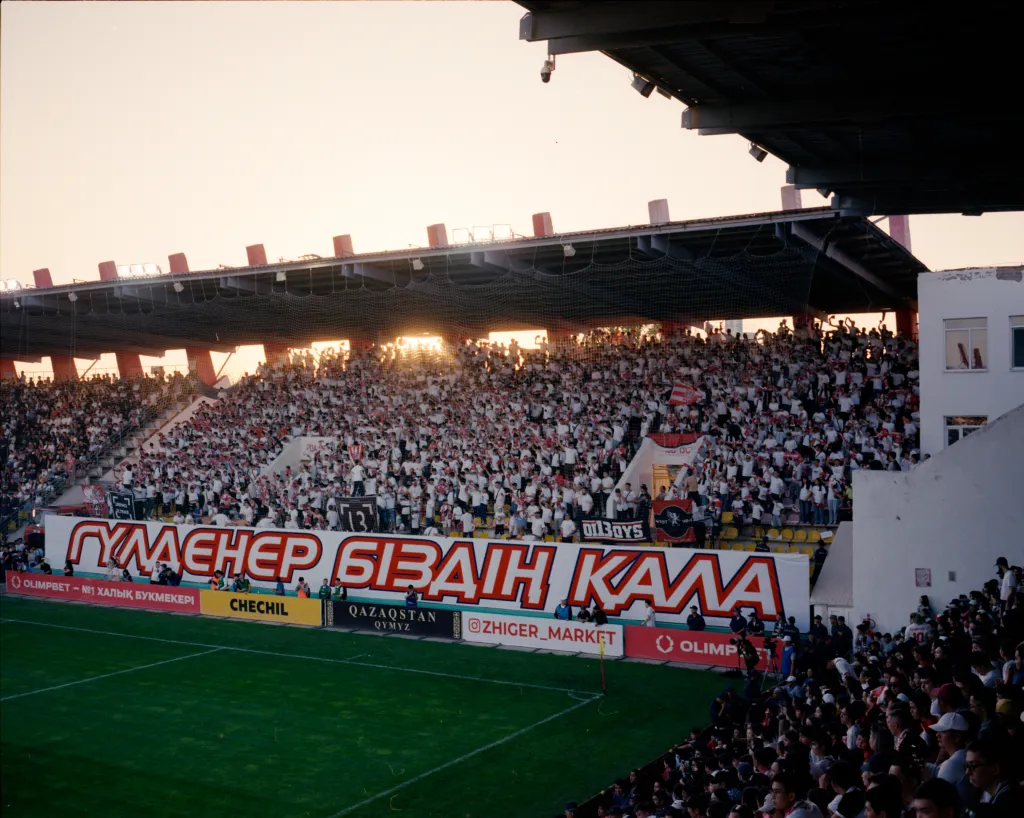
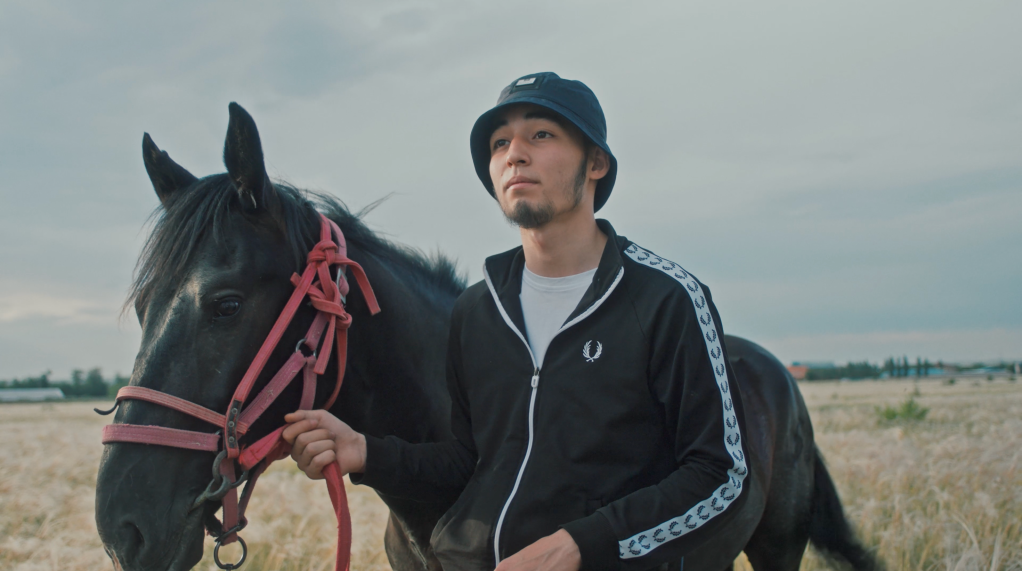
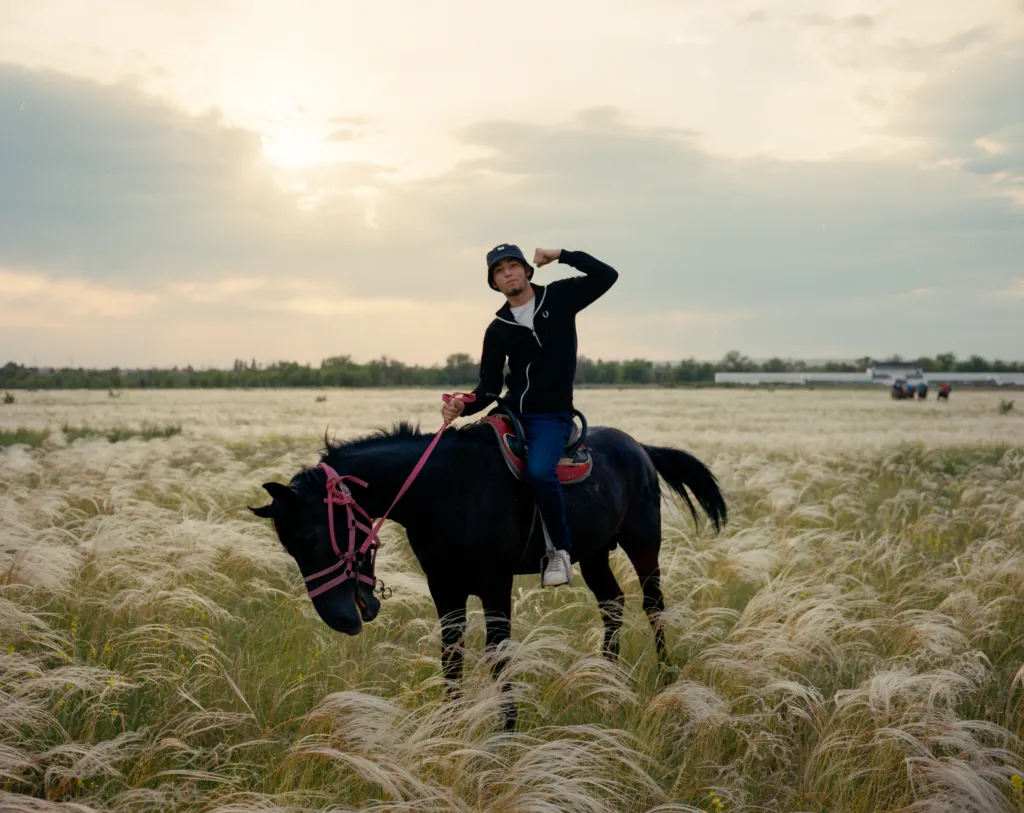
The relatively recent arrival of football in Central Asia has given rise to a new style of hooliganism. These crews mix British hooliganism with European ultras culture and ancient Kazakh tradition. They have organized punch-ups in secluded forests, ride horses across the open plains kitted out in Fred Perry, and run their own print shop producing banners and flags for Aktobe Central Stadium—to which they have been given their own set of keys.
Away Days, an independent documentary series from journalist Jake Hanrahan and videographer Jonny Pickup, embedded with the crew for their latest film Thirteen Sector. Following the lads in the lead-up to a big match against Kairat, it offers a surprisingly tender window into a hybrid hooligan scene, thriving 3000 miles from where it all began.
Watch Thirteen Sector below or uncensored at awaydays.tv.
VICE: When did you first come across 13 Sector and why did it interest you?
Jake Hanrahan: I’m fascinated with the whole hooligan forest-fighting scene. I’m always keeping an eye on Telegram channels that post updates from various firms—this one had a fight with that one, ten vs ten, so-and-so won. It’s just something I find interesting. Then one day I see this crazy fight. It was 38 vs 13. And I was like, who the hell would agree to 38 vs 13? On the channels it usually says where the fight is and what firm, and this one was in Kazakhstan. Hooliganism is a very unusual thing to have in Kazakhstan anyway. But 38 vs 13? Obviously the 13 got battered, but still. What guts these lads had.
I started looking through the channels a bit more, and saw dozens of announcements of hooligan firms having arranged fights in Kazakhstan. The biggest and most notorious group was 13 Sector, which is an umbrella group. There’s all these different firms but they’re all a part of 13 Sector, so I was like, right, they’re clearly the biggest and most active. I spent ages combing through Instagram and eventually came across some people involved. Most of them ignored me, but one lad said he wanted to talk. Luckily, his sister-in-law speaks perfect English. She became our fixer and translator. I don’t think he believed that we were serious until we got there. He just couldn’t believe that someone would travel all the way to Kazakhstan, to a pretty backwater area, to make a film about what they’re doing.
Football culture is relatively new in Kazakhstan and so is hooliganism, so they’re sort of developing alongside each other. What distinctions has that created in terms of how hooliganism operates and how it’s perceived there?
One of the big ones is the “hooltras” thing. And that’s not necessarily a Kazakh creation. There are hooltras elsewhere in Europe, but it’s a very small scene. In Kazakhstan it’s their main thing. The people in the stadium doing the ultra-fanatic stuff with the flares and the banners and the flags—they’re also the hooligans. Generally, in Europe, it’s not like that. Sometimes there’s crossover. They might steal each other’s flags or there might be a little fight here and there, but generally it’s not their vibe. In Kazakhstan, street fighting, forest fighting, ultras—it’s all the same thing.
It’s not like this everywhere in Kazakhstan but in Aktobe, at least, the club also understands that they really have to behave themselves. They can’t just steal the game away from the people, like clubs do in Europe, because 13 Sector will cause problems. As they should, in my opinion. Football was a working-class sport and now look at it. I saw a thing the other day that said World Cup Final tickets are going to be £3,000 minimum. Who in their right fucking mind can afford that? So I think it’s a good thing that shareholders of a football club have some fear of hooligans that will smack their arse if they start misbehaving.
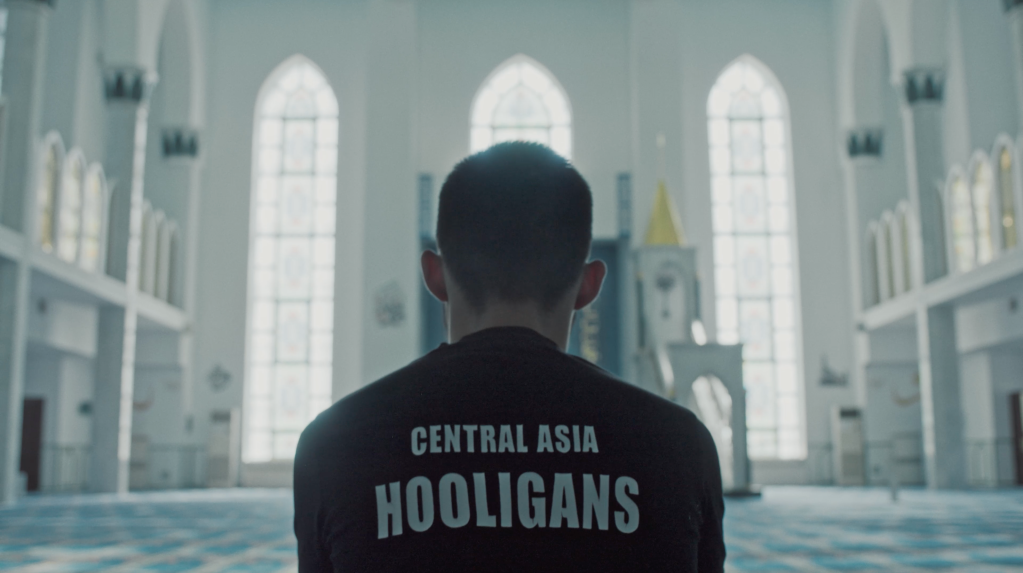
You’ve described hooliganism in Kazakhstan as a mash-up of British football hooliganism, European ultras culture, and ancient Kazakh tradition. What’s the through-line between all those things, if there is one?
I think it would probably be a kind of tribal rowdiness—but in a familial way. One thing people don’t always understand about hooligan firms is that people aren’t necessarily friends. It’s more like a family. You might not like your cousin, but it’s your cousin and you stand by them whatever, you know? It’s kind of like that. But generally the through-line is they’re all mad rowdy lads who don’t think they should have to make excuses for their natural behaviour in these worlds.
There are a few recognizably “British” moments in the film—like when they’re having pre-game pints and doing English football chants in Kazakh, or out on the plains riding horses in Fred Perry. What do you think it is about British hooligan culture that resonates with people in Kazakhstan?
I think it’s just because England is where hooliganism started. Now—unfortunately or fortunately, depending on how you want to see it—Britain is considered an absolute joke to every other hooligan scene in the whole of Europe. But there’s a part of that old-school thing that all hooligans nod back to. They might not be throwing chairs into café windows—and it’s good they’re not doing that, obviously—but I think all hooligans have this soft spot for the Brits because it’s where it all began. They probably all watched Football Factory and Green Street, terrible fucking films in my opinion, but still, you get the vibe.
I also think parts of Kazakh culture are quite similar to working-class British culture. The rowdiness, very abrasive mockery of family members all the time, hard work, pull your fucking boots up—there’s a lot of that. Then there’s the direct parallel with the Eastern European scene, which is the arranged forest fighting. And let’s be honest, old school hooliganism—running up and down trains throwing bottles and that—it’s not exactly as ballsy as going “Right, 10 vs 10, we meet in this field, stand together, and fight each other until one side is completely KO’d.” Obviously they have the spirit of old=school hooliganism, but their fighting is a lot more real.
“One thing people don’t always understand about hooligan firms is that people aren’t necessarily friends”
For a film about organized violence, Thirteen Sector is beautifully shot and actually quite serene in places. Did you want to make a film that flies in the face of people’s assumptions?
Definitely. That’s kind of the Away Days ethos: we never want to show anything one dimensionally. Mainstream media is very quick to tell you “this is bad, this is good.” They’ll be mealy mouthed when it comes to trying to sell away war crimes against children, but then shocked that we’re not condemning hooliganism. Personally, I think everyone has got it fucking backwards.
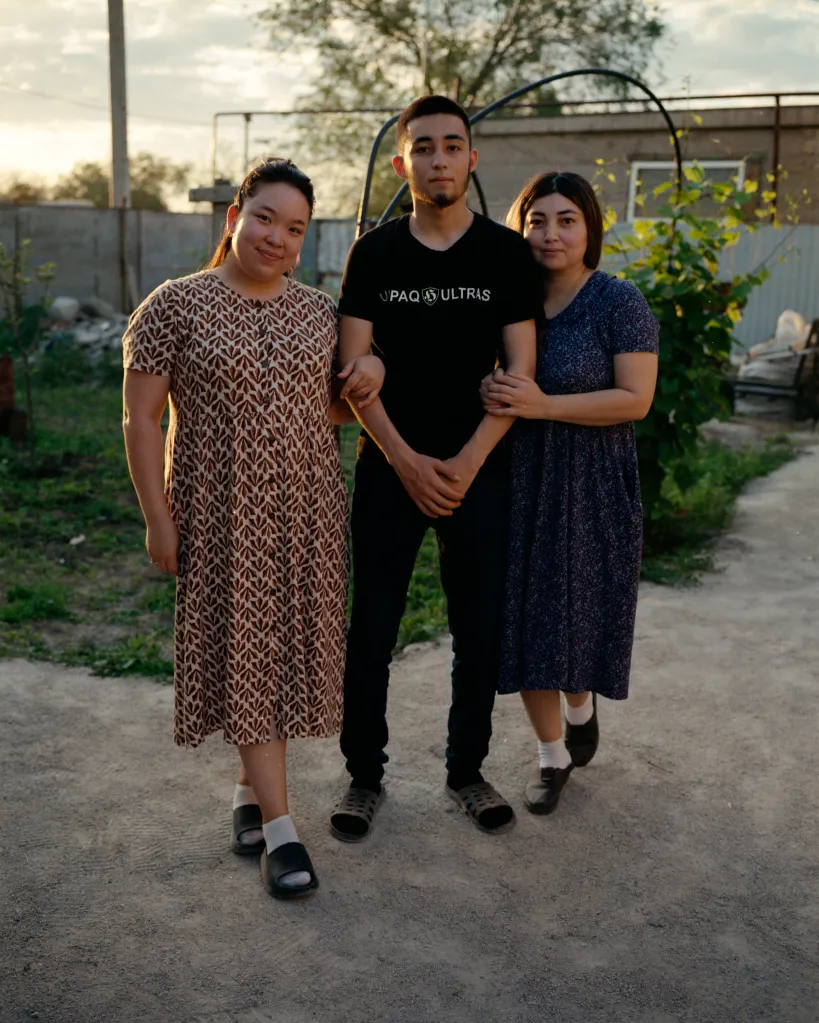
We spent a lot of time with 13 Sector. For almost two weeks we spent all night and day with them, we ate with them, we met their families, they cooked for us, we joked with them. These are good people. They work very hard. They’re not a drain on their society or country or community. Quite the opposite. But they’re fascinating people, because they do this mad hooligan shit. So we sought to make this film that was cool but also kind of soft, ironically. You see at the end, after the game, Asmir is just at home drinking tea with his mum. We didn’t have to stage that. That’s real. That’s what he does every day. Thirteen Sector is a film about rowdy young men who have formed this thing to make sense of their own world, in a world that tells them they shouldn’t be violent until some government tries to send them to die in a war they shouldn’t even be a part of.
People will happily fly off the handle to categorize things as “bad” because conventionally, in their minds, they don’t like it. So what if you don’t like it? Maybe it’s not for you, and that’s fine.
When talking about hooliganism, Farkhat, one of the founders of 13 Sector, describes it as “honest.” What do you think about that?
I think he’s completely accurate in one sense. It is about as honest as it gets. You can’t run, you can’t hide. The forest fighting scene is very hidden. Fights that happened recently are never posted in full online. In fact, when firms do that they get accused of being “social media firms” and lose favor with the whole community. So I think it is an honest thing that they’re doing, in the sense that they’re being honest with themselves. Is there a lot of dishonesty in the hooligan community because of drama? Yeah, of course. Just look at Celtic and Rangers. Anything happens between them and they’re all lying their mouths off, and of course they would [laughs]. But in terms of the activity itself, I think it’s very honest.
If people are admitting to themselves that they have this fire inside them that’s so strong that they want to get alongside other people who also have that fire, somewhere they don’t have to explain it away or hide it, and act it out without hurting anybody that doesn’t want to be hurt—how fucking honest is that? I think it’s a lot more dishonest to pretend that you don’t have that in you and beat yourself up about it. A lot of people have this internal fire, and instead of finding a way to get it out or turn it into something positive, at least for themselves, they just become horrible, bitter little people.
“They have the spirit of old-school hooliganism, but their fighting is a lot more real”
Did you notice a different attitude among the younger hooligans? One lad you interview, Asmir, talks about his first fight in almost spiritual terms.
The doc doesn’t really capture this but a lot of the younger lads don’t drink. Asmir was smoking, you’ll notice, but he doesn’t drink. A lot of the younger lads are like that. They’ll go out and fight, but they’re not drinking. They don’t do drugs. I actually spoke to one of the older boys off camera about it, and he mentioned that the younger lads are mostly straight edge. I asked if it was a religious thing, and he said no, it’s just kind of what they prefer. There is a strong emphasis on that in quite a few Eastern European hooligan firms as well, so I do wonder if they got it from there. But Asmir is an eloquent young lad. He’s got a good family around him, and I think he just felt confident enough to talk about it like that. He couldn’t have been more real about it. I thought it was a great moment.
In Kazakhstan there’s no distinction between ultras and hooligans, and firms have a direct relationship with the clubs. What do you reckon the future of hooliganism will look like there—do you think it’ll continue to develop on its own terms?
A lot of other cities and areas are trying to emulate what 13 Sector have. Even if they hate them, they want to be like them in that respect. I even saw a guy from Kairat [a rival club] message the Away Days account saying, “I’m Kairat but fair play, Aktobe do have the biggest, most active, toughest hooligan ultras scene.” I thought that was interesting. The hooligan tit for tat is extremely petty usually. It’s very rare that someone will admit something like that. I’m not sure the government will leave them alone as much as they do now, but at the same time I think the government is more concerned with the possibility of political uprising. It’s quite an authoritarian leadership so I think there’s a likelihood that as long as the hooligans keep it out of the stadiums, away from the games, and away from normal supporters, they’ll be left alone.
How would you describe a hooligan in your own words? Who is he? What makes him?
A hooligan, as in football hooligan, is somebody that fights other hooligans who support different teams because both sides enjoy the tribalism of the football, but above all enjoy the tribalism that comes from group fighting alongside people that are not necessarily your friends, but in your tribe. The hooligan chooses to live outside of society. Not always—some hooligans are criminals and that’s all they do, and some hooligans do normal shit. I know a very good youth worker who’s a hooligan. I know a lawyer who’s a hooligan. I’ve met a primary school teacher in Sweden who’s a hooligan. But I think the hooligan is a person who chooses, for some time, to live outside of society to satiate his own draw to a kind of violence that’s not really that dangerous in the grand scheme of things.
People in general tend to have a problem with violence as recreation. Why do you think that is and what would you say to that?
The reality is everybody has a bit of recreational violence within themselves, it’s just certain people are more honest about it than others. Take the wine mum who gets her rocks off on a Friday night watching true crime documentaries about young kids getting kidnapped and murdered—when you watch and enjoy those kinds of things, you’re indulging in a recreational form of violence. Do I think there’s anything wrong with that? Fuck no. But I also don’t think there’s anything wrong with doing it in a more honest form, which is what the hooligans do.
“The hooligan chooses to live outside of society”
The thing you have to remember is no one gives a fuck. If you’re into recreational violence as a hooligan, what people think of you does not matter. That’s really universal within the hooligan scene. Do you think they give a fuck that we even made this film? Do you think any of them other than 13 Sector give a fuck that I gave them a fair whack? I’m just a journalist and they couldn’t care either way, and I think that’s brilliant. I hate Millwall, Millwall are mostly far-right dickheads, but they do have one of the most honest chants: “No one likes us, we don’t care.” I think that’s a very hooligan-esque attitude. It’s not about indulging in something that makes everybody mad or upset. It’s irrelevant to them. That’s the point. It’s irrelevant. They do it because it’s their own world.
Recreational violence is something people have a problem with until they need protecting. Not to be too deep, but I think that in itself raises a lot of questions about the honesty of society. There’s a book by James Montague called 1312: Among the Ultras, and in it he makes the very good observation that in pretty much every country that has had a grassroots revolution, from Egypt to Ukraine, the tide changed when hooligans got involved. Fundamentally, these are people that you need in your society when you need helping. You can’t then throw them to the kerb and tell them they’re maniacs when everything’s peaceful again.
The funny thing is, these hooligans that a lot of people hate, are also the people that build their fucking houses and drive them to work. You’d be amazed at who gets involved in this stuff. You don’t know who the hooligan is.
Watch Thirteen Sector along with all Away Days’ uncensored documentaries at awaydays.tv.
The post The Kazakh Football Hooligans You Never Knew Existed appeared first on VICE.