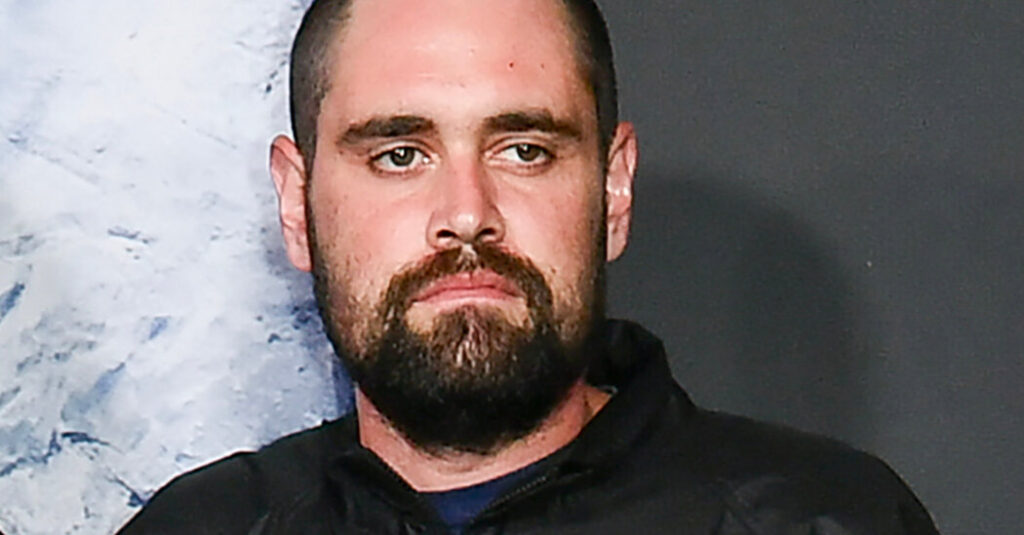
Nick Reiner, who has been charged with the murder of his parents, Rob Reiner and Michele Singer Reiner, was placed into a yearlong mental health conservatorship in 2020, according to two people with knowledge of the legal arrangement.
A clerk with the Los Angeles Superior Court said the conservatorship ended in 2021. Steven Baer, a licensed fiduciary who was appointed as the conservator for Mr. Reiner, said mental illness “is an epidemic that is widely misunderstood and this is a horrible tragedy.” Both people declined to provide further details about the arrangement, citing confidentiality.
The revelation of the conservatorship underscores the severity of the mental health challenges Mr. Reiner faced in recent years, issues that are likely to be central to his legal defense.
Rob Reiner, the director of movies such as “This Is Spinal Tap” and “The Princess Bride,” and his wife were found stabbed to death in their Los Angeles home on Dec. 14. If Nick Reiner were convicted of two counts of first-degree murder, he could be sentenced to life in prison without parole or the death penalty. He is being represented by a public defender and has not entered a plea.
Mr. Reiner, 32, has a serious mental illness and had struggled in the weeks before his arrest with a change in his medication, two other people familiar with his health told The New York Times on the condition of anonymity to discuss sensitive medical information. One of those people said he had been diagnosed at different times with schizophrenia and schizoaffective disorder.
The medication Mr. Reiner had been taking was effective, the other person said, but side effects led him to switch to a new medication about a month before his parents were killed.
The Los Angeles County public defender’s office declined to comment, as did a representative for the district attorney’s office.
That Mr. Reiner, who had battled drug addiction starting in his teenage years, had been in a conservatorship indicates that a judge determined he had a “grave disability,” meaning he was unable to provide for his basic personal needs for food, clothing or shelter as a result of a mental health disorder.
“You have to be pretty severe to be placed on a mental health conservatorship in California,” said Lee Blumen, a lawyer with expertise in such cases. “Of all the people who come into this system, a very small group of people actually get placed on conservatorship.”
Mr. Reiner was put under what is known as an L.P.S. conservatorship, based on a 1967 law — the Lanterman-Petris-Short Act — that established a new process for involuntary psychiatric treatment in California. It is distinct from the system that is commonly used to take over medical and financial decision-making for people with dementia or a developmental disability; that system drew significant scrutiny for its use in controlling the affairs of the pop star Britney Spears.
L.P.S. conservatorships typically originate from an involuntary psychiatric hospitalization and are initiated by a doctor. In Los Angeles County, officials from the Office of the Public Guardian then assess whether a conservatorship is warranted and make their case to a judge.
The system allows a professional conservator or a person close to the patient, such as a family member, to make decisions about medical treatment, including psychiatric medications. It lasts one year, after which the conservator has the opportunity to try to renew it.
It is unclear why Mr. Reiner’s conservatorship did not last beyond one year. The county’s Department of Mental Health, which oversees the public guardian’s office, declined to comment or provide any documentation from the legal proceedings, citing patient confidentiality.
Mr. Reiner had long struggled with drug addiction and spoken about it publicly, co-writing a 2016 movie that was directed by his father and was loosely based on the family’s experience with his heroin and cocaine use. He had been in drug treatment about 18 times as a teenager, circling through residential facilities across the country and sometimes experiencing homelessness amid conflict with his parents about returning to rehab.
He has alluded to broader behavioral health issues, saying in an interview alongside his father that “it was more than drugs — it’s really always about more than that.” But he and his family have not spoken publicly about his psychiatric diagnosis or treatment.
Schizophrenia is a severe brain disorder characterized by abnormal thinking, often involving delusions, paranoia or hallucinations. Schizoaffective disorder combines symptoms of schizophrenia with mood episodes, which can be manic or depressive. Both disorders are usually managed with a combination of medications and therapy.
Most antipsychotic medications work by blocking receptors for the neurotransmitter dopamine, which affects functions like motivation, reward, mood, attention and sleep. In most patients, they can reduce symptoms like hallucinations and paranoia to a manageable level.
But they have serious side effects including weight gain, which contributes to a high rate of cardiac disease and early death among people with psychotic illnesses. Many patients stop taking the medications, saying that they leave them sluggish and unmotivated. Researchers have found that as many as half of patients do not take antipsychotic drugs as prescribed, often leading to relapse and hospitalization.
Speaking generally, any switch in medication for a disorder like schizophrenia is best undertaken over several weeks, said Dr. Demian Rose, a professor of psychiatry and behavioral sciences at the University of California, San Francisco. A slow “cross taper” helps ensure that the new medication is effective and that the old medication is not withdrawn too quickly, he said, adding that discontinuing an antipsychotic medication after long use can induce withdrawal symptoms like insomnia, agitation and restlessness.
Mr. Reiner is being held at the Twin Towers Correctional Facility, a county jail in downtown Los Angeles. When his previous lawyer, Alan Jackson, left the case last week for reasons he did not provide, he told reporters that “pursuant to the law in California, Nick Reiner is not guilty of murder.”
The comments indicated that Mr. Jackson may have been preparing a defense centered on mental health. It is unclear whether Mr. Reiner’s current counsel, a public defender, will take a similar approach.
Nathan J. Hochman, the Los Angeles County district attorney, told reporters this month that he was confident a jury would ultimately convict Mr. Reiner for the “brutal murders of his parents.”
Considering the mental health issues at play, Mr. Reiner’s counsel will have to assess whether he is competent to understand the court proceedings or help with his own defense. Questioning his competency would initiate a process that involves medical examinations and culminates in a decision by a judge or jury. It can take months or years of medical treatment and court proceedings for a defendant to be found competent to stand trial.
If Mr. Reiner is deemed competent, he can seek to prove at trial that he is not guilty by reason of insanity. In such cases, the defense must convince a jury that mental health problems made the defendant unable to understand past actions and incapable of distinguishing right from wrong.
But winning acquittals in such cases is rare, said John Kip Cornwell, a law professor at Seton Hall who has expertise in criminal cases involving mental health issues. It can be challenging, he said, to prove that someone, even when experiencing psychosis and paranoia, did not have some understanding that killing a person was wrong. Juries can also be unwilling to let violent crimes go unpunished.
“Jurors want, instinctively, for justice to be served,” Professor Cornwell said, “and they’re uncomfortable letting someone be found ‘not guilty’ when an innocent victim was killed.”
If jurors reach a verdict of not guilty by reason of insanity, it means they decided the defendant committed a crime but cannot be held legally responsible. The defendant would typically be committed to a state-run psychiatric hospital and can eventually petition the court for release. That requires convincing a judge that the person does not pose a danger to the community.
Shawn Hubler contributed reporting.
Tim Arango is a correspondent covering national news. He is based in Los Angeles.
The post Nick Reiner Was in a Mental Health Conservatorship in 2020 appeared first on New York Times.