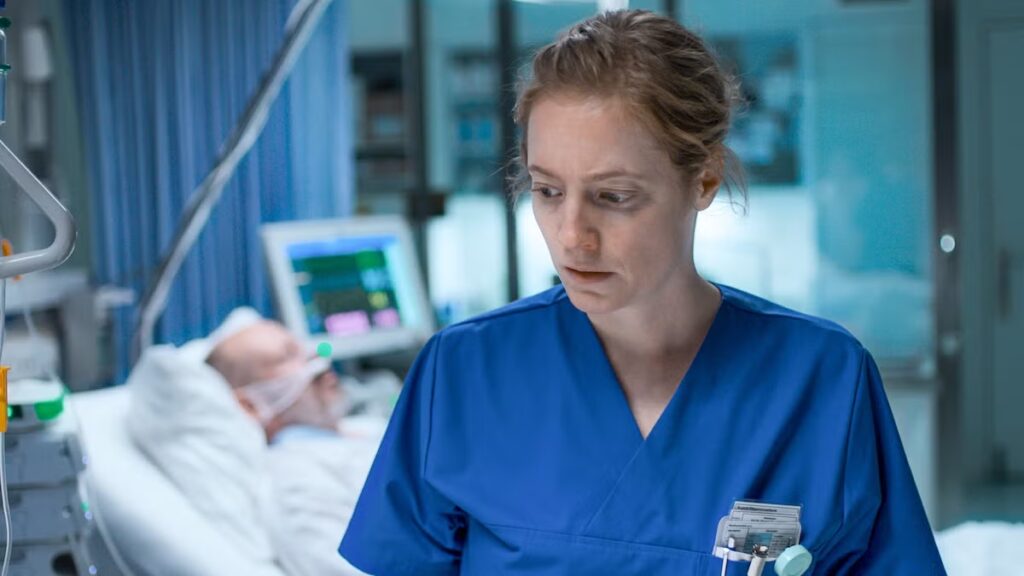
Swiss director Petra Volpe was in the final stages of making her movie “Late Shift,” which follows a nurse through one tension-racked shift at the hospital where she works, when she first heard about the American television series that was going to follow doctors through a tension-racked shift at the hospital where they work.
“I read about ‘The Pitt’ pretty late,” said Volpe, who is representing Switzerland in the Oscars international race for the second time with “Late Shift,” eight years after her film “The Divine Order” did so.
“And when I watched it, we were in post-production. I binge-watched it, and I absolutely adored the show,” she added. “I think it’s fantastic. The writing, the acting, the staging – it’s just high art. But it focuses on the doctors, and nurses are not at the center of the narrative. We wanted to show the complexity of their work.”
In “Late Shift,” Volpe has about 90 minutes to tell the story of one shift, as opposed to the 16 episodes and 13 hours of “The Pitt.” The result is concise but gripping, landing the film a spot among the 15 shortlisted films in the Best International Feature Film category and drawing additional attention to the gifted German actress Leonie Benesch, who plays the nurse Floria and has in the last three years also appeared in the Oscar-nominated films “The Teacher’s Lounge” and “September 5.”
Volpe spoke to TheWrap from the Palm Springs International Film Festival, where she was appearing on a panel of filmmakers from the shortlisted international films.
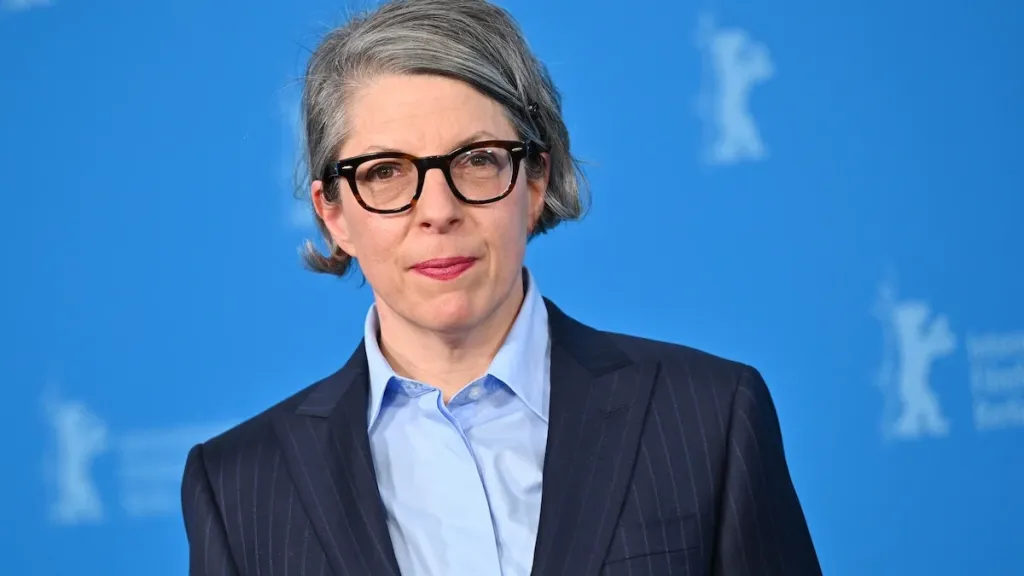
TheWrap: Why this subject matter for a film? Volpe: It’s been on my mind for many years, because my parents both worked in the hospital – my father in sanitation, my mother as a secretary. And then I lived with a nurse for many years, and I was so in awe of what she did every day. She would come home and tell me about how her day was, and everything I did felt so banal. She had to deal with death and illness and loneliness and all the big human topics that we tried to avoid as best as possible. And that was her daily experience.
It stayed with me, but I didn’t quite find a way to tackle this subject. And that’s how I tend to work: Something percolates in my mind for many years until I find the right form for it.
That came when the topic became more acute for me after COVID, because we were all clapping on the balconies, we were celebrating the nurses, and then it kind of disappeared again. And you read media all the time about the staffing shortage globally and in the United States. It seems to be one of those topics that’s always cooking somewhere, but nobody’s really latching onto it.
I felt like, how do I make something about a topic that remains very abstract for people? How do I make it something that people feel engaged with and touched with? And then I read a book by a German nurse (“Unser Beruf ist nicht das Problem: Es sind die Umstände” by Madeline Calvelage), and she described just one shift. And when I read it, I thought, this is like a thriller, but this is her everyday life. That’s the movie.
Did you have to think carefully about how much you could put into a single shift? The thing is, our shift isn’t even the most dramatic one. (Laughs) We were very consciously to show a pretty normal shift. I’ve had so many screenings where nurses said, “This is just my every day.” But the audience feels exhausted after the movie, and that was very intentional. I wanted the movie to be like a physical experience, to really put people in the shoes of a nurse for 90 minutes that felt like eight hours.
I think you can show a lot of things in one shift. You can show the everyday challenge of an understaffed ward and the complexity a nurse encounters on a shift like that. In a very condensed way, you can tell a big story.
The way the film is shot gives it a real sense of immersion. From the beginning, the basic idea was to completely stay in the perspective of the nurse. Not to go into the perspective of the patients, but really tell it almost like a video game. We constructed it like a computer game that she can’t win, because that’s just the everyday reality.
We wanted to shoot it to feel like one ongoing shot, even though we couldn’t technically do that. We have a lot of long shots in the beginning, and they reflect Floria’s enthusiasm: She’s strong, she’s motivated, she thinks she can handle the shift. And all of that came from the observation of the actual nurses. My DP and I went to the hospital and observed the pace and the rhythm of the work, and we wanted to reflect that, and reflect the physicality and the stress level of the shoot.
Obviously, you have to be meticulously accurate when you’re depicting medical work. That was paramount. You cannot make any mistakes. Madeline, the author of the book, became a consultant, and I did dozens and dozens of interviews with other nurses. And we had so many consultants on the set to watch every single take. Of course, because it’s a cinematic narration, we had to find a way to condense certain actions.
Did you ever have disagreements with the consultants about how you should do things? Yeah, definitely. There were things we did that nurses sometimes do in the course of everyday life that they would learn not to do in nursing school. But I wanted it to look real, not like a nursing-school film. For example, when she opens one syringe, she makes a little gesture that I observed in the hospital, but it’s actually forbidden in nursing school. But we felt like we wanted to show it, because it’s cool.
I have a funny anecdote. We had quite a clash of cultures with one nurse consultant. It was her first time working with a film team. And when things got a bit heated in prep, she once yelled at us and said, “If we worked like you guys, everybody would be dead!” (Laughs)
There’s definitely humor in the film at times, but is it difficult to figure out how to bring that in? You’re in an arena where the stakes are high and people can die at any moment. Yeah. But because of that, nurses are some of the people with the darkest humor. You don’t want to sit at lunch or breakfast with a bunch of nurses. So humor is really important, and I put the humor pieces very consciously at one particular moment, because that’s when I wanted the people to feel release.
The moment you’re talking about has to do with a pretty shocking and also very satisfying action by Floria. Yes. We shouldn’t spoil that, but honestly, that’s the only scene where all my nurse consultants said, “That’s unrealistic. We would never do that.” And I thought, this is the one moment where as a filmmaker and artist, I will take creative license. I told them, “I know you would never do that, but I know you dreamed and thought about it.” And they all laughed and said, “Yes, of course we did!”
In the screenings I did in Germany and Switzerland with rooms full of nurses, that scene got a standing ovation. (Laughs) It’s a gift to the nurses, this scene.
Apart from the subject of accuracy, were there particular challenges in making this film? The thing that kept making me nervous was the idea that we were just showing a nurse doing her job. My producers and I wondered, is that enough? The movie doesn’t do any of the things that classical movies do. She doesn’t have an arc, she doesn’t learn anything.
And also, do we feel enough for these patients? Since we don’t spend a lot of time with the patients, only as much time with them as she does, how will the emotionality of the movie work? It’s so outside of the narrative convention of cinema, so that made us a bit nervous.
I remember my producer sat there during the first screening like, “Oh, my God, maybe they think it’s boring. She’s just doing her job.” It was a huge relief when people were completely engrossed and touched by it.
Best Picture
Contender Probability
-

One Battle After Another
Probability: 100%
No change: 0%
Show notes Hide notes
Nominations: SAG, PGA, GG, Critics Choice
Wins: GG, Critics Choice
“One Battle After Another” would be the third consecutive Best Picture nominee for director Paul Thomas Anderson following “Licorice Pizza” and “Phantom Thread.”
-

Hamnet
Probability: 100%
Up: 2.70%
Show notes Hide notes
Nominations: SAG, PGA, GG, Critics Choice
Wins: GG
“Hamnet” could join “Hamlet,” “West Side Story” and “Shakespeare in Love” as the fourth Shakespeare-related story to win Best Picture.
-

Sentimental Value
Probability: 97.3%
Down: -0.26%
Show notes Hide notes
Nominations: PGA, GG, Critics Choice
Joachim Trier’s “The Worst Person in the World” picked up nominations for Best International Feature and Best Original Screenplay, but it was not recognized in Best Picture.
-

Sinners
Probability: 96.77%
Down: -0.53%
Show notes Hide notes
Nominations: SAG, PGA, GG, Critics Choice
Only eight horror films have been nominated for Best Picture. You can read William Bibbiani’s breakdown here.
-

Frankenstein
Probability: 96.77%
Down: -0.53%
Show notes Hide notes
Nominations: SAG, PGA, GG, Critics Choice
No film starring a title character of the Universal Monster movies has ever been nominated for Best Picture.
-

Marty Supreme
Probability: 84.62%
Up: 2.80%
Show notes Hide notes
Nominations: SAG, PGA, GG, Critics Choice
Timothée Chalamet has starred in seven Best Picture nominees across the past 10 Academy Awards ceremonies.
-

Bugonia
Probability: 69.23%
Down: -2.99%
Show notes Hide notes
Nominations: PGA, GG, Critics Choice
“Bugonia” would be Yorgos Lanthimos and Emma Stone’s third collaboration (following “The Favourite” and “Poor Things”) to get a Best Picture nomination.
-

Train Dreams
Probability: 56.52%
No change: 0%
Show notes Hide notes
Nominations: PGA, Critics Choice
Joel Edgerton hasn’t starred in a Best Picture nominee since 2012’s “Zero Dark Thirty.”
-

Weapons
Probability: 21.43%
Up: 0.01%
Show notes Hide notes
Nominations: PGA
Zach Cregger could follow in Jordan Peele’s footsteps as a sketch comedy star who directed one of the few horror movies to be nominated for Best Picture.
-

Wicked: For Good
Probability: 20.93%
No change: 0%
Show notes Hide notes
Nominations: Critics Choice
Prior to 2026, only 11 sequels have been nominated for Best Picture.
-

Jay Kelly
Probability: 20.93%
No change: 0%
Show notes Hide notes
Nominations: Critics Choice
Noah Baumbach’s last Oscar nomination was not for a film he directed, but for co-writing Greta Gerwig’s “Barbie.”
-

Wake Up Dead Man: A Knives Out Mystery
Probability: 3.06%
No change: 0%
Show notes Hide notes
Both of Rian Johnson’s prior “Knives Out” movies were nominated for screenplay awards. Neither got a Best Picture nod.
-

Springsteen: Deliver Me From Nowhere
Probability: 3.06%
No change: 0%
Show notes Hide notes
Biopics about musicians have been nominated for Best Picture at the last three Academy Awards ceremonies. At least one biographical film has been in every Best Picture lineup since 2008 — before the Academy expanded from five nominees.
-

Sorry, Baby
Probability: 3.06%
No change: 0%
Show notes Hide notes
Eva Victor could join a short list of filmmakers whose debut features were nominated for Best Picture.
-

Song Sung Blue
Probability: 3.06%
No change: 0%
Show notes Hide notes
Hugh Jackman has not starred in a Best Picture nominee since 2012’s “Les Misérables.”
-

Nuremberg
Probability: 3.06%
No change: 0%
Show notes Hide notes
It’s been more than 60 years since Stanley Kramer’s “Judgment at Nuremberg” was nominated for 11 Oscars
-

Is This Thing On?
Probability: 3.06%
No change: 0%
Show notes Hide notes
After “Maestro,” Bradley Cooper joined a rare class of filmmakers, including Orson Welles, James L. Brooks and Frank Darabont, whose first two features were nominated for Best Picture.
-

A House of Dynamite
Probability: 3.06%
No change: 0%
Show notes Hide notes
“A House of Dynamite” would be Kathryn Bigelow’s first Best Picture nomination in more than a decade.
-

Hedda
Probability: 3.06%
No change: 0%
Show notes Hide notes
No adaptation of a Henrik Ibsen play has been nominated for Best Picture.
-

Avatar: Fire & Ash
Probability: 3.06%
No change: 0%
Show notes Hide notes
“Avatar” could join “The Godfather” and “The Lord of the Rings” series as the only franchises with three consecutive Best Picture nominations.
-

F1
Probability: 2.14%
Down: -19.28%
Show notes Hide notes
Nominations: PGA
Read TheWrap’s coverage with the team behind “F1” here
-

Nouvelle Vague
Probability: 1.79%
Up: 0.10%
Show notes Hide notes
Nominations: GG
“Nouvelle Vague” is one of two films directed by Richard Linklater in contention for Best Picture this year.
-

No Other Choice
Probability: 1.79%
Up: 0.10%
Show notes Hide notes
Nominations: GG
Like Jafar Panahi, Park Chan-wook has never had a film nominated for an Oscar across his acclaimed career.
-

Blue Moon
Probability: 1.79%
Up: 0.10%
Show notes Hide notes
Nominations: GG
Richard Linklater and Ethan Hawke waited years to develop “Blue Moon” until Hawke had appropriately aged into the role.
-

The Secret Agent
Probability: 1.67%
No change: 0%
Show notes Hide notes
Nominations: GG
Last year, “I’m Still Here” became the first Brazilian film and the first Portuguese-speaking film nominated for Best Picture. “The Secret Agent” would be the second.
-

It Was Just An Accident
Probability: 1.67%
No change: 0%
Show notes Hide notes
Nominations: GG
Despite an acclaimed career, Jafar Panahi has never had a film nominated for an Oscar.
See All + See Less –
The post ‘Late Shift’ Director Breaks Down Her Swiss Film’s Spin on ‘The Pitt’ appeared first on TheWrap.