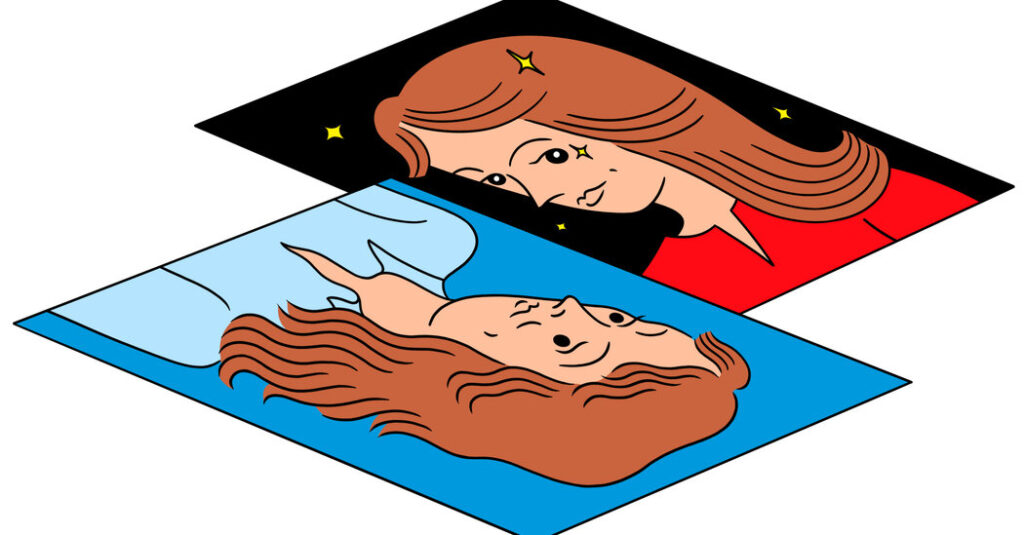
Photo editing tools, filters and artificial intelligence image generators are more accessible than ever.
Have you used them to enhance photos of yourself? If not, would you? Do you think posting such images, without revealing that they were edited, is dishonest? Or is it totally acceptable, given the world we live in today?
In “Can I Use A.I. to Look Better Online?,” The Ethicist column in The Times Magazine took on these questions. A reader wrote in with the following issue:
I recently used an artificial-intelligence program to create a headshot for my social media accounts. The program asked me to upload several pictures of myself and select clothing choices and background locales. It then spit out a number of A.I.-created photos.
I was pleased with the results. The A.I. photos looked like me, just slightly improved — fuller hair, fewer wrinkles, etc. I uploaded the best one to my social media accounts and, within minutes, over-the-top compliments started rolling in. “Stunning,” “Crazy gorgeous!” — the commentary went on for days.
My husband thinks I’m being dishonest by not disclosing that my headshot was generated by A.I. I disagree. Individuals and magazines publish photoshopped pictures all the time without disclosure. So I ask you: As a private individual, do I have an obligation to mark my profile picture on social media as A.I.-generated? — Name Withheld
Students, tell us:
-
Before reading the Ethicist’s response, how would you answer the reader’s question? Do you think it’s OK for ordinary people to use A.I.-generated images to make themselves look better online? Why or why not?
-
Now read the Ethicist’s reply. What points do you agree or disagree with? Are you satisfied with his overall answer? Explain.
-
Have you ever digitally enhanced your appearance in a photo, whether through the use of editing tools, a filter or A.I.? If so, what motivated you to do so? Did you have any questions about whether posting an enhanced image was ethical? If you don’t edit your photos, why not?
-
How far is too far when it comes to altering images, in your opinion? In other words, at what point does an alteration cross the line from being harmless to being dishonest? Why?
-
Both the letter writer and the Ethicist note that so many of the images we see now, whether on social media or in magazines, are photoshopped, edited or enhanced in some way. What does it feel like to be a teenager growing up in a time like this? Does it affect how you see yourself or others in any way?
Students 13 and older in the United States and Britain, and 16 and older elsewhere, are invited to comment. All comments are moderated by the Learning Network staff, but please keep in mind that once your comment is accepted, it will be made public and may appear in print.
Find more Student Opinion questions here. Teachers, check out this guide to learn how you can incorporate these prompts into your classroom.
Natalie Proulx is an editor at The Learning Network, a Times free teaching resource.
The post Is It OK to Alter Photos of Yourself to Look Better Online? appeared first on New York Times.