Three weeks of large-scale protests in Iran, met with a deadly government crackdown, have pushed the country into crisis on a scale rarely seen since the Islamic Revolution of 1979.
Triggered by worsening economic conditions and a collapse of the Iranian riyal, the protests swiftly evolved to encompass diverse streams of discontent, including widespread calls for an end to the Islamic Republic.
Iran’s government has responded with a crackdown leaving at least 2,000 people dead and more than 16,000 arrests, according to a rights group, amid an encompassing communications blackout.
The protests stand out in Iran’s recent history but have many precedents. Here’s how they echo or build on previous waves of discontent, and how they diverge.
Waves of dissent
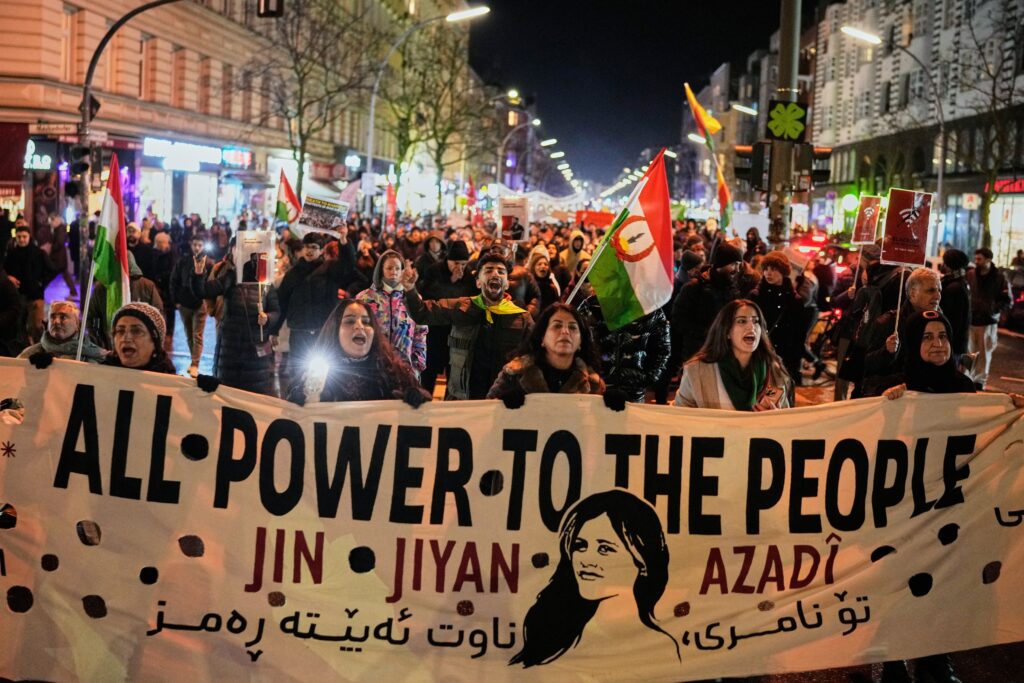
Iran has seen successive protest movements since the 1979 revolution established the Islamic Republic: student-led protests in 1999 calling for democracy; the 2009 Green Movement over demands for free elections; economically motivated protests in 2017-2018 that evolved into anti-government demonstrations; unrest over increased gas prices in 2019; the Women, Life, Freedom movement that began in 2022 with the death of a woman in the custody of morality police and expanded into a broad-based, women-led expression of dissent; and mobilizations around the country’s ongoing water crisis, including a major one last year.
The government often responded to these movements with violent crackdowns, communications outages and mass arrests. But the ongoing wave of protests is broader than previous ones, has sparked a more expansive crackdown and comes at a moment of heightened external pressure on Iran, analysts say.
Larger scale, deadlier crackdown
“Uprisings in Iran and protests in Iran are nothing new,” said Narges Bajoghli, a professor of Middle East studies and anthropology at Johns Hopkins University. “But one of the things that makes this different is that it is nationwide and it’s spread quickly.”
The protests began Dec. 28, when Tehran’s Bazaar shut down as merchants went on strike. The Bazaar, which was a key ignition point for the Islamic Revolution itself, serves as a commercial hub and weather vane, deeply enmeshed in the country’s economic life.
At least “2,003 people have been killed and more than 16,700 arrested” in the crackdown on protests, Skylar Thompson, the deputy director of the Virginia-based Human Rights Activists News Agency, said Tuesday. The Washington Post could not independently verify the toll in part because of the media and internet blackout.
“No other movement compares to this in terms of scope and intensity,” said Navid Pourmokhtari, a professor of law and governance at Athabasca University in Canada and the author of a book on the Green Movement. “It started from the peripheries and cascaded over into more than 100 cities.”
Sparked by the death of 22-year-old Mahsa Amini in 2022 in the custody of so-called morality police after being detained for an alleged violation of headscarf rules, the Women, Life, Freedom protests, which took on the name of a chant among demonstrators, met with a government crackdown that left more than 550 people dead, according to rights groups.
The death toll in the ongoing protests “is already four times what we documented during the Woman, Life, Freedom protests,” Thompson said. “This is an escalation in both speed and scale. We are also seeing forced confessions extracted at an unprecedented rate.”
Death figures for crackdowns on protests in Iran are difficult to confirm in real time or even after the fact because of government communication blackouts and unreliable official tolls. At times, the Iranian regime has barred families from taking their loved one’s bodies, obtaining independent coroner’s assessments or even publishing obituaries.
At least four protesters were killed in the 1999 student-led protests; 70 in the 2009 Green Movement; and 41 killed in the 2017-2018 demonstrations that started over economic grievances but soon turned political as people around the country chanted anti-government slogans, according to the Center for Human Rights in Iran, a New York-based group.
At least 1,000 people were killed in the 2019 protests triggered by increasing gas prices, the group said, a figure that may be a “significant undercount due to media suppression, bodies removed by security forces, inconsistent reporting of causes of death, and families being pressured about cause-of-death documentation.”
The latest wave of protests appears to have rallied a wide anti-government coalition, analysts say, even more so than the similarly decentralized Women, Life, Freedom movement, which came to encompass a broad range of grievances.
“This movement can best be labeled a movement of movements and that’s the difference between this and others before this,” Pourmokhtari said. “It’s a mega movement comprised of smaller opposition groups including the bazaaris, youth, women, students, teachers and others.”
External pressure
The protests, more so than any before, are unfolding amid dire economic conditions in Iran worsened by years of U.S. sanctions, many imposed by U.S. President Donald Trump. They also come in the wake of a 12-day war with Israel in June, during which the United States launched strikes on Iranian nuclear facilities.
External pressures have compounded with internal ones. “The Iranian state sees these protests as part of the ongoing war,” Bajoghli said. “We got a ceasefire of bombs and missiles flying but there was no real end to that conflict.”
Trump — who is weighing the possibility of another military intervention in Iran — said in a statement this week that “help is on its way” to anti-regime protesters, and warned the regime that it will pay a “big price.” Trump also imposed a 25 percent tariff on goods from countries trading with Iran.
On Wednesday afternoon, Trump said that Iran might have ceased its crackdown, an assessment that could not be independently verified, leaving open the question of where he stood on the matter of U.S. strikes.
Upon his return to office last year, Trump restored a “maximum pressure” sanctions policy on Iran from his first term, after withdrawal from the Obama administration’s 2015 nuclear deal.
Iranian authorities have accused the U.S. and Israel of encouraging protests and interfering in domestic politics.
“Many believe that the recent events that happened these days were the thirteenth day of the U.S.-Israeli aggression against our country,” said Esmaeil Baqaei, the Iranian foreign ministry spokesman Monday, state media reported.
The post Iran’s protests come after waves of unrest, spanning years appeared first on Washington Post.