ISTANBUL — Iran reopened its airspace early Thursday after a brief overnight closure, as the country’s judiciary announced that a young Iranian man who rights groups said was facing execution would not be put to death.
The resumption of flights over Iran, according to tracking data posted Thursday on Flightradar24, came as the Trump administration weighs possible military strikes against the country.
The White House has framed the potential strikes as a response to the Iranian government’s brutal nationwide crackdown on a protest movement; rights groups say thousands have been killed.
Commercial airliners, including from Turkey and the United Arab Emirates, were seen traversing Iran’s airspace Thursday, according to the tracking site.
Tensions in the region soared Wednesday when officials said the Pentagon had begun relocating personnel and equipment away from key facilities in the Middle East, including al-Udeid Air Base in Qatar, where the United States maintains thousands of troops as well as bombers, tanker aircraft, fighter jets, surveillance planes and drones. It was not immediately clear what specific assets were being relocated, but the move could be seen as a precautionary one ahead of possible Iranian retaliation to U.S. strikes.
Later Wednesday, though, President Donald Trump’s assertion that Iran had halted its deadly clampdown signaled a possible de-escalation.
“We’ve been told,” Trump said, that “the killing in Iran is stopping, and there’s no plan for executions.”
“We’re going to watch and see,” he added. He told CBS News on Tuesday that the U.S. will “take very strong action” if Iran executes protesters.
In recent days, human rights groups had expressed concerns about the fate of Erfan Soltani, a 26-year-old clothing merchant who was arrested last week during the height of the protests, according to Arina Moradi, a member of Hengaw Organization for Human Rights, a Norway-based group that focuses on Iran. Moradi, citing information from Soltani’s family, said he was abducted from his home on Jan. 8 on undisclosed charges.
The family was told he was scheduled to be executed Wednesday but later was told that the execution had been “postponed,” Moradi said.
In a statement Thursday, Iran’s judiciary media center confirmed that Soltani had been detained but said he was facing imprisonment, rather than the death penalty, on charges that included “propaganda activities” and “colluding” against security services.
Moradi said her group did not believe the peril to Soltani, along with thousands of others the government imprisoned during the protests — some as young as 15, she said — had passed. Iran’s regime has postponed executions after pressure from foreign governments or human rights groups, only to implement the sentences later, she said.
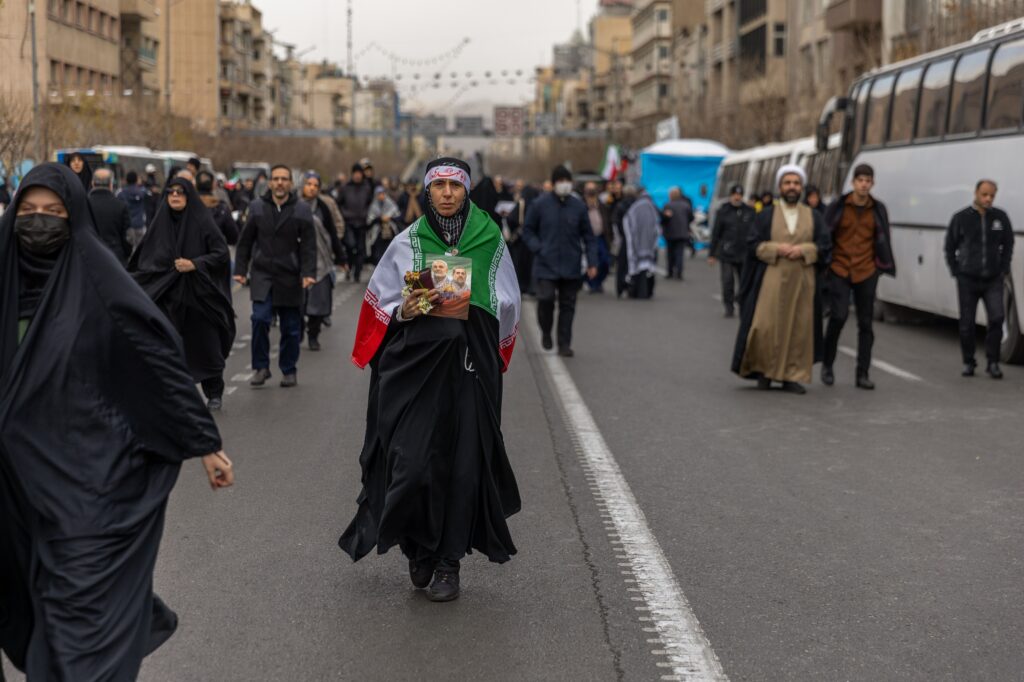
Tehran has directed a withering crackdown in response to the uprising, which began in late December, leaving potentially thousands dead. The exact death toll has been difficult to tally because the government has throttled internet and phone access to the country.
In at least six cities across Iran, security forces fired directly into crowds of protesters, according to a Washington Post review of videos that surfaced online. Other videos have revealed the scale of the casualties. In one, at least 100 bodies in bags await identification at a Tehran morgue.
The U.S.-based Human Rights Activists News Agency estimates that more than 2,500 people have been killed since protests began Dec. 28, including 147 members of the security forces, making this wave of violence far deadlier than any previous Iranian state response to public protest. The Post has not independently verified this figure.
Despite the bloodshed, key U.S. allies in the region have warned the Trump administration against pursuing military action against Iran, fearing it could destabilize the region. The warnings have come from Persian Gulf states as well as Iran’s neighbors, worried about the spillover from a conflict.
Hakan Fidan, the foreign minister of Turkey, which borders Iran, told reporters Thursday that his government was “against” military intervention while seeming to downplay the nature of the protests, saying they owed to “economic hardship” rather than “ideological unrest.”
Rights groups say the demonstrations protesting the country’s dire economic state — many of which have called for the end of Iran’s clerical regime — have dissipated over the past week, mainly because of the ferocity of the crackdown.
Morris reported from Baghdad. Yeganeh Torbati in Istanbul contributed to this report.
The post Iran reopens airspace after Trump says protest crackdown has eased appeared first on Washington Post.