Iran’s communications blackout last week seemed complete. Internet and cellular networks had been shut down by the authorities. Online banking, shopping and text messaging services stopped working. Information about the growing protests was scarce.
Yet a ragtag network of activists, developers and engineers pierced Iran’s digital barricades. Using thousands of Starlink satellite internet systems that they had quietly smuggled into the country, they got online and spread images of troops firing into the streets and families searching for bodies.
Their actions, described by digital rights researchers and others, forced Iran’s government to respond. The authorities deployed military-grade electronic weaponry designed to disrupt the GPS signals that Starlink equipment needs to function, a step that activists and civil society groups said was rarely taken outside of battlefields like in Ukraine.
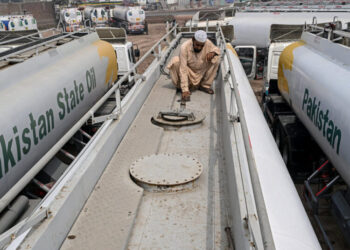
The cracks exposed in Iran’s internet shutdown were no accident. Since 2022, activists and civil society groups have worked on sneaking Starlink terminals into the country, aided by a U.S. government sanctions exemption for Starlink and American companies to offer communication tools in Iran. About 50,000 of the terminals are now in Iran, according to digital activists, in defiance of an Iranian law passed last year that bans the systems, and rules prohibiting unlicensed services.
“You need to plan to have that infrastructure in place,” said Fereidoon Bashar, the executive director of ASL19, a digital rights group focused on Iran. “This is because of years of planning and work among different groups.”
The hidden networks of Starlinks — and the Iranian government’s aggressive response against them — shows how national digital blackouts are becoming harder for authorities to enforce. Governments have long used internet disruptions to suppress dissent in countries like India, Myanmar and Uganda. But the spread of tools like satellite internet have complicated the shutdowns and created a cat-and-mouse hunt against new technologies.
Starlink, provided by Elon Musk’s rocket company SpaceX, beams an internet connection from satellites to terminals on Earth, bypassing any land-based censorship infrastructure. That has helped the service play an outsize role in Iran’s protests, helping demonstrators organize and communicate with the outside world.
Starlink is still available only to a sliver of the Iranian population and information about the protests, which have left an estimated 3,000 dead, remains limited. For most people, the internet continues to be heavily restricted, even as some domestic services have reopened. Video game services have removed chat options, while e-commerce platforms have blocked messaging features, researchers said, an effort to keep the economy going while limiting communication.
“This is the most severe internet shutdown that we have experienced,” said Ahmad Ahmadian, an exiled activist who was also involved in smuggling the satellite internet systems into Iran. “Starlink is a lifeline.”
The reliance on Starlinks underscores Mr. Musk’s geopolitical influence. This week, the world’s richest man said all Starlink services in Iran would be free of charge. President Trump has also emphasized the importance of satellite internet technology.A SpaceX spokesman could not be reached for comment.
In most internet shutdowns worldwide, governments order local internet service providers to turn off access. Other techniques that filter internet data allow authorities to more narrowly target what connections are cut. In 2024, 296 internet shutdowns took place in 54 countries, the highest on record, according to the rights group Access Now.
Iran has long been a practitioner of internet blackouts, with its online censorship system considered one of the most sophisticated in the world outside of China. The government has built a state-run internet, called the National Information Network, which is essentially walled off from the rest of the world. Authorities tightly control access to global internet content, while providing smooth connections for approved domestic services like banking, shopping, transportation and entertainment.
When needed, Iran’s government has surgically cut off the internet in some areas, while still giving access to essential online services, internet monitors said. Its system is not perfect and many Iranians have used virtual private networks, known as VPNs, and other tools to access Instagram and other global services.
But on Jan. 8, as mass protests swelled, Iranian officials turned off the internet altogether, sending the country of 90 million people into a digital blackout. VPNs stopped working. Iran’s internet traffic dropped 99 percent, according to the monitoring group Netblocks.
The government “panicked,” said Amir Rashidi, a cybersecurity expert with Miaan, a digital rights group focused on Iran.
Activists who had prepared for a communications blockade swung into action. After authorities shut down the internet during violent protests in 2022, activists and civil society groups hatched plans to smuggle in Starlinks from neighboring countries.
The State Department coordinated with SpaceX on the sanctions exemption for digital communication tools in Iran. It also provided support to civil society groups about how to hide the systems from government detection, according to a Biden administration official involved in the plans.
“Activating Starlink,” Mr. Musk posted on X that year about Iran.
Mr. Ahmadian, now executive director of the rights group Holistic Resilience in Los Angeles, said he helped others get some of the first Starlink terminals across the border. “We turned it on and it just worked like a charm,” he said.
Encouraged by the success, Mr. Ahmadian said he helped build a smuggling network. Clustering on Telegram channels and other online platforms, merchants sold Starlink units and coordinated delivery routes through the United Arab Emirates, Iraqi Kurdistan, Armenia and Afghanistan.
Before the latest protests, it cost $700 to $800 to smuggle a Starlink terminal into Iran, Mr. Ahmadian said. A black market emerged for people seeking access to Instagram, YouTube and other restricted platforms, mainly among more wealthy Iranians, he added.
The roughly 50,000 Starlink terminals now in Iran are hidden on rooftops and discreet locations. Developers have built tools so a Starlink connection can be shared, turning a single terminal into a gateway for others further away to access the service.
The Iranian government was aware of Starlink’s growing presence, but did not do much to curtail the use until recently, said Doug Madory, an internet infrastructure expert.
The latest electronic jamming efforts against Starlink worked in certain areas, but the terminals are too numerous and dispersed to block completely, researchers said. An Israeli intelligence official said Iran’s government appeared to focus on blocking Starlink terminals in neighborhoods close to the largest universities, to force students offline.
The authorities have flown drones to find the Starlink units, activists said. They also tried to invoke fear by broadcasting the confiscation of the satellite terminals and warning that possession of a Starlink was a crime.
The situation in Iran with satellite internet systems “is a litmus test for electronic warfare in the civilian environment,” said Thomas Withington, a military communications expert at the Royal United Services Institute. “Access to satellite communications used to be for the military. That paradigm is changing.”
Several activists said Starlink has been vital, but they were concerned that Mr. Musk might one day change his mind and turn off the service. In authoritarian countries where Mr. Musk has business interests, like China, he has said the service is unavailable.
Adam Satariano is a technology correspondent for The Times, based in London.
The post Inside the Fight to Keep Iran Online appeared first on New York Times.