This far along into the life of the internet, we know to be skeptical of emails, search results, Facebook posts, Instagram links, and dang near everything else online, because everybody and everything is out to scam you.
But LinkedIn, with its veneer of professionalism, seemed to embody the rarefied, semi-trustworthy corner of the internet. Along with the soapboxing of deeply personal issues of late, LinkedIn has also become host to another stalwart feature of the rest of the internet: the phishing attempt, and it’s taking place right into LinkedIn posts.
And the scam posts are pretty convincing.
the posts…
“Over the past few days, LinkedIn users have been targeted with bot-like activity from several LinkedIn-themed profiles commenting on their posts,” writes Bleeping Computer in a story from January 13, 2026.
“These posts falsely claim that the user has ‘engaged in activities that are not in compliance’ with the platform and that their account has been ‘temporarily restricted’ until they visit the specified link in the comment.
“The fabricated reply bearing the LinkedIn logo, shown below and archived here, appears fairly convincing depending on how viewers are interacting with the comments area and on what device.”
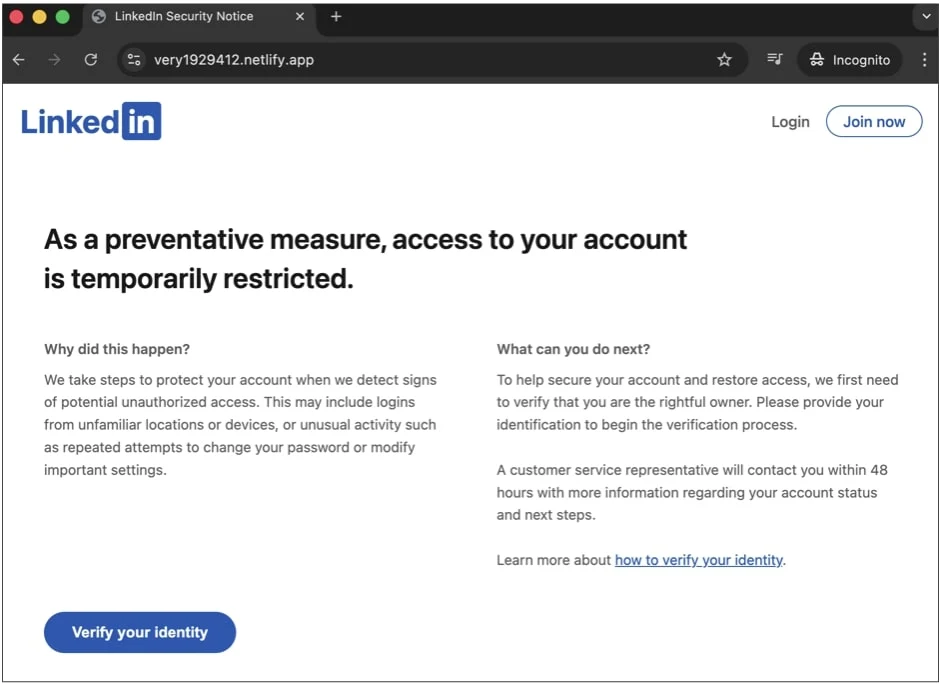
Unsuspecting users click the link, at which point they’re redirected to a fairly official-looking webpage bearing the LinkedIn slogan and professional-seeming language. Gone are the days when almost any scam could be easily spotted by misspelled English, weird sentence construction, and an unsettling mix of formal and deeply intimate language. Scammers have gotten pretty good at seeming convincing.
It’s one more reminder to trust that if there truly is a problem with your LinkedIn account, you’ll receive an official message through more likely channels and not as a reply on a LinkedIn post. And always, always check the URLs of links you’re unsure of.
Just hover your cursor over the link for a second, and it should pop up without your having to click on it. If it looks like word soup that a robot just vomited up (“very1929412…”), then you’re most likely looking at a phishing attempt. Don’t click it. Just carry on as usual.
The post Hackers Are Spreading Malware Through LinkedIn Comments Now appeared first on VICE.