A program in British Columbia to decriminalize drug use and allow users access to public health services rather than be charged by the police with narcotics possession is ending after three years of intense political backlash.
The experimental pilot began in January 2023, after British Columbia, the center of Canada’s opioid crisis, received a legal exemption from the federal authorities that enabled drug users to carry minuscule amounts of cocaine, opioids, methamphetamines and MDMA, also known as Ecstasy.
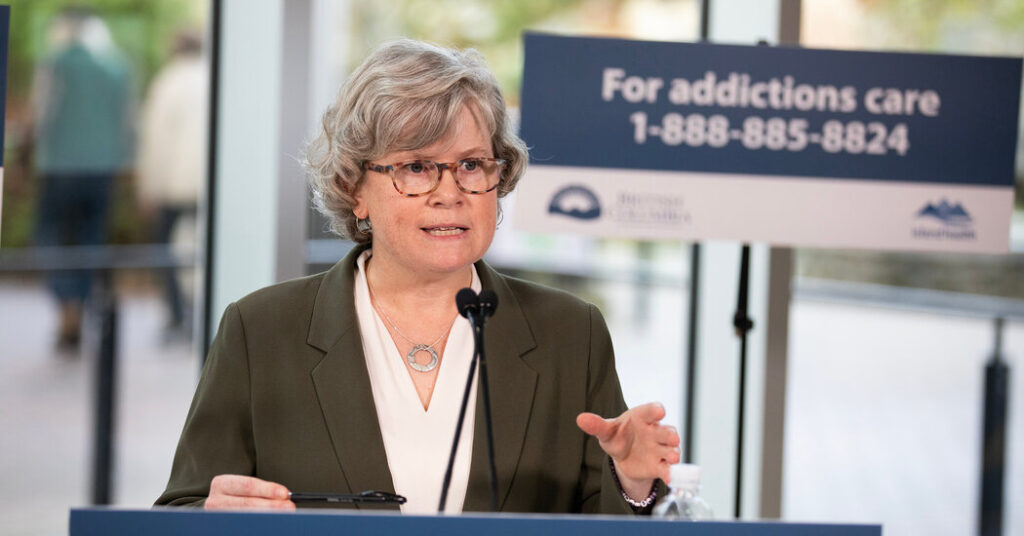
Josie Osborne, the provincial minister of health, announced that British Columbia would not renew its request for the exemption and instead end the program on Jan. 31.
“This pilot was designed as a time-limited trial with ongoing monitoring built in so we could understand what was working, what wasn’t and where changes were needed,” Ms. Osborne told reporters at a news conference on Wednesday.
“However, the pilot hasn’t delivered the results that we hoped for,” she added, but did not elaborate on the outcomes.
The program had been the target of political attacks, with detractors blaming it for stoking public disorder, especially on the streets of Vancouver, a coastal city in British Columbia. David Eby, the province’s premier, walked back part of the pilot in 2024 to ban the public use of drugs.
Deaths caused by drug use in British Columbia had peaked by the time the program was announced in 2022. The number of deaths increased further in 2023, to 2,589, but have fallen below that in the two subsequent years.
About 6,200 people died of a drug overdose across Canada from July 2024 to June 2025, according to the latest data published by Health Canada.
The police in British Columbia were largely directed not to bring narcotics possession charges against individuals found with 2.5 grams of drugs in total for personal use. Data from a recent government report show that arrests have remained well below the levels in 2022.
“That is important and positive, because criminal justice involvement drives harm,” said DJ Larkin, the executive director of the Canadian Drug Policy Coalition, based in Vancouver. “You can end up losing housing and employment. People are put at increased risk of overdose. People can get kicked out of school. There’s all sorts of harms.”
Interactions with the police that would have otherwise led to arrests were instead framed by supporters of the program as another opportunity to redirect drug users to public health resources and curb overdoses.
British Columbia has built a reputation for globally pioneering drug treatment styles, including harm reduction, which views drug use as a health concern rather than criminal behavior. In 2003, Vancouver, the province’s largest city, opened the first supervised injection site in North America. Once regarded as radical, the methods have become a more mainstream way to curb opioid deaths.
When decriminalization was announced, the program was heralded as the next chapter in British Columbia’s trailblazing method to cope with the crippling effects of the drug crisis. But aggressive political backlash followed as complaints flowed in from members of the public, who blamed the decriminalization program for public disorderliness.
“It wasn’t thoughtfully implemented,” Mx. Larkin said.
Vjosa Isai is a reporter for The Times based in Toronto, where she covers news from across Canada.
The post British Columbia Ends Program That Aimed to Curb Arrests of Drug Users appeared first on New York Times.