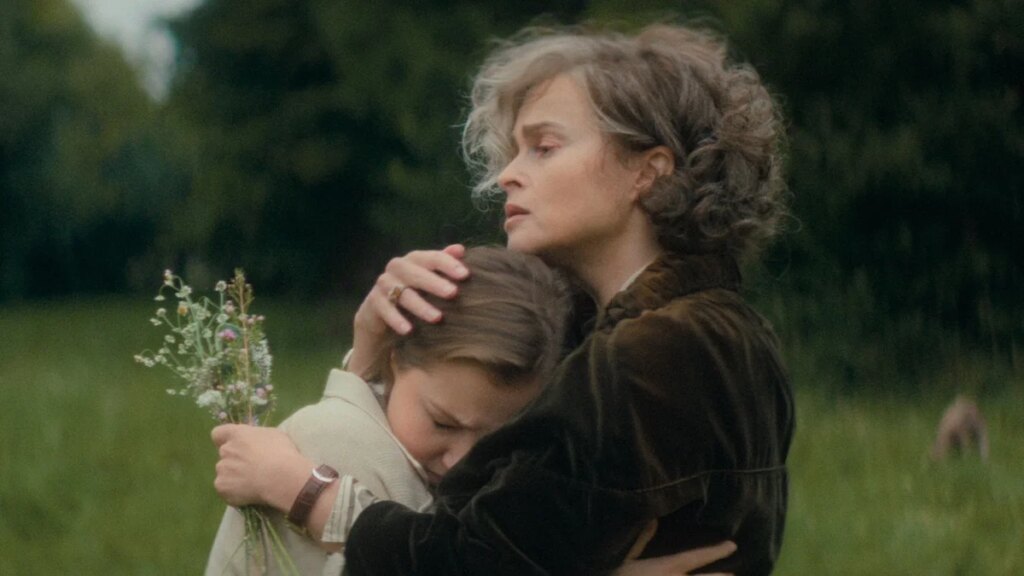
It’s a classic setup: a country house, a party full of colorful characters, and at some point during the night, a murder. For Lady Eileen “Bundle” Brent (Mia McKenna-Bruce), a glamorous shindig at her family home is an opportunity to get close to Gerry Wade (Corey Mylchreest), a Foreign Office employee for whom she harbors a soft spot. But the very next morning, Gerry is found dead in his bed. Everyone suspects it to be an accident or suicide. But not Bundle, and she won’t stop until she uncovers the truth.
Agatha Christie adaptations are one of British television’s sturdiest foundations, as crucial an export as fish & chips and RADA-educated thespians. The bestselling author of all-time was prolific and adaptations of her work are even more prevalent. But there’s no Poirot or Miss Marple here. “The Seven Dials Mystery” is actually considered one of her weaker efforts. Upon publication, it was criticized as less methodical, lacking the cheeky wit that kept readers gripped. One would wonder why this of Christie’s dozens of books was chosen for the glossy Netflix treatment, but given that it recently entered the public domain, the mystery is not a difficult one to solve. In that sense, it has much in common with this story.
Chris Chibnall, fresh from his divisive run as showrunner on “Doctor Who,” returns to the crime world in “Agatha Christie’s Seven Dials.” “Broadchurch,” his most acclaimed series, certainly had Christie-esque elements — a hard thing to avoid for literally any crime writer of the past century — with its focus on the community impacted by a horrendous abuse as much as the whodunnit at its heart. With “Seven Dials”, he’s aiming for something a touch fizzier, although added details about the trauma of the First World War and the splintering British class system are intended to bring heft to proceedings. He has three episodes to pad out what would otherwise be a 90-minute TV movie for a cozy Sunday afternoon, but he seems oddly committed to a plot that does not work.
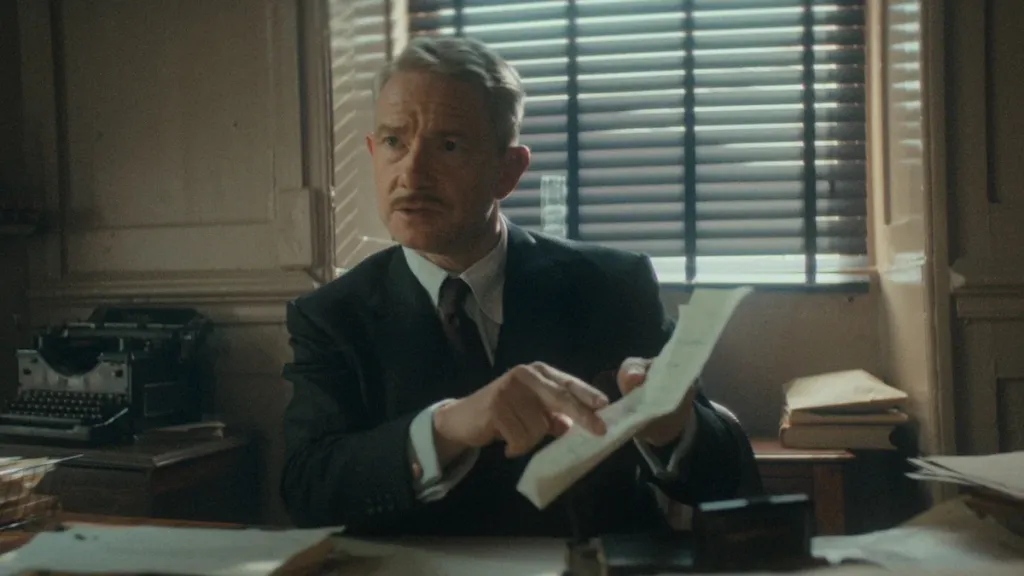
It’s through no fault of the cast that “Seven Dials” feels so misshapen. Mia McKenna-Bruce, the scene-stealer from “How to Have Sex” and future Mrs. Ringo Starr in the upcoming Beatles movie saga, is a sparky and determined heroine worthy of Christie’s best. She manages to be dignified but without being a snob, stubborn and ahead of the pack yet always underestimated by the dumb men of the upper classes. You never doubt that she’d be able to solve a case worthier of her talents than the one given to her here. Helena Bonham Carter is once again in kooky posh lady mode, while Edward Bluemel and Alex Macqueen have a lot of fun as snooty gentlemen who unironically say things like “toodle pip.” Martin Freeman’s presence as a somewhat shady police inspector is minor until the very end.
Nor is there anything stylistically wrong at play. Everything looks as gorgeous as one would expect from a 1920s period drama with Netflix cash behind it. Expect lots of gorgeous mansion interiors, fabulous fashions, and jitterbugging ‘til dawn. None of it is particularly unique, especially if you have seen days’ worth of Christie adaptations in your time, but it’s pleasant all the same. Window dressing, however, cannot strengthen troubled foundations.
Chibnall has curiously decided to adhere closely to the source material, despite its rushed climax and lack of rigor in its construction. The best Christie books are like Swiss watches in their structure, full of red herrings and clues that keep the reader acting as an eager investigator. With “The Seven Dials Mystery,” critics called out how far it fell below the high standard Christie had set for herself. As a 1929 review in The New York Times put it, “She has held out information which the reader should have had, and, not content with scattering false clues with a lavish hand, she has carefully avoided leaving any clues pointing to the real criminal. Worst of all, the solution itself is utterly preposterous.” Chibnall doesn’t fix these errors, although he certainly had enough screentime to do so. Indeed, he might have actually made them worse.
The ending is new, and it is so convoluted and out-of-nowhere that one imagines Chibnall came up with it by throwing darts at a board full of random ideas. It’s not clever or witty or a satisfying surprise in a Christie-esque manner. Really, it’s rather insulting, hoping the audience will accept shock in lieu of satisfaction. Deciding to turn this wonky novel into the stepping stone for a Seven Dials Universe is, to put it mildly, a choice. Perhaps this critic would have had more patience for the idea if it weren’t executed so poorly. But the decision to not correct the blunders of the source material and then to add even more on top is dunderheaded that it’s almost avant-garde.
By the final scene, where Chibnall sets up a sequel where the late author did not write one, “Agatha Christie’s Seven Dials” feels more inspired by studio meddling than its namesake’s legacy. Does everything in TV have to be a franchise? Were Christie’s talents, even at their most flawed, insufficient for the modern entertainment landscape where IP rules all and standalone concepts are discarded almost instantly?
Fortunately for Christie enthusiasts, there are plenty of alternatives to indulge in over this misfire.
“Agatha Christie’s Seven Dials” is now streaming on Netflix.
The post ‘Agatha Christie’s Seven Dials’ Review: Lavish Netflix Adaptation Builds to a Terrible Ending appeared first on TheWrap.