Every time you get behind the wheel, your car is collecting data about you. Where you go, how fast you’re driving, how hard you brake, and even how much you weigh.
All of that data is not typically available to the vehicle owner. Instead, it’s gated behind secure restrictions that prevent anyone other than the manufacturer or authorized technicians from accessing the information. Automakers can use the same digital gates to lock owners out of making repairs or modifications, like replacing their own brake pads, without paying a premium for manufacturer service.
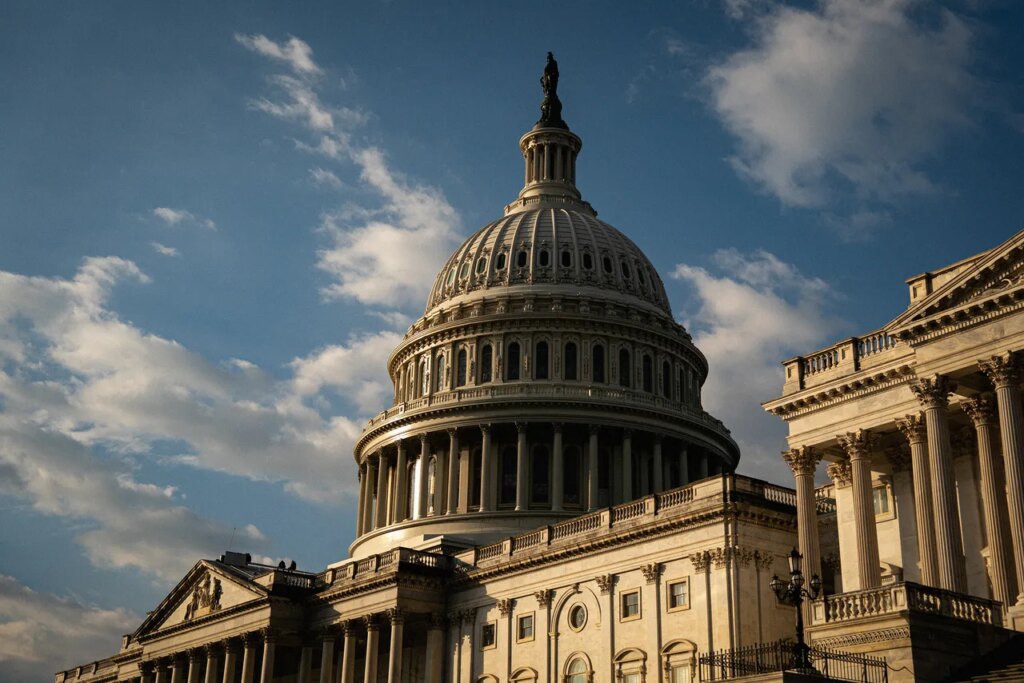
The Repair Act, a piece of pending legislation discussed in a subcommittee hearing at the US House of Representatives on Tuesday, would mandate that some of that collected data be shared with the vehicle owners, specifically the bits that would be useful for making repairs.
“Automakers are trying to use the kind of marketing advantage of exclusive access to this data to push you to go to the dealership where they know what triggered this information,” Nathan Proctor, senior director of the campaign for the right to repair at PIRG, says. “Repair would actually be quicker, cheaper, more convenient if this information was more widely distributed, but it’s not.”
Today, the US House’s Committee on Energy and Commerce held a hearing called (deep breath) “Examining Legislative Options to Strengthen Motor Vehicle Safety, Ensure Consumer Choice and Affordability, and Cement US Automotive Leadership.” The session covered potential legislation about improving road safety, regulating autonomous vehicles, and helping people protect their catalytic converters from theft.
The hearing took on a contentious tone when the discussion turned to the Repair Act. The House bill, introduced in early 2025 by Representatives Neal Dunn of Florida and Marie Gluesenkamp Perez of Washington, calls for automakers to give vehicle owners and third-party repair shops access to telemetry, or the ability to access all the data collected by modern vehicles. The act has been supported by organizations representing vehicle suppliers as well as auto care shops.
Bill Henvy, CEO of the Auto Care Association, who has long called for automakers to share vehicle owner’s data, testified in the hearing to say that the threat to owners’ data has been growing over the past decade.
“The need for the Repair Act is critical and real,” Hanvey said in the hearing, calling today’s vehicles essentially computers on wheels that produce data that manufacturers then gate off to block consumers from accessing. “Make no mistake about it, automakers unilaterally control the data, not the owner of the vehicle. It may be your car, but currently it is the manufacturer’s data to do with whatever they choose.”
The Repair act has been opposed by vehicle manufacturers and car dealerships, who cite concerns about their intellectual property being used by third parties. They say they have done enough to make their data and tools accessible and that if you need to get your car fixed it’s not too hard to find somebody authorized to peek inside its digital brain.
“Vehicle owners should be able to get their vehicles fixed anywhere they want,” said Hilary Cain, senior vice president of policy at the automaker industry group Alliance for Automotive Innovation, in testimony at the hearing. “The good news is that automakers already provide independent repairs with all the information, instruction, tools, and codes necessary to properly and safely fix a vehicle.”
Cain says ultimately automakers support a comprehensive federal right-to-repair law, albeit one that protects company intellectual property and “doesn’t force automakers to provide aftermarket parts manufacturers or auto parts retailers with data that isn’t necessary to diagnose or repair a vehicle.”
Advocates for the act have pushed back against that.
“The Repair Act is specifically about repair, maintenance, calibration, and diagnostic information,” says Justin Justin Rzepka, executive director of the CAR Coalition, a repair advocacy group that supports the Repair Act. “That’s all that the bill is asking for. This has nothing to do with proprietary software. This has nothing to do with intellectual property. This is about information that you generate as a car owner.”
The Long Road Home
While repair advocates generally support the Repair Act, there are some hang-ups. The act contains a section (found on page 26 of the PDF) that would preempt US states or other jurisdictions from making their own laws if they would affect the provisions covered in the Repair Act. That means it would be harder to advocate for and potentially pass stronger repair legislation in the future.
Kyle Wiens, a repair advocate and CEO of iFixit, supports passing the Repair Act broadly but calls the preemption language a poison pill that will hopefully be amended out of the bill should the legislation pass. The problem with keeping new laws from being made, he says, is that the battlefield of the repairability fight is always shifting.
“Right to repair is a kind of a cat-and-mouse game, where manufacturers come up with new ways of locking things down, and then we have to wrangle enough public support and outcry to push back and stop them,” Wiens says. “And then they come up with something else. There needs to be some break on the power of these monopolies.”
The Repair Act is expected to go through additional rounds of edits, then be up for voting in the House and Senate later this year.
The post The Fight on Capitol Hill to Make It Easier to Fix Your Car appeared first on Wired.