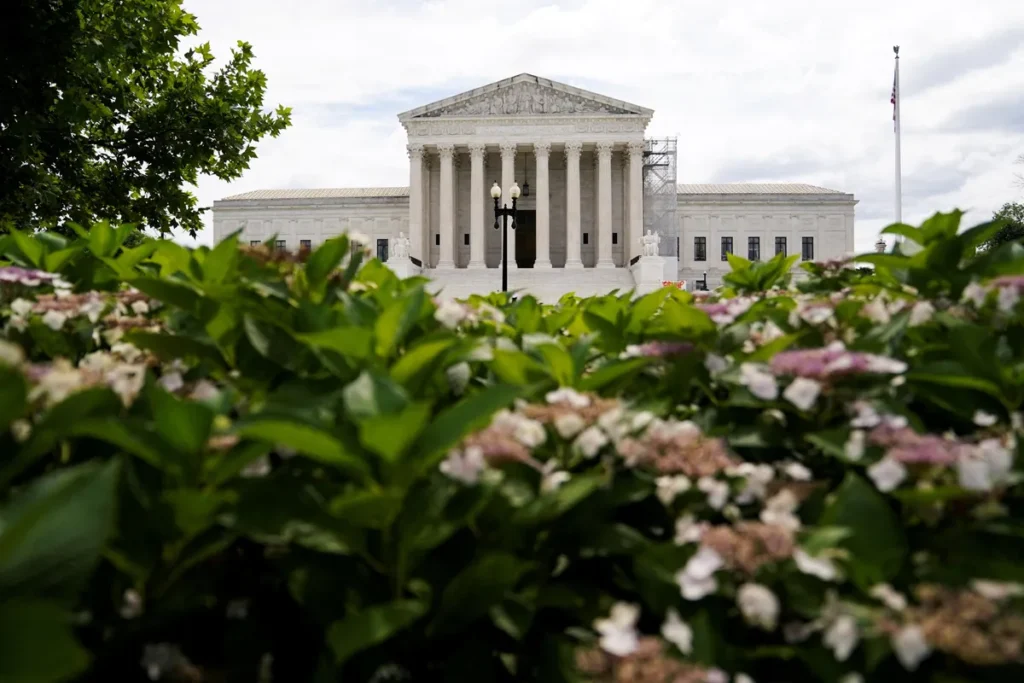
The Supreme Court on Wednesday ruled in favor of a Republican congressman, Rep. Mike Bost of Illinois, who is trying to sue over his state’s mail-in voting rules.
The 7-2 decision, with Justices Sonia Sotomayor and Ketanji Brown Jackson dissenting, doesn’t immediately change election rules anywhere; however, it establishes a precedent that potentially makes it easier for candidates for office to sue over election rules.
Bost filed a suit challenging Illinois’ practice of counting mail-in ballots that are postmarked by Election Day, even if they arrive days later. This practice varies from state to state, with some requiring all ballots be received by Election Day, and others merely requiring it be postmarked. Bost’s contention was that the more permissive rule violates federal law.
Lower courts, including the Court of Appeals for the 7th Circuit, ruled that Bost lacked standing to challenge Illinois’ election laws because the disputed ballots would not have altered the outcome of the election.
The Supreme Court majority, however, disagreed with this logic.
“Candidates do not need to show a substantial risk that a rule will cause them to lose the election or prevent them from achieving a legally significant vote threshold in order to have standing,” said the syllabus of the opinion, which was written by Chief Justice John Roberts. “Requiring such a showing could channel many election disputes to shortly before election day or after. Only then will many candidates be able to predict with any certainty that a rule will be outcome determinative.”
Furthermore, continued the opinion, citing Roberts’ own prior opinion in the landmark Rucho v. Common Cause case that limited federal courts’ involvement in gerrymandering, “Premising standing on a candidate’s risk of election loss or failure to achieve a certain vote threshold would also convert Article III judges into political prognosticators.”
The post Supreme Court empowers GOP lawmaker to sue over mail-in voting laws appeared first on Raw Story.