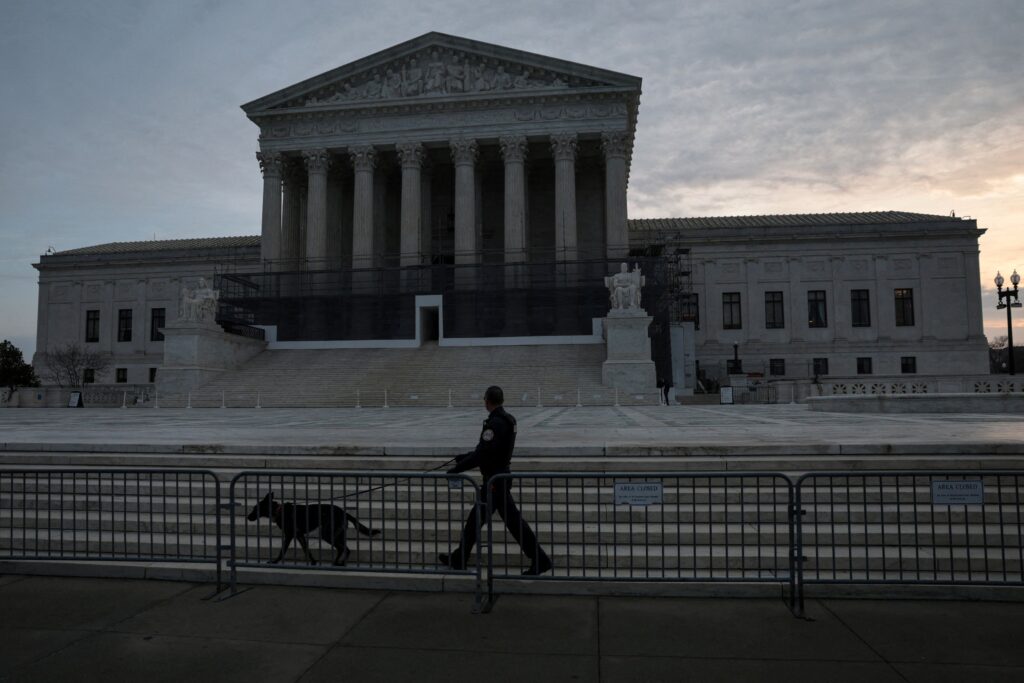
The Supreme Court on Wednesday allowed an Illinois congressman and others to pursue a lawsuit challenging the state’s practice of counting mail-in ballots that arrive after Election Day, the first of two possible rulings on the voting practice President Donald Trump and his allies have claimed without evidence is riddled with fraud.
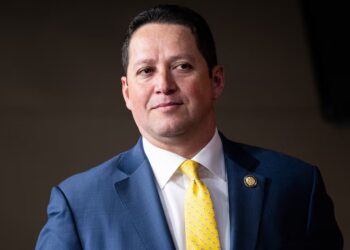
The high court’s 7-2 ruling dealt with the narrow question of whether Republican Rep. Michael Bost and two other candidates had standing to sue. It did not involve the legality of a state law that permits the counting of ballots that arrive up to 14 days after the polls close as long as they are postmarked by Election Day.
Bost, a six-term congressman, and the other plaintiffs claim Illinois’ mail-in ballot procedures violate federal election law, which they argue does not allow the counting of ballots that arrive after Election Day. The case is one of a number of challenges against mail-in ballot laws that Republicans launched after the 2020 presidential election. Trump said fraud in the mail-in vote process cost him that contest.
Chief Justice John G. Roberts Jr. wrote the majority opinion, which was joined by four of the court’s other conservatives. Conservative Justice Amy Coney Barrett filed a concurring opinion in which liberal Justice Elena Kagan joined.
“Candidates have a concrete and particularized interest in the rules that govern the counting of votes in their elections, regardless whether those rules harm their electoral prospects or increase the cost of their campaigns,” Roberts wrote. “Their interest extends to the integrity of the election—and the democratic process by which they earn or lose the support of the people they seek to represent.”
The court’s two other liberals, Ketanji Brown Jackson and Sonia Sotomayor, filed a dissenting opinion saying Bost had not shown he had suffered a real-world injury, the legal standard for bringing a lawsuit.
“Congressman Bost has failed to allege that the election-related law he seeks to challenge has caused him to suffer any injury that satisfies those requirements,” Brown wrote.
The case is significant because it could also open the door to similar election challenges across the country. Many conservatives view expansive mail-in balloting rules as favoring Democrats.
In another major case this term, the justices will directly weigh the legality of counting ballots that arrive after Election Day. The case has the potential to upend how elections are run in dozens of states before midterm elections next year.
The post Supreme Court allows Illinois congressman to challenge mail-in balloting appeared first on Washington Post.