Louisiana officials on Tuesday moved to extradite a California doctor the state indicted on a charge of providing abortion pills to a Louisiana resident, escalating an ongoing legal battle over whether health providers in states supportive of abortion access can send medication to states with abortion bans.
Gov. Jeff Landry of Louisiana, a Republican, said he would sign the extradition order on Tuesday, hours after Attorney General Liz Murrill announced the indictment against the doctor, Rémy Coeytaux of Sonoma County, Calif.
It is the second time that Mr. Landry and Ms. Murrill, also a Republican, have sought criminal prosecution and extradition of an out-of-state doctor over the prescription of abortion pills. Last year, Louisiana sought to extradite a New York-based abortion provider, Dr. Margaret Carpenter, whom the state indicted on similar charges. Gov. Kathy Hochul of New York, a Democrat, has refused to agree to her extradition, citing the state’s abortion shield law that protects health providers who prescribe and send pills to other states.
California has a similar abortion shield law, which precludes officials there from cooperating with extradition requests, subpoenas or other out-of-state legal actions taken against abortion providers in the state. The offices of California’s governor, the Democrat Gavin Newsom, and attorney general did not immediately respond to a request for comment about whether the state would refuse to extradite the doctor.
“Louisiana has a zero tolerance policy for those who subvert our laws, seek to hurt women, and promote abortion,” Mr. Landry said in a post on social media on Tuesday. “I know Gavin Newsom supports abortion in all its forms, but that doesn’t work in Louisiana.”
Dr. Coeytaux did not respond to a request for comment.
Nancy Northup, the president and chief executive of the Center for Reproductive Rights, said in a statement that Louisiana’s allegations “are unproven and should not be reported as fact.”
Ms. Northup’s organization is not representing Dr. Coeytaux in that case, but it is representing him in a separate civil suit filed last year by the boyfriend of a Texas woman. The Texas suit claims that Dr. Coeytaux mailed abortion pills to the woman’s estranged husband, who pressured her to take them.
Ms. Northup said that while her organization could not comment on the new criminal case, “the state of Louisiana is going after doctors for allegedly harming women, yet they are enforcing an abortion ban that puts women’s lives at risk every day.”
The Louisiana case is the latest salvo in the battle between states that has arisen since the U.S. Supreme Court eliminated the national right to abortion in 2022. About a third of states currently have near-total bans on abortion. About 20 others have some type of abortion shield law, including at least eight states — New York and California among them — that explicitly refuse to cooperate with prosecutions, lawsuits or investigations against providers who supply abortion medication to states with bans.
The clash centers on whether states are required to honor one another’s abortion laws, and legal experts on both sides of the argument expect it to eventually lead to a constitutional showdown that could reach the Supreme Court.
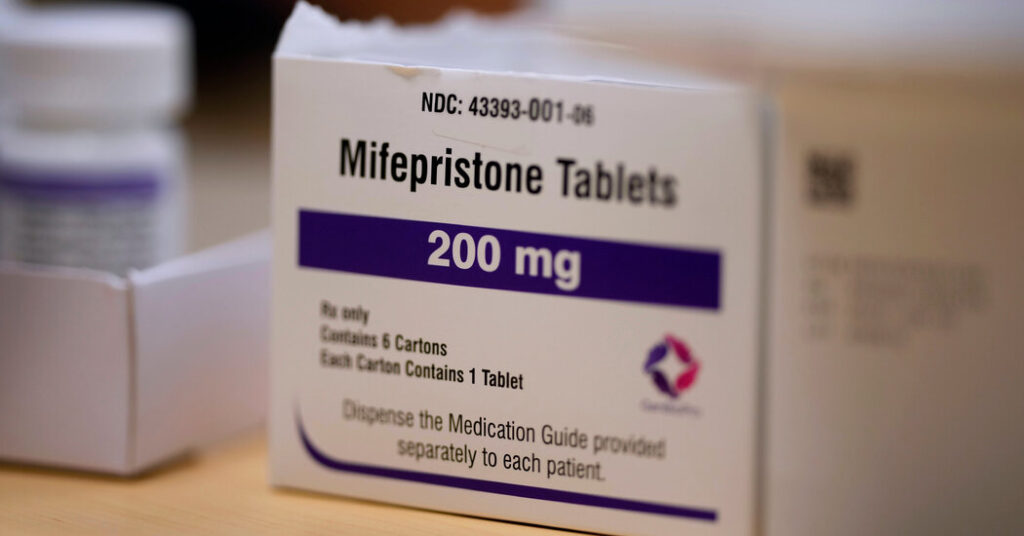
Conservative leaders opposed to abortion have sought various ways to limit access to the abortion pills mifepristone and misoprostol, which Louisiana classified as dangerous controlled substances in 2024.
Years of research on abortion pills — including detailed analyses by the Food and Drug Administration — have consistently found the medications, which are also used to help with miscarriages, to be overwhelmingly safe.
“Abortion pills are widely used and incredibly safe, including when provided via telehealth,” Ms. Northup said in her statement. “Women should also be able to get safe and legal abortion care in their own state. Thousands of women seek abortion pills via mail every year because abortion is banned in their state, and that will not change until abortion is legal everywhere.”
Dr. Coeytaux is charged with criminal abortion by means of abortion-inducing drugs. Documents released by Ms. Murrill’s office said that the case involved a woman who learned she was pregnant in October 2023 and soon afterward searched online for ways to obtain mifepristone and misoprostol.
The documents said she found Aid Access, an organization that will prescribe and send abortion medication to any state, and received the pills in the mail after supplying her personal information on a form and paying $150. She took the medication and terminated her pregnancy soon after, the documents said. The woman is not identified in the documents.
The affidavit said the investigation into the case began in March 2024. It is unclear who contacted the authorities or how they became aware of it. From the package’s postal tracking number, the investigators determined that the medication had been sent from a business in Dr. Coeytaux’s name. An arrest warrant for Dr. Coeytaux was issued in May 2024, the documents show.
Ms. Murrill has been active in other anti-abortion legal actions. Last year, she filed a lawsuit against the F.D.A. seeking to sharply restrict access to mifepristone. The other plaintiff in that case, which is pending, is a Louisiana woman who said that her boyfriend ordered pills from Dr. Coeytaux in October 2023 and coerced her to take them to abort her pregnancy.
A spokesman for Ms. Murrill declined to discuss further details or say whether the case was connected to Tuesday’s criminal case.
Ms. Murrill indicated that her office would continue to pursue other cases, including against Dr. Coeytaux and Dr. Carpenter in New York.
Emily Cochrane is a national reporter for The Times covering the American South, based in Nashville.
The post Louisiana Indicts Another Out-of-State Doctor Over Abortion Pills appeared first on New York Times.