When the government stomps on some once-inviolable right, it may be carrying out the next step in a concerted plan, or it may just be stumbling clumsily. The proper response in these moments is not to wax hysterical, but instead to draw clear moral lines. That is especially true for powerful people with the ability to make themselves heard.
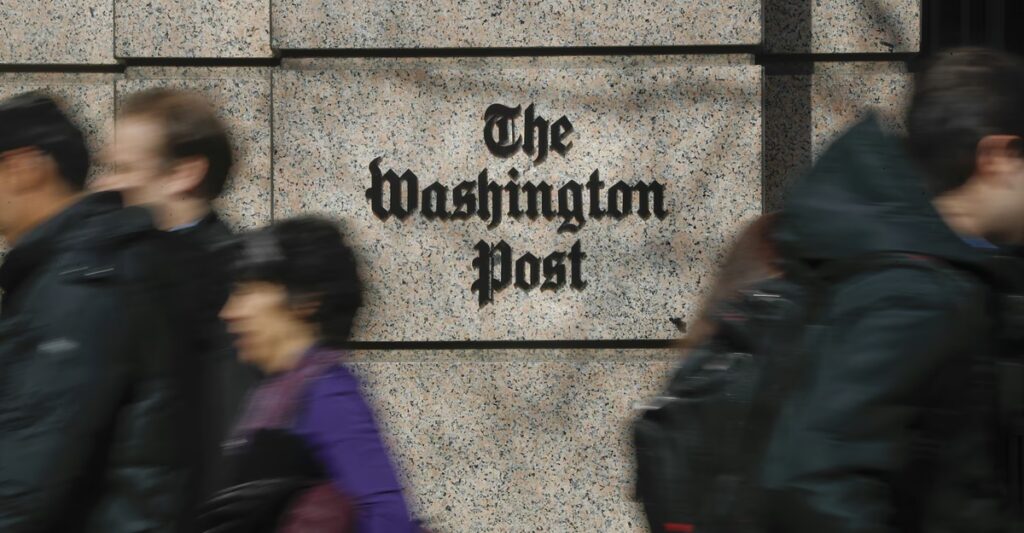
This morning, FBI agents searched the home of the Washington Post reporter Hannah Natanson and seized her devices, allegedly as part of a leak investigation targeting sources she had covered.
Journalists are supposed to enjoy legal protections from raids such as this, because courts have recognized that if the government could treat them as criminals for acquiring nonpublic information, their work—protected by the First Amendment—would become impossible. Gray areas do exist, and previous administrations have often tangled with the media over where to draw the line between legitimate investigations of important government secrets and impingement upon the free press.
Depending on what facts the FBI produces, the raid of Natanson’s home may lie within that traditional gray area. But there are reasons it may portend something more ominous.
[Paul Farhi: Trump’s campaign to crush the media]
One is that Donald Trump refuses to accept the legitimacy of an independent media. He has repeatedly described media outlets whose reporting he doesn’t approve of as operating illegally, and has threatened more than a dozen times to remove the broadcast license of offending outlets. In his first term, he retaliated against The Washington Post’s owner, Jeff Bezos, by withholding a lucrative Pentagon contract from Amazon.
In his second term, Trump has learned to apply this pressure more pointedly. He has made it plain that owners of large media firms should expect much friendlier regulatory treatment if they bring to heel the journalists they employ. What makes this tactic so deviously effective is that many influential media outlets are just a tiny portion of their owners’ business interests. The Ellisons own CBS News, but CBS News is a speck in their financial portfolio. Losing audience share for 60 Minutes because the show relinquishes its independence would be an insignificant financial setback, but losing the administration’s approval for the Ellisons’ merger bids would be catastrophic.
The same logic applies to Bezos. Companies he founded take in billions of dollars in federal space and defense contracts, and require the government’s approval for satellite communications. Bezos has good reason to worry that the fate of these companies is tied to Trump’s feelings toward the Post, a newspaper whose gains or losses amount to a rounding error. Bezos has sent a procession of compliant signals: replacing the Post’s leadership and its writers for its editorial page with more conservative figures, spiking the newspaper’s presidential endorsement, and appearing at Trump’s inauguration in a Putin-esque display of oligarchic cooperation.
The question that has hung over the Post since Bezos’s heel turn has been whether he is still willing to protect the paper from a president who yearns to subdue it. He could answer the question by speaking out forcefully in defense of his journalists and their right to report on the government without intimidation. Or he could continue to remain silent, which, in its own way, is also an answer.
The post Jeff Bezos Needs to Speak Up appeared first on The Atlantic.