On the second floor of an apartment building, a young disabled woman sleeps in three jackets and the fuzzy green-and-red Santa hat she got for Christmas. Down the hall, her retired neighbor leaves her oven on with the door open. On the sixth floor, a man cranks up space heaters, anxious that his pet turtles will freeze in their tank.
On a recent afternoon, nearly a dozen residents in the building, on Anderson Avenue near West 167th Street in the Bronx, said they had spent the winter miserably cold in their apartments. The heat had not worked during some of the coldest days of the season.
Across New York City, complaints of a lack of heat and hot water shot up to record highs this past year, and over the past two years, the number of city-issued violations for serious heat deficiencies was more than double the typical average.
City officials say part of the problem is old buildings getting older, and breaking down as they do. Tenant advocates say greedy landlords are unwilling to spend the money to fix problematic boilers and pipes. Officials said the spike in complaints may be due in part to more people working from home and a city push urging people to report heating issues after a space heater fire in the Bronx killed 17 people in 2022.
Yet, like many urban aggravations, the pain of cold homes is not equally felt everywhere: City data shows that some residents of the city’s poorest neighborhoods are routinely without heat, while wealthier New Yorkers stay toasty at home.
“We are just left to freeze,” said George Sanchez, 25, a seasonal worker at the Bronx Zoo who lives in the building on Anderson Avenue. The Bronx, the poorest borough, may also be the city’s coldest, judging by the number of heat complaints in 2024, according to RentHop, a real estate site.
In an interview on Jan. 6, Mr. Sanchez said it was the first day the heat had been on in about a week. During the lapse, the temperature outdoors had dropped to a bitter 19 degrees at night, making him fear for his pet turtles’ health.
“We feel like prisoners in our own homes, just neglected,” he said.
A Cold “Heating Season”
It is currently “Heating Season” in New York City — the period between Oct. 1 and May 31, when landlords are required to heat their buildings to at least 68 degrees during the day and 62 degrees at night if the temperature outside falls below 55 degrees. If indoor temperatures are colder than mandated and a tenant complains, the New York City Department of Housing Preservation and Development can issue violations or, in emergencies, will make repairs itself.
Over the past three heating seasons, tenants made almost 204,000 heat complaints each year, on average — a nearly 20 percent increase from the 2017 to 2021 seasons, according to the city comptroller’s office.
Unlike with rats, flooding or black mold, the persistence of heating issues may be linked to the idea that being cold at home is not that dire, said Anna Luft, the associate director for housing policy and advocacy at New York Legal Assistance Group, which provides legal help to low-income people.
“There is this idea: ‘Oh, well there is a space heater,’ or ‘Put on a sweater or put on a coat, toughen up a little bit,’” Ms. Luft said. “There is this attitude among landlords, maybe, that they’re not taking it seriously, but they should.” She added that the cold can have serious effects on physical and mental well-being.
Tenant advocates believe that the tally of complaints is most likely an undercount, since it does not include heat issues in public housing, which are referred internally to the New York City Housing Authority, and because untold numbers of tenants never complain, unaware that they have recourse when the heat falters.
For the past six years, NYCHA has been under federal oversight, to improve things like heat service, and has reduced heat outages by nearly 40 percent, an agency spokesman said. Last year, there were 530 heat outages — which can include an entire building losing heat — a nearly 12 percent increase from the prior year. The authority said every issue was resolved within 24 hours.
“We have learned to accept a certain amount of bad behavior from landlords, and it’s part of the zeitgeist: ‘We are in an apartment and it’s cold,’” said Andrea Shapiro, the director of program and advocacy at the Met Council on Housing. “But you are paying rent, and one of the things you should get is heat. It’s the bare minimum.”
Violations that led to inspections, litigation and city-funded emergency repairs have succeeded in getting the heat back on in many instances, according to city data. But a significant group of buildings — more than 900 across the city — are chronic offenders, with “persistently inadequate heat” between 2017 and 2024, the comptroller’s data analysis showed. In 20 percent of those buildings with consistent heat complaints, the housing department did not intervene or issue violations. The department said this was because no violations of housing maintenance code had been found.
“During heat season, when a lack of heat can directly affect someone’s health and day-to-day life, H.P.D. is laser-focused on responding quickly to each and every building from which a complaint is received,” said Natasha Kersey, a spokeswoman for the department.
‘This is a trap’
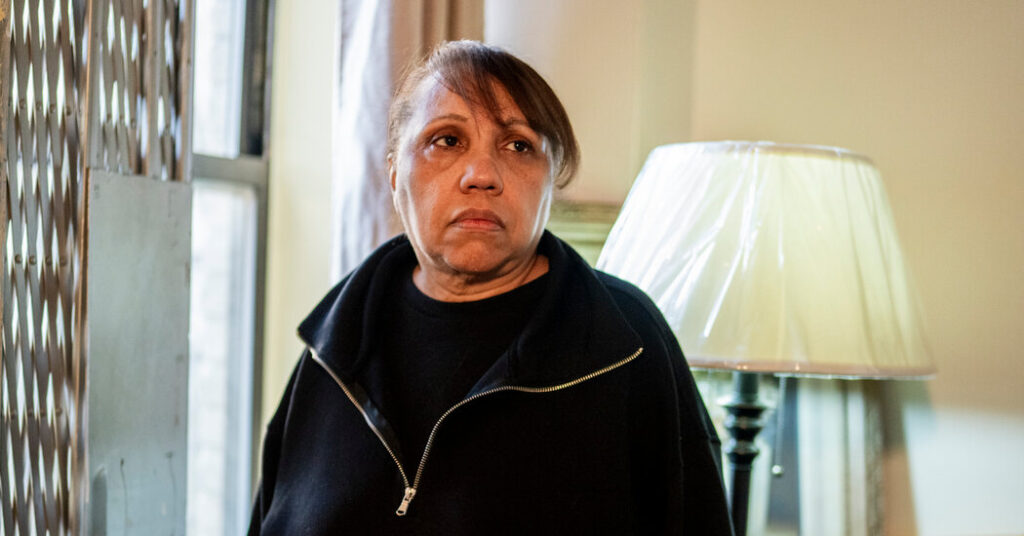
The cold gets so bad in Jane Phillips’s apartment on the top floor of the building on Anderson Avenue that she can barely speak about it without crying. Ms. Phillips, 75, who has multiple myeloma, said she spends the heatless days huddled under layers of blankets, and often resorts to leaving the stove on to warm up, which scares her because of the fire risk. Several neighbors said they also use space heaters.
Nearly 30 percent of households in Ms. Phillips’s neighborhood used supplemental heat in 2023, the last year that data was available, according to the city’s Environment and Health Data Portal. By comparison, in Greenwich Village, one of the wealthiest enclaves of Manhattan, less than 8 percent of homes did so.
Since 2017 there have been more than 150 fires in New York City caused by portable heaters, according to the comptroller’s office.
“This is a trap,” Ms. Phillips said.
Her building was purchased by Emerald Equity Group in 2019. In 2021 the landlord unsuccessfully petitioned the state housing agency to remove the building’s rent-stabilized designation. Since then, conditions have deteriorated, and the tenants filed suit a year later. They have won small concessions like rent abatements and civil penalties against the landlord, but the heating and other quality-of-life issues persist. The building currently has several open violations for pests and issues with heat, hot water, lighting and fire safety.
A person who answered the phone at a number listed for Emerald hung up on a New York Times reporter.
On the second floor, Mercedes Escoto, 67, keeps a space heater in each room and a pot of water in her open oven for steam heat when the boiler fails. The cold has pushed her to become a tenant organizer with Community Action for Safe Apartments, a group participating in the long-running legal battle with the landlord.
Ms. Escoto said she was hopeful about the professed tenant-first policies of Mayor Zohran Mamdani, including “rental rip-off” hearings for tenants to voice their housing problems. Mr. Mamdani has vowed to streamline the process for housing maintenance, increase fines for noncompliant landlords, and create systems that allow residents to schedule and track appointments with inspectors, among other pledges.
“I deserve to live well in an apartment that provides all the services I pay for,” Ms. Escoto said after a week without heat, her voice breaking. In her hand was the wool cap she wears on the days when she can see her breath in her apartment. “I don’t deserve this,” she said.
Sarah Maslin Nir is a Times reporter covering anything and everything New York … and sometimes beyond.
The post A Week Without Heat in New York City appeared first on New York Times.