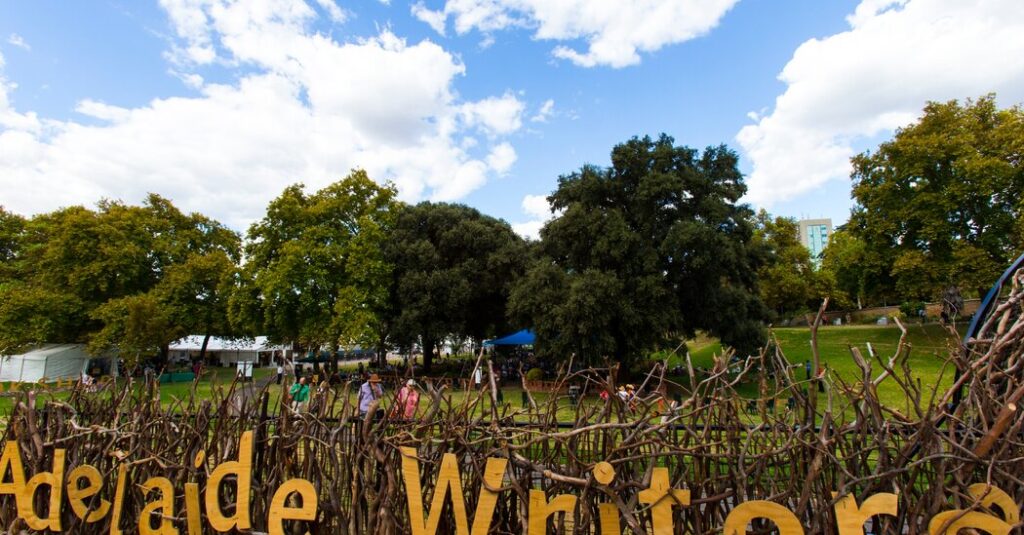
A storied literary festival in Australia was canceled on Tuesday, in a dramatic implosion that began when organizers disinvited a Palestinian Australian author and ignited a furor about free speech.
The turmoil over Adelaide Writers’ Week was a sign of the tensions racking the country after the mass shooting last month that targeted a Hanukkah gathering at Bondi Beach in Sydney, killing 15 and injuring scores of others.
Last Thursday, the board of the Adelaide event announced that it was removing from its program Randa Abdel-Fattah, a lawyer, academic and writer who has been a fervent critic of Israel. The board said that it would “not be culturally sensitive” to have her speak “so soon” after the shooting in Bondi, which the authorities have called a terror attack.
In the following days, about 180 of roughly 240 writers scheduled to appear at the festival pulled out in protest, many publicly criticizing the decision as setting a dangerous precedent of curtailing speech and freedom of expression. The authors Zadie Smith and Percival Everett, plus former Prime Minister Jacinda Ardern of New Zealand, were among those who canceled their appearances, according to local news media.
Over the weekend, half of the festival’s eight-member board, including its chair, resigned. The director of the writers’ week, Louise Adler, announced on Tuesday that she was stepping down, saying she “cannot be party to silencing writers.”
Hours later, the board announced the event could no longer go ahead as scheduled in late February because of the writers’ exodus. It apologized for the decision to disinvite Ms. Abdel-Fattah, acknowledging it had “created more division.”
The board said in a statement on Tuesday that the decision was “not about identity or dissent but rather a continuing rapid shift in the national discourse around the breadth of freedom of expression in our nation following Australia’s worst terror attack in history.”
Ms. Abdel-Fattah said in a statement that she rejected the apology, calling it “disingenuous.”
“The Bondi shooting does not mean I or anyone else has to stop advocating for an end to the illegal occupation and systemic extermination of my people,” she wrote in the statement.
Richard Flanagan, one of Australia’s most respected novelists, said in an interview that he was heartened that writers had collectively taken a stand for free speech in the country, at a moment when it was imperiled. The cost was their attendance at a festival that is a rare and important opportunity for many of them, he said.
“Writers here understood very clearly that if they let go on this issue, who will be next?” said Mr. Flanagan, who wasn’t attending the festival this year. “Either we allow people with different opinions to talk about them, or we’re on the path to tyranny.”
Tensions have boiled over in Australia since the Hamas-led attacks on Israel on Oct. 7, 2023, and Israel’s subsequent war in Gaza. Violent incidents of antisemitism have sharply risen in Australia over the same period, as Israel’s actions came under increasing criticism. Journalists, musicians, artists and actors have faced fierce backlash and negative consequences for expressing political opinions on the war.
In the wake of the attack in Bondi, which the authorities said were motivated by Islamic State-inspired antisemitism, political leaders have pledged to strengthen laws on hate speech, put restrictions on public protests and tighten regulations governing prayer halls.
Peter Malinauskas, the premier of the state of South Australia, where the festival was set to take place, told the Australian Broadcasting Corporation that, while he had made clear to the festival’s board that he “did not think it was wise” to invite Ms. Abdel-Fattah, it was their decision to cancel her appearance.
Ms. Adler, who recently stepped down as the festival’s director, said she had warned a government official that canceling a Palestinian Australian writer’s appearance would “ratchet up the temperature” rather than bring social cohesion. The festival had never before canceled an author’s invitation in its 65-year history, she said.
Ms. Abdel-Fattah, a sociologist who has written children’s books about being Muslim, had been scheduled to talk about her new novel “Discipline.” Her publisher described it as an exploration of wrestling with the costs of speaking up against the status quo.
A group of Australian Jewish academics had protested her public appearances in the past, according to Australian news media reports. They took issue with statements on social media, including a post in which she wrote, “Armed struggle is a moral and legal right of the colonized and brutalized.”
In an interview, Ms. Adler said Ms. Abdel-Fattah had been invited to speak because “she’s a respected writer and academic, with a topical novel about this moment. She’s an important writer in the Australian firmament.”
Jo Dyer, a former director of the festival, said the political pressure to deny Ms. Abdel-Fattah a platform was a dangerous sign of conflating pro-Palestinian advocacy with the violent antisemitism that motivated the individuals behind the Bondi attack. Allowing cultural institutions and the open exchange of ideas to be undermined would be letting the attack jeopardize Australia’s way of life, she said.
If Ms. Abdel-Fattah had expressed views that were controversial and incendiary, a writer’s festival was the place to scrutinize and examine them, she said.
“Let those views be interrogated by the interlocutor on the stage and the audience so they can make up their own mind,” Ms. Dyer said.
Peter Greste, an Australian journalist and free press advocate who pulled out of the festival, said Adelaide Writers’ Week had been a cherished event because it was free to attendees, lending itself to a more democratic atmosphere open to people of all stripes.
That would have made it the best setting to air out some of the uncomfortable and difficult discussions ahead for Australia in the wake of the mass shooting, he said.
“When you’re sitting down face to face in a public environment, it forces conversations that are far more dignified and thoughtful than on social media, when we’re yelling into the void,” he said.
Victoria Kim is the Australia correspondent for The New York Times, based in Sydney, covering Australia, New Zealand and the broader Pacific region.
The post Writers’ Festival Unraveled After It Disinvited Palestinian Australian Author appeared first on New York Times.