California lawmakers are seeking to tax billionaires’ wealth. But the effort may cause the state to lose billions in future tax revenue before it even reaches the ballot.
A proposed ballot measure called the 2026 Billionaire Tax Act would impose a one-time 5% tax on billionaires’ assets. The measure is still in the process of gathering the 90,000 signatures necessary to put it before voters in November. But it is already receiving fierce backlash from several of the state’s wealthiest residents—and from its Democratic Gov. Gavin Newsom.
[time-brightcove not-tgx=”true”]
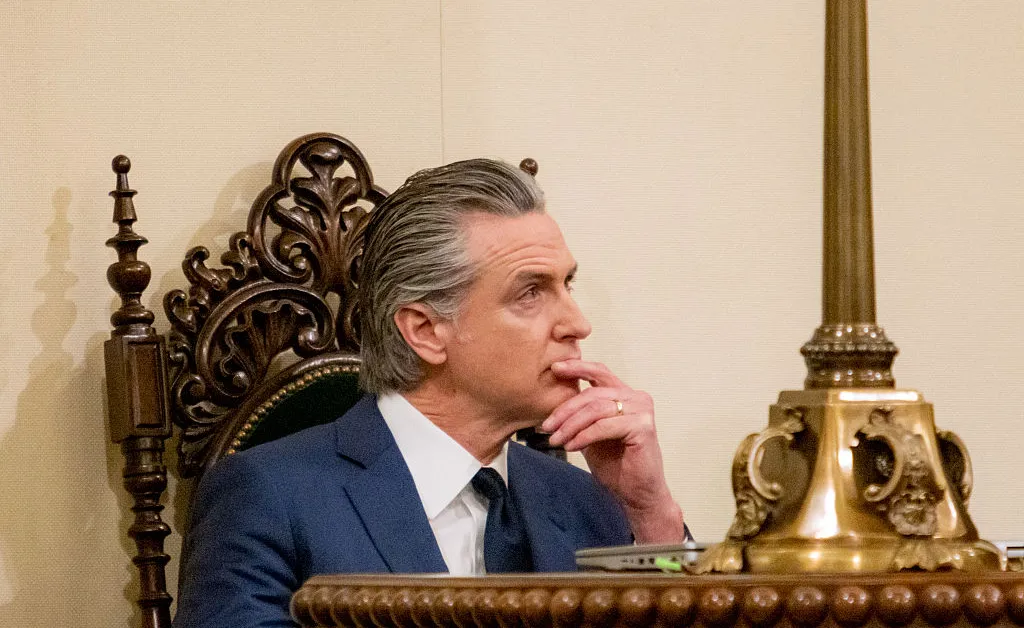
“This will be defeated. There’s no question in my mind,” Newsom told The New York Times on Monday, following a speech in which he called the proposal “really damaging” and “bad economics.”
“I’ll do what I have to do to protect the state,” he added.
Newsom said that a wealth tax that takes from billionaires’ assets instead of their incomes is “something very, very different” than the state’s progressive income tax, which already taxes high earners at the highest tax rate in the country. He added that he would be more open to a similar proposal carried out on the federal level.
“It’s one thing to have a prism of the nation, and you can talk about 50 states. It’s another when you’re competing against 49 other states,” he said.
The push for the ballot measure is being led by a health care workers’ union, SEIU-UHW, that is calling for the hike to compensate for federal cuts to healthcare, education, and food assistance in the state under President Donald Trump’s sweeping “Big, Beautiful Bill.”
“We’re calling on California’s billionaires to step up and pay a one-time, emergency 5% tax to prevent the collapse of California healthcare and help fund California public K-14 education and state food assistance programs,” the union’s website states.
It notes that the bill would only affect roughly 200 people who have a combined net worth of $2 trillion.
California is home to more billionaires than any other state. But in the face of the proposed tax, a handful are already starting to cut ties with California and shift their assets elsewhere, including Google co-founder Larry Page, Paypal co-founder Peter Thiel, Craft Ventures co-founder David Sacks, and Oracle CEO Larry Ellison. And more have threatened to depart.
Several made major moves before the residency cut-off date for the ballot measure. Page purchased $173 million worth of property in Miami while moving assets out of California. Thiel also targeted Miami as a destination, with his investment firm, Thiel Capital, announcing on the last day of 2025 that it had opened an office in the city. Earlier in the month, Sacks similarly announced that his firm had opened an office in Austin, Texas, and that he had relocated to the city from San Francisco.
“This is my fear,” Newsom said to Politico. “It’s just what I warned against. It’s happening.”
In December, attorney Alex Spiro, whose elite clientele includes billionaires like Tesla CEO Elon Musk, wrote a letter to Newsom warning him that the proposed ballot measure would “trigger an exodus of capital and innovation from California” and stressing, “Our clients have made clear they will permanently relocate if subjected to this tax.”
This is not the first time a wealth tax has been proposed in California. A proposal in 2024 introduced by Assemblymember Alex Lee sought to apply a 1% annual tax on those with more than $50 million, and 1.5% for billionaires. Newsom has rejected such previous proposals as well.
Some billionaires are not opposed to the 2026 Billionaire Tax Act, however, including Nvidia CEO and President Jensen Huang, who said he was “perfectly fine” with the proposal in an interview on Bloomberg Television.
“We chose to live in Silicon Valley, and whatever taxes they would like to apply, so be it,” he said.
The post What to Know About the Proposed California Wealth Tax Drawing Threats From Billionaires and Pushback From Newsom appeared first on TIME.