If federal immigration agents are coming to your area—or have already arrived—you may be frantically making plans to lay low at home, or perhaps grabbing your whistle and lacing up your sneakers to join a neighborhood watch. It’s a terrifying situation for undocumented residents and all American immigrants, and the climate has even become fraught for US citizens too. There are no simple answers for how to protect yourself and others in every scenario, but there are frameworks you can use for weighing your options.
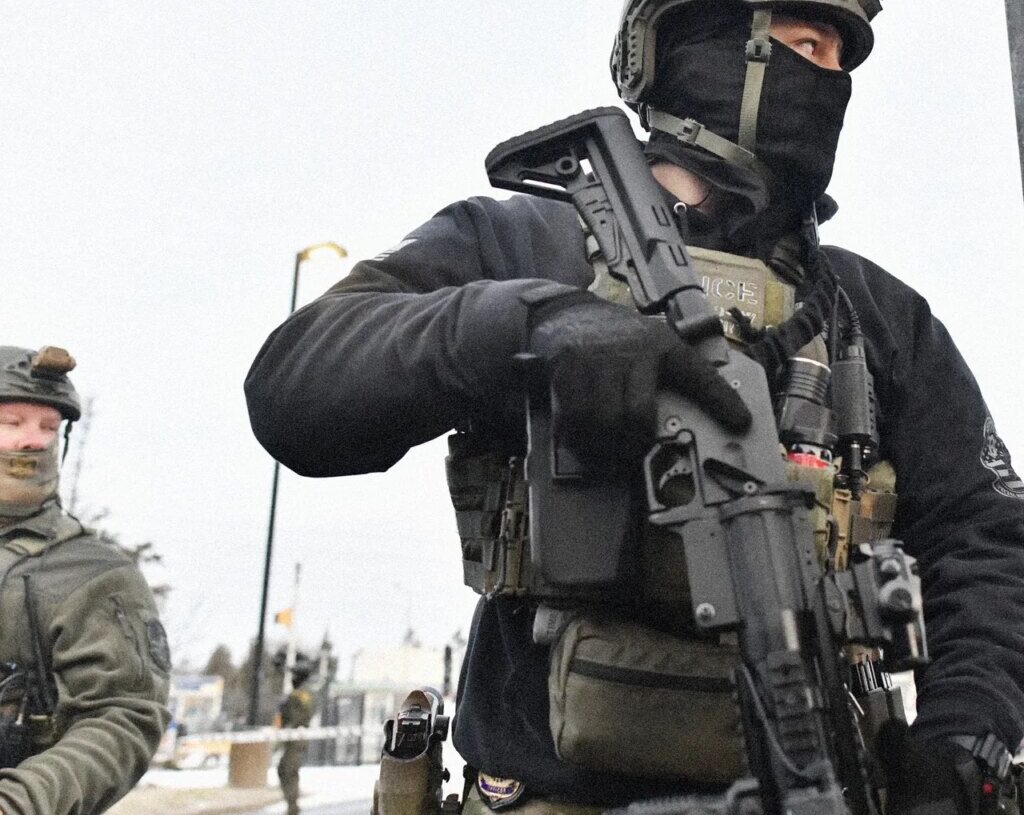
The presence of immigration agents in cities and towns around the country has starkly increased in recent months, and tensions have escalated in step. On Wednesday, a federal agent shot and killed 37-year-old Minneapolis resident and US citizen Renee Nicole Good in her car during an Immigration and Customs Enforcement (ICE) operation. Having already deployed 2,000 agents to Minnesota, DHS reportedly planned this week to send 1,000 more. “There are now more ICE agents in Minnesota than there are combined in Minneapolis police force and St. Paul police force,” Minnesota Senator Amy Klobuchar said on Friday. “So they are outnumbering our own local police officers out on the streets.” (Minnesota and Illinois have since filed lawsuits in federal court to end the ICE “invasion” in those states.)
Elsewhere, Customs and Border Protection agents shot two people in a car in Portland, Oregon, on Thursday, hospitalizing both. These tragedies are just the latest in a series of violent incidents involving immigration agents that have escalated since US president Donald Trump took office a year ago with a sweeping anti-immigration agenda. In addition to intense activity in Minneapolis and Portland, ICE and CBP have carried out deportation operations across the US.
“The number of ICE agents has dramatically increased, the sheer presence in people’s communities is larger,” says Jennifer Whitlock, senior policy counsel at the National Immigration Law Center. “And this means that the risk of encountering an ICE officer has really increased for people, even if you’re not in any way attached to immigration.”
Pause
Problems have persisted for years with ICE and CBP actions—including arrests and detentions—that accidentally ensnare US citizens and other documented residents. Additionally, the agencies’ operations have a history of aggression and mistreatment in dealing with suspects. Immigration infractions are typically civil, not criminal offenses. Over the last year, though, the Department of Homeland Security’s budget for immigration enforcement has expanded substantially at the same time that public unrest about the activity has grown. The result is a charged climate in which standard interactions can quickly, and dangerously, escalate.
“We’re surging operations because of the dangerous situation we see in this country,” homeland security secretary Kristi Noem said in a press conference on Wednesday. “We should all work together to protect our citizens.”
Many see immigration enforcement’s track record and current activity very differently, though.
“For its entire existence, ICE has been a very violent agency and a very unaccountable agency without a lot of oversight or transparency,” says Nithya Nathan-Pineau, policy attorney and strategist at the Immigrant Legal Resource Center.
She notes that as immigration officers have been involved in more and more violent incidents in recent months, it has become harder than ever to offer simple, definitive advice to people about assessing risk in interactions with federal agents.
Numerous sources told WIRED that their trainings and materials about interacting with federal immigration agents are actively evolving to reflect the current moment. For example, one core point has long been to explain the difference between a judicial warrant signed by a judge that gives law enforcement the right to, say, enter a person’s home versus the administrative warrants that ICE agents often carry that do not give them that right. “Don’t open the door for ICE” is a common refrain. But this type of information, while still accurate, does not fully account for the chaotic intensity of current US immigration enforcement.
“In the past, we would encourage people to exercise your right to protest or record video to document,” the National Immigration Law Center’s Whitlock says. “We always talked about risk assessment and how some people are more vulnerable than others, but now it’s not just risk of arrest at a protest, it’s risk of physical harm. I don’t think we fully anticipated how ICE and CBP would ignore and violate people’s constitutional rights.”
In short, there is some risk inherent in any interaction with federal immigration officials, whether you’re a US citizen or not. Even if you aren’t willing to expose yourself in that way, though, you can still take action to meaningfully and concretely help people in your community affected by the Trump administration’s policies.
Plan Ahead
Depending on your situation, you should make a plan in case you end up interacting with immigration enforcement while out and about.
In its online guidance, the nonprofit National Immigrant Justice Center says individuals and communities can create a “safety plan” to help be best prepared in case ICE operatives arrive in the area. Such a plan could involve identifying trusted family members, friends, or colleagues who can act as emergency contacts for people who could be the target of federal immigration actions, or anyone who could come into contact with agents. Memorize their phone numbers and also make sure that your child’s school or daycare has emergency contacts on file. If you know you are at specific risk of deportation, you may consider additional steps, too, related to establishing an emergency guardian for children and a power of attorney for yourself.
Given that US citizens are not safe from violence or arrest at the hands of federal immigration agents, immigrants with an established status, visa, or permanent residency are potentially at even higher risk if they participate in community safety efforts or other activities that put them near immigration agents.
In December, DHS vehemently denied to WIRED that its agents engage in racial profiling as part of immigration operations. Multiple sources emphasized to WIRED, though, that nonwhite Americans should consider being extra cautious about proximity to immigration agents. This is particularly true in light of a September 2025 US Supreme Court decision in which Justice Brett Kavanaugh concluded that someone’s apparent ethnicity may be a “relevant factor” that could justify detaining someone during an immigration enforcement action—something now derisively known as a “Kavanaugh stop.”
You should consider taking precautions to protect yourself against potential digital surveillance if you know you are going to be proximal to immigration authorities. CBP and ICE both have digital surveillance capabilities that are increasing all the time. You can’t always anticipate when you might encounter federal agents, of course, but people who could specifically be the target of an immigration enforcement action should consider taking extra digital precautions if they can.
Looking broadly, sources told WIRED that political polarization and rising tensions across the US are key contexts in assessing potential risks.
“It’s no longer Officer Friendly out there,” Whitlock says. “This is not to give any excuse, but I can imagine there is a mindset within the field ICE agents and CBP where they really do think they’re under attack and being threatened. And no one is above the law, but I think it’s important for people to understand that there are going to be limited forms of trying to hold these officers accountable in practice.”
On the Scene
If you find yourself witnessing an immigration enforcement action, there are some things to keep in mind if you want to stick around.
“The goal is to be an observer and to document what is happening,” says Nathan-Pineau of the Immigrant Legal Resource Center. “The goal is not to go and try to intervene in the law enforcement action.”
Training materials from Siembra NC, a North Carolina–based grassroots organization working to defend its local communities from exploitation, say that the priority when ICE is present is letting agents know they are being observed and reminding people of their right to remain silent, while deescalating whenever possible and promoting safety. The group advises that if ICE operatives are conducting an arrest or traffic stop, responders should try to approach within their line of sight and identify themselves in the process.
Filming ICE behavior can let agents know they are being watched, potentially creating some accountability for their actions, as well as a digital evidence trail for any legal cases or proceedings that may occur at a later date. When interacting with federal agents as part of a group effort responding to ICE, Siembra NC recommends identifying yourself as a volunteer, and asking agents who they are, what they are doing, and what agency they work for. Then you can state that you will remain present to observe, while also recording any models of vehicles, license plates, and operatives at the scene.
“We always advise people that if the law enforcement officer that you are filming tells you to step back, you should step back and you should say it out loud—‘I’m stepping back, I’m stepping back.’ That way you’re recording that you’re complying with their order,” Nathan-Pineau says.
Multiple sources reiterated that recording federal agents has a dual purpose, because if your own behavior and that of the people around you is appropriate to the situation, this will be captured in your documentation as well as any officer misconduct. The fact remains, though, that peacefully filming interactions can be interpreted as aggressive or escalatory precisely because it is an accountability mechanism.
Proximity is one of the most important risks to assess when on the scene, says Xavier de Janon, director of mass self-defense at the National Lawyers Guild. “The closer people have been to federal agents or property, the more likely they’ve been charged, tackled, or arrested,” he says.
More and more, federal prosecutors are seeking criminal charges against people for allegedly assaulting federal officers, even if the cases ultimately don’t succeed and later get dropped. The NLG recently published a guide on how protesters and observers can assess risks related to the federal assault law.
Work From Home
Even if you can’t risk hitting the streets, there are other important ways to contribute to community safety efforts.
Civil liberties groups have been campaigning nationwide to ban real-time surveillance platforms and end lucrative contracts that feed information to ICE. You can contact the offices of your local officials and tell them to cancel surveillance contracts and stop information-sharing and other law enforcement cooperation that fuels ICE operations.
“It’s good that local officials in cities targeted by ICE are speaking out and condemning their brutal tactics—but talk is cheap,” says Evan Greer, director of the digital rights activist organization Fight for the Future. “ICE violence is enabled by ICE surveillance, often with help from local police and city-run surveillance systems. If local leaders want to protect their residents from ICE’s gestapo tactics, one of the most immediate things they can do is roll back and limit surveillance by canceling contracts with surveillance vendors like Flock and banning the use of facial recognition and other forms of biometric surveillance, either through executive action or city ordinance.”
For those who are not direct targets of the federal immigration crackdown, Kathy O’Leary, a member of the Catholic peace organization New Jersey Pax Christi, recommends listening to neighbors who are directly affected and figuring out what they need. Every week, she and other volunteers go to Delaney Hall Detention Facility in New Jersey to support families who are visiting their loved ones in detention. The volunteers bring chairs and water for the visitors—who are forced to wait outside—and help visitors navigate the rules of the facility.
For example, she said, her group started bringing extra clothing because they realized that visitors were being turned away because of dress code violations. She said it started when a woman who had traveled all the way from Boston to visit her father in detention was turned away because she was wearing ripped jeans. A volunteer realized she was the same size and offered to switch pants.
“That was a serious act of resistance,” O’Leary says. “The system was creating a hurdle to see her father. The system tries to limit contact with families; it’s about stealing people’s hope and trying to break people.”
O’Leary and other volunteers also give out gift cards to grocery stores to visitors, since many families’ breadwinners are the ones in detention. O’Leary says that people who want to figure out how to get involved in their communities can see if they live near a local member of the Detention Watch Network. If there isn’t a member in their state, sometimes groups in neighboring states will know who’s active in their area.
Working with local mutual aid organizations, food pantries, and other humanitarian support groups contributes to overall community strength and safety. And simply contributing to digital ICE watch trackers as you go about your regular activities can give others valuable information.
“It’s about what lever matches your risk tolerance, matches the resources that are available to you,” says Matt Mitchell, CEO of the risk-mitigation firm Safety Sync Group. “Not everyone has the same privileges. Some people want to donate money, some people want to write letters, some people want to read up on what law enforcement and CBP and ICE can and can’t do. Some people want to put their bodies in the space and assemble because that is our right, some people want to document. There are many different levels.”
The post What to Do If ICE Invades Your Neighborhood appeared first on Wired.