I didn’t invent the phrase “regime change,” but I know it when I see it. And what is happening in Venezuela now is not regime change. Instead, it recalls aspects of the Bay of Pigs invasion, and the failure of regime change efforts there.
In 1961, President John F. Kennedy’s administration decided to proceed with former President Dwight Eisenhower’s planned strike in Cuba, albeit markedly scaled back. Eisenhower’s approach did not guarantee success, but Kennedy’s slimmed-down model, heroic though it was, was doomed from the start. Halfway measures didn’t succeed then, and they won’t succeed in Venezuela today.
As a result, the Castro regime effectively remains in power in Havana. Years from now, will the Hugo Chávez-Nicolás Maduro regime still retain power in Caracas?
If President Trump does not soon radically alter his administration’s make-it-up-as-you-go-along style — a preference for overt action seemingly without the intense preparation, close cooperation with the opposition and intelligence that underlie any real chance to succeed in tipping a hostile regime — it may never accomplish regime change.
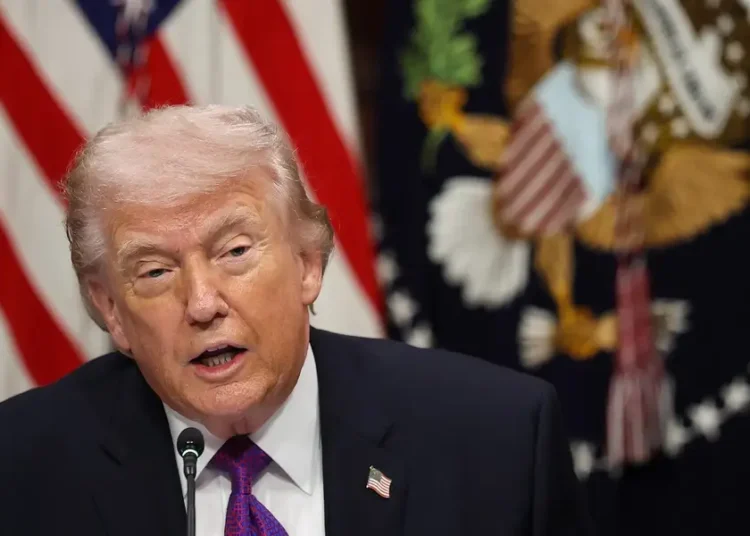
Removing Mr. Maduro was entirely proper, achieved by a brilliant military operation that every American adversary will duly note. Mr. Trump then announced, stunningly, that in Venezuela, “Well, we’re gonna run everything. We’re gonna run it, fix it. We’ll have elections at the right time. The main thing you have to fix, it’s a broken country.”
Secretary of State Marco Rubio tried to roll Mr. Trump’s words back immediately, saying, “It’s not ‘running’ the — it’s running policy, the policy with regards to this.” How long will all this last? According to Mr. Trump, possibly for years: “Only time will tell,” he said in an interview with The Times.
Whatever Mr. Trump and Mr. Rubio meant, allowing the remnants of Mr. Maduro’s regime (a “deep state” if ever there was one) to retain authority, even temporarily, is a potentially catastrophic mistake. Mr. Trump’s principal argument for keeping the dictatorship is to ensure Venezuela’s stability in order to “fix” the country. But to what end?
Mr. Rubio briefed members of Congress on a three-stage process: stabilizing the country; recovery; and rebuilding civil society to transition to a democratic government. These stages to approaching normalcy are sensible, but acting as though the likes of Vladimir Padrino López, the defense minister, and Diosdado Cabello Rondón, the interior minister, will meekly follow Mr. Trump’s game plan for years to come is delusional.
Had Washington engaged the opposition earlier and more effectively, it could have very quietly found and exploited fractures within the regime after Mr. Maduro was snatched. There’s no sign that happened, but it is not yet too late to come from behind and prevail.
Mr. Trump didn’t improve things by dismissing the Nobel Peace Prize winner María Corina Machado and the entire Venezuelan opposition as insufficiently respected or capable of running even an interim administration to prepare the return of constitutional, representative government.
Venezuelans might beg to differ. In the 2024 elections, stolen by Mr. Maduro’s regime, Ms. Machado was the overwhelming choice of the diverse, often contentious opposition. But Venezuela’s top court, which is filled with Maduro loyalists, barred her candidacy. The little-known Edmundo González became the substitute candidate, and by some estimates won nearly 70 percent of the general election popular vote, despite every effort by the government and thuggish motorcycle gangs (the “colectivos”) to intimidate and suppress the opposition vote. Ms. Machado is scheduled to meet Mr. Trump on Thursday; perhaps she can achieve more than just surrendering her Nobel medal to him.
America’s Venezuela operation could be going a different way. Why did Mr. Trump abandon his 2019 approach to the opposition, recognizing Juan Guaidó as Venezuela’s legitimate interim president, and vigorously supporting him through sanctions and mobilizing international support? The Financial Times reported that before Mr. Maduro’s capture, his vice president, Delcy Rodríguez, “was envisaged as head of a transitional government in secret talks that her politician brother, Jorge, led with Washington last year about a post-Maduro future,” with Mr. Maduro agreeing to go into exile.
Who in the U.S. government conducted that dialogue, which seems to be where the decision to support Ms. Rodríguez emerged? Mr. Rubio has held discussions with Ms. Rodríguez herself since Mr. Maduro’s capture, but it is unclear if she was his preferred interlocutor. To paraphrase what I once heard from a constitutional scholar, Mr. Trump loves the dictatorship; he just hates one particular dictator, Mr. Maduro.
Riding with the Rodríguezes (Jorge is president of the National Assembly), General Padrino López and Mr. Cabello implies that this clique will follow Washington’s orders and then toddle off into obscurity. To the contrary, the top priority for the Maduro-less regime is self-preservation, which is different from alignment with the U.S. president or committing to his demands. The administration is undoubtedly trying to extract loyalty from the military, the police, the colectivos and other key constituencies. Numerous reports indicate the Rodríguez faction is repressing the opposition, and otherwise seeking to shore up its power.
Every passing day enables the regime to entrench itself further, as evidence of emerging widespread repression, including renewed threats by the colectivos against Venezuela’s civilians, hoping to intimidate them into inaction. Unsurprisingly, the new caudillos present a smiling face to Mr. Trump, announcing the release of political prisoners, including at least five Spanish citizens who will return to Spain.
Mr. Trump is already effectively declaring victory, saying that the previously threatened “second wave” of U.S. military attacks is no longer necessary and even considering restoring diplomatic relations. Reports about the status of U.S. forces deployed in the Caribbean conflict are mixed, but at least some naval and air assets have reportedly departed from the region.
Most important to any chance for successful regime change is for Washington to enforce a “no exceptions” blockade on oil-related shipments to and from Venezuela. Failing to do so would be another severe mistake, an example of Mr. Trump’s intense desire to claim victory quickly for political credit domestically.
We had the opportunity to help the opposition remove these leaders, but retreated from the challenge. Combined with the inevitably discouraging effects of Mr. Trump’s disdain, the opposition is certainly demoralized and unlikely to take significant steps against what remains of the government, although perhaps Thursday’s scheduled Trump-Machado meeting will present an opportunity for Mr. Trump to turn things around. Now, Washington is effectively responsible for every act of the continuing dictatorship.
Mr. Trump has talked about using funds derived from Venezuela’s oil revenues in country, but not controlled by the Rodríguez faction. That is easier said than done. Too bad Mr. Trump demolished the U.S. Agency for International Development, which was well equipped for such assignments. Does the administration contemplate a parallel Venezuelan authority controlled by the opposition to disburse assistance? Or Americans on the ground? We don’t know. Why sustain parallel governments when working now to empower the opposition to administer existing agencies is the ultimate objective, and was apparently considered entirely viable in Mr. Trump’s first term?
Inevitably, the longer the level of political risk remains high, the lower the chances of significant foreign investment. The absence of rule-of-law conditions is undoubtedly central to the ExxonMobil chief executive Darren Woods’s declaration as oil company executives met with Mr. Trump on Friday that, as of now, Venezuela is “uninvestable.” That will not change materially until a free government rules in Caracas.
China may well accept dealing with a post-Maduro government to exploit Venezuela’s oil reserves if U.S. companies decline to make substantial new investments. China’s vastly increased presence is a risk here if the remainder of the regime does not exit quickly.
Without revenues from Venezuelan oil sales and much sooner than later, however, much of Mr. Trump’s grand design is simply fantasy. Moreover, his plans may well cause grave damage to U.S. oil-shale producers, hardly the mark of a purportedly “America First” administration.
There is no avoiding the reality that after almost 30 years of authoritarian rule, Venezuela cannot escape some level of turmoil in any transition to representative government. But the way to transition is to transition, not to seek stability for the sake of stability. Stability is far more likely to follow the transition than to precede it.
Autocracies can be plenty stable, including stable enough to keep themselves in power. Whatever caused Mr. Trump to back away from the opposition — C.I.A. comparisons of Ms. Rodríguez and Ms. Machado, Mr. Trump’s fascination with dealing with real authoritarians or the intoxication of a big oil deal — he badly misplayed his hand.
Mr. Trump can, at least for now, say he believes that only a prompt transition will be effective. Yes, that will contradict what he had been saying earlier, but reversing course has never been a problem when it suits him.
In fact, the oil blockade and the broader coercive power of America’s military are the principal facts worrying Rodríguez et al. as they play for time to solidify their position. Instead of a “second wave,” the real threat should be a clear ultimatum: Leave for exile in Cuba within X days. Or else.
The administration should encourage the opposition to work inside Venezuela to encourage defections from the military and civilian authorities. This is a riskier course now than if it had been undertaken before grabbing Mr. Maduro, but better late than never.
Under his present approach, Mr. Trump has put himself in a box. Despite the availability of overwhelming coercive military force, he is preemptively surrendering to Mr. Maduro’s cronies by allowing them to remain in power. By helping his adversaries up off the floor, Mr. Trump is complicating the dilemmas faced after all regime changes.
It is still possible to reverse course and insist to Ms. Rodríguez and her crew that they are leaving “now,” whether they like it or not. But time is short.
John R. Bolton was the U.S. ambassador to the United Nations and the longest serving national security adviser in President Trump’s first administration.
The Times is committed to publishing a diversity of letters to the editor. We’d like to hear what you think about this or any of our articles. Here are some tips. And here’s our email: [email protected].
Follow the New York Times Opinion section on Facebook, Instagram, TikTok, Bluesky, WhatsApp and Threads.
The post Trump Has Declared Premature Victory in Venezuela appeared first on New York Times.