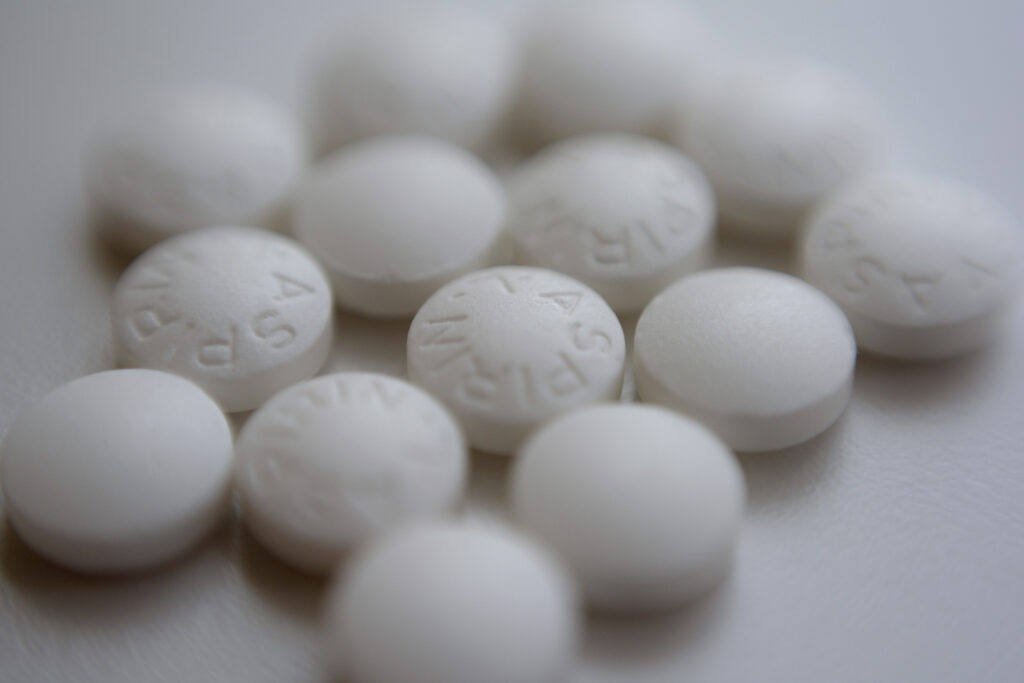
President Donald Trump, in a wide-ranging interview with The Wall Street Journal earlier this month, revealed that he takes a high-dose aspirin pill every day despite his doctors encouraging him to switch to a lower dose. “They say aspirin is good for thinning out the blood, and I don’t want thick blood pouring through my heart,” he said. “I want nice, thin blood pouring through my heart.”
Trump, unfortunately, is not alone in having misconceptions about the ubiquitous pill. His comments offer a timely opportunity to revisit recommendations that have evolved substantially over the past decade.
Aspirin’s medical history began thousands of years ago with its use as a pain reliever. In the 1950s and 1960s, researchers discovered that it helps prevent blood clots by making platelets less likely to stick together. Clinical trials in the 1970s and 1980s found significant reductions in heart attacks and strokes among daily aspirin users, and the drug became a mainstay of cardiovascular disease prevention.
A paradigm shift occurred over the past decade. Part of the change reflects the success of other preventive strategies, including better treatment of high blood pressure, diabetes and high cholesterol, as well as lower smoking rates. As a result, today’s patients derive less benefit from aspirin than earlier generations did. The risks of aspirin have also become more apparent: Long-term use increases the chances of gastrointestinal bleeding and can lead to devastating events such as bleeding in the brain.
In 2018, a major New England Journal of Medicine study examined the use of low-dose aspirin among older adults to prevent a first heart attack or stroke. The trial found that daily users had a significantly higher risk of major hemorrhage and no meaningful reduction in cardiovascular disease compared to a placebo group. This led the American Heart Association and the American College of Cardiology to update their guidelines to discourage routine aspirin use in people older than 70. Adults between the age of 40 and 70 could still consider low-dose aspirin if they were at higher cardiovascular risk, provided they do not have an elevated risk of bleeding.
Another seismic shift came in 2022, when the U.S. Preventive Services Taskforce, a federally supported panel whose recommendations shape health care practices nationally and influence insurance coverage, also revised its guidance. For the first time, the group recommended against starting aspirin for the prevention of cardiovascular disease in adults age 60 and older who haven’t previously had a stroke or heart attack. For those aged 40 to 59, the decision should be based on a person’s individual risk. Even among people whose risk of developing cardiovascular disease was greater than 10 percent over the next decade, the task force concluded that “the net benefit of aspirin use in this group is small.”
Importantly, these recommendations do not apply to patients with a history of heart attack, stroke, cardiac bypass surgery or a recent stent placement. For these people, regular use of aspirin or another blood thinner remains the standard of care.
But even for these high-risk patients, the recommended dose is a low-dose aspirin, commonly called a “baby aspirin” and sold as 81 milligrams. The dose that Trump is taking is four times higher. Large randomized-controlled studies trials have shown that higher doses are no more effective at reducing heart attacks or strokes — either in people with healthy hearts (as Trump is believed to have) or in those with established cardiovascular disease — and carry greater risk of harm.
Trump’s decision reflects a broader disconnect between current evidence and real-world aspirin use. A 2025 study found that a third of adults aged 70 and older — approximately 9 million people — continued to take aspirin to prevent heart attacks and strokes. Among those using aspirin for this purpose, more than 20 percent reported taking it on their own, without medical advice, including 14 percent of those older than 70.
People need to understand that aspirin is a drug like any other, with both potential benefits and real risks. Daily use is not appropriate for everyone, and aspirin should be discussed with a doctor just like other medications. Older adults should be cautious, especially those with higher bleeding risk — including people with liver or kidney disease or a history of gastrointestinal bleeding. Lower doses are preferred over higher ones, except in specific clinical situations.
Aspirin’s evolving guidance, and the lag in how it is understood and applied, shows why clear, credible medical information from trusted experts is so essential. Without it, patients will make decisions in an information vacuum, where outdated beliefs and misinformation often crowd out the latest evidence.
The post Don’t follow Trump’s example on aspirin appeared first on Washington Post.