Before 2020, decisions about whether transgender athletes could compete on school sports teams in accordance with their gender identity were left to athletics associations in districts and states.
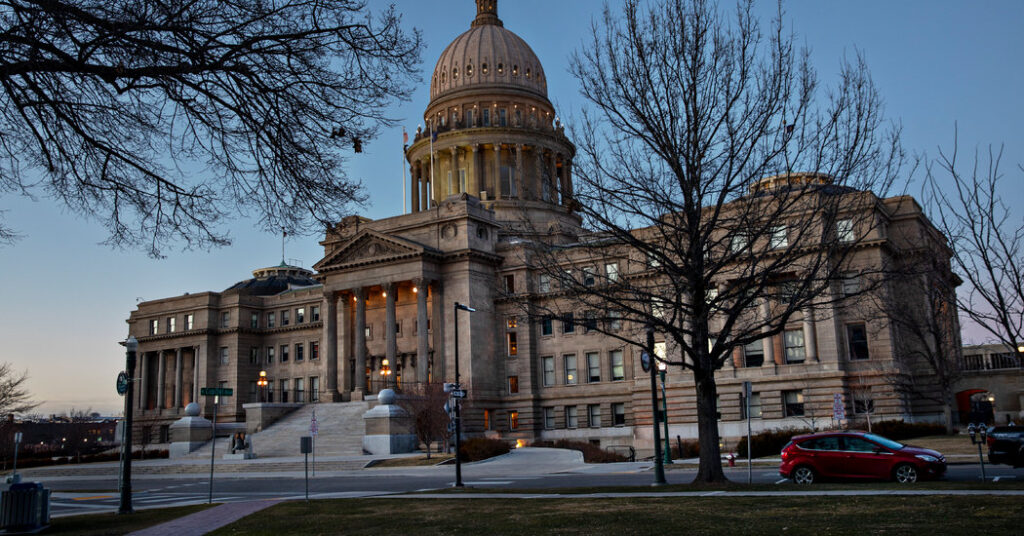
But over the past six years, 27 states enacted laws in rapid succession restricting their participation. Idaho, whose statute is being challenged before the Supreme Court, was the first, in March 2020. West Virginia, whose law is also now before the court, passed its version in 2021.
There is no authoritative count of trans athletes in school sports. During contentious hearings at state houses across the country, sponsors of legislation often did not cite an instance in their own state or region where participation had caused a problem.
The wave of legislation came as the number of young people identifying as transgender was climbing, adding to a perception among many parents across the political spectrum that their own daughters might be placed at an unfair disadvantage. In a Gallup survey last spring, about two-thirds of adults said they believed that transgender athletes should be limited to teams that match their birth sex, including four in 10 Democrats.
The legislation was part of a strategy among conservative activists a few years after the Supreme Court made same-sex marriage a national right in 2015 to rally their base.
All the states that enacted restrictions had Republican-controlled legislatures. Two more, Alaska and Virginia, banned transgender participation through regulations or agency policies, according to the Movement Advancement Project, an L.G.B.T.Q. advocacy group. Efforts in Congress to pass a national ban have failed.
Last spring, Minnesota became the first state to sue the Justice Department over its threat to cut federal funding to states that allow transgender girls and women to participate on sports teams that correspond with their gender identity. The state argues that its own anti-discrimination statute requires that trans athletes be allowed to participate in sports.
Harmeet Dhillon, the head of the Justice Department’s civil rights division, wrote in a letter to the state attorney general that the state’s position “seemingly requires Minnesota schools to disregard the federal government’s interpretation of Title IX,” referring to the civil rights law that bars sex discrimination in schools, at issue in the West Virginia case.
The Supreme Court will address the question of whether the word “sex” under Title IX means only biological sex, as the Trump administration has argued, or whether it also includes gender identity. Its answer will likely shape the future for trans athletes across all states.
Amy Harmon covers how shifting conceptions of gender affect everyday life in the United States.
The post 27 States Restrict Trans Participation in School Sports appeared first on New York Times.