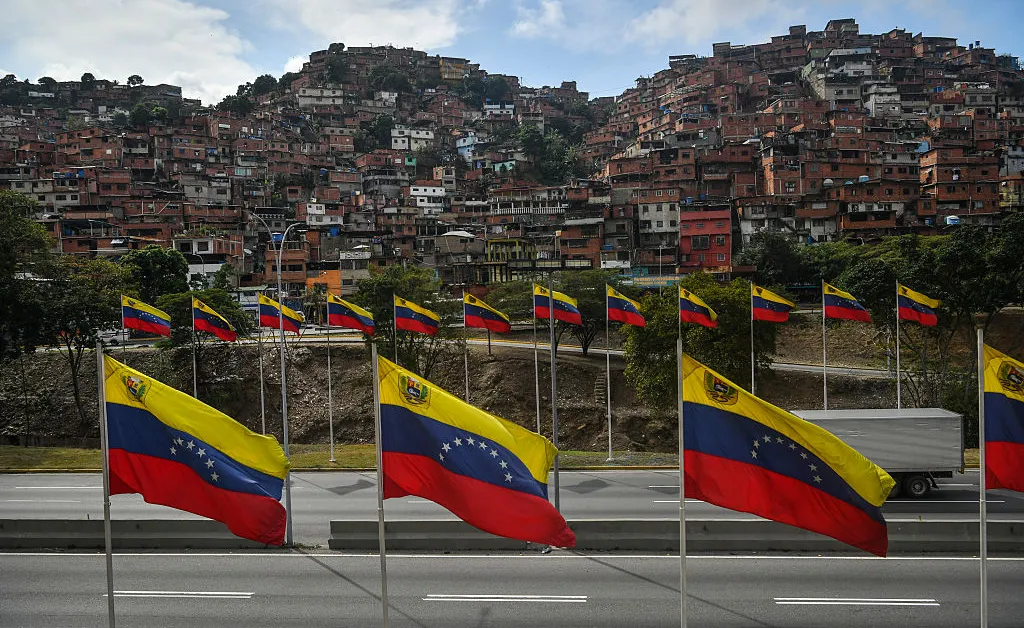
The U.S. capture and extradition of Venezuelan President Nicolas Maduro on Jan. 3 marks a new period of uncertainty for Venezuela. After the strike, Venezuelans across the country rushed to grocery stores to stockpile supplies amidst fears of instability and violence. During a UN Security Council emergency meeting on Jan. 5, Secretary General Antonio Guterres warned of possible instability not only in Venezuela, but across the region.
[time-brightcove not-tgx=”true”]
Speculation is rife over Venezuela’s political future. However, one thing is abundantly clear: after years of humanitarian crisis, overstretched public systems, and sharp aid cuts, further security and economic deterioration would have disastrous implications for already-vulnerable Venezuelans.
Rampant political and economic uncertainty and the threat of further violence threaten to worsen already serious, unaddressed humanitarian needs. Tragically, civilians are paying the price.
In December 2025, I visited programs operated by my organization the International Rescue Committee (IRC) at the Venezuela-Colombia border, where since 2018 we have
provided humanitarian relief to displaced Venezuelans and Colombians fleeing conflict. Discussions with displaced communities and our staff underscored the already-dire situation facing many communities.
Conditions in Venezuela are grim, with a decade of political and economic crisis leading to the collapse of health, education, and other basic infrastructure. Hyperinflation has left food and other basic goods unaffordable for the 80% of the population estimated to live in poverty. Nearly 8 million Venezuelans are in humanitarian need, requiring health, nutrition, water, and other critical assistance.
The Venezuelan crisis has long stretched beyond its borders. An estimated 7.9 million Venezuelans have left the country, with the majority settling in Latin American countries like Colombia, host to nearly 3 million Venezuelans. About half displaced in the region are unable to afford three meals a day or access adequate housing.
Colombia and other host countries are also facing their own challenges. Both displaced Venezuelans and Colombians are suffering from increasing internal conflict within Colombia, with violence affecting at least 1.5 million people in 2025. The 2016 Peace Process that ended a decades-long conflict between the government and nonstate armed groups is crumbling as armed groups fight to control territory and resources, including the illegal drug trade.
During my visit, I heard stories of women who fled Venezuela in a desperate search for safety and stability for themselves and their children. Some settled in Colombian towns which were later captured by armed groups and had to flee a second (and often third) time. Colombians spoke of witnessing executions and of fears for their children in a context where forced child recruitment increased 1,000% between 2021 and 2024. Many spoke of sexual assaults that they or those close to them had experienced.
Yet U.S. and global aid cuts have left humanitarian actors with few resources to respond. The strain on capacity was a theme in every conversation I had with IRC staff and partner organizations. Several organizations have closed operations within Venezuela as a result of the US grant terminations in early 2025. An estimated 1.5 million fewer people in need were reached in 2025 compared to 2024 as a result of aid cuts.
The situation in countries hosting displaced Venezuelans is similarly dire. At the end of January 2025, much of our programming in Colombia was halted due to the U.S. government stop work orders, only resuming months later, eroding community trust and incurring added costs to rebuild project infrastructure. Other organizations have been forced to close entirely; UN officials told me that 20 of 38 organizations operating in Cucuta, a Colombian town on the Venezuela border, are reported to be closing by the end of the year. In 2025, the UN announced that it would be scaling back its presence in Colombia as a result of global aid cuts.
This depletion of humanitarian capacity means that should the security situation deteriorate, or additional displacement occur, organizations are ill-equipped to meet needs. Within Venezuela, tensions remain high amidst the risk of violent repression, power struggles, and further military actions. In Colombia, the government has mobilized to respond to potential displacement—yet is also facing significant budget constraints and a displacement crisis of its own.
There is much that remains uncertain about Venezuela’s political future. Urgent international efforts are needed to scale the humanitarian response and mitigate impacts on civilians in both Venezuela and the broader region:
First, it is essential for the international community to prioritize preventing violent conflict and humanitarian impacts on civilians in Venezuela and across the region. Several countries such as Spain and Brazil have offered to mediate negotiations that would de-escalate the threat of conflict, and multilateral engagement including through the United Nations is essential for solutions that put civilians first.
Second, donors must ensure organizations have the resources to support already-vulnerable communities. This means both rapid, flexible investments to address urgent humanitarian needs and sustainable support for civil society and markets to help transition from assistance to self-sufficiency. Based on our teams’ assessments, healthcare and psychological support for survivors of sexual assault and conflict are vital. Scarce aid can be maximized by investing in approaches that reach more people at less cost. For example, where local markets are stable enough, such as in Colombia, cash assistance is a highly cost-effective solution that helps communities meet food and other basic needs and strengthens local economies.
Finally, donors and policymakers should support local actors working on the frontlines. In Colombia, this means technical and financial support to Colombian municipalities and grassroots organizations meeting the needs of new and longer-term displaced individuals. In Venezuela, local organizations are essential to ensuring the hardest-to-reach communities are not left out. They are also a vital bastion
of civil society in a country where repression has heavily constrained civic space. Yet these organizations—which delivered 58% of assistance in 2025—have been the hardest hit by aid cuts.
A worsening humanitarian crisis for Venezuelans is preventable. But it will require strategic, sustained international engagement to protect civilians from the fallout of worsening geopolitical tensions, and ensure that humanitarians have the resources to support them.
The post Venezuelans Can’t Afford Another Catastrophe appeared first on TIME.