OFFA, Nigeria — When President Donald Trump announced U.S. airstrikes in Nigeria on Christmas night, he declared that his newly rebranded War Department had conducted “numerous perfect strikes” against “ISIS Terrorist Scum.”
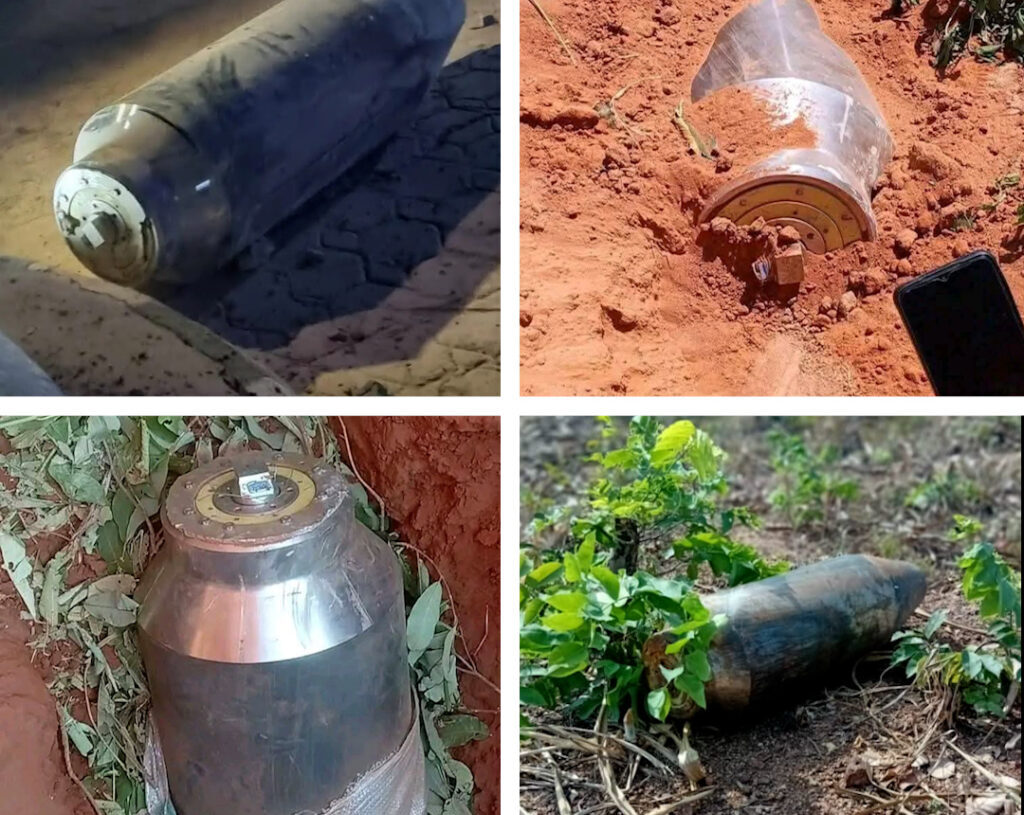
But warheads in four of the 16 Tomahawk missiles that were fired that night appeared not to explode, according to Nigerian officials, analysts and imagery reviewed by The Washington Post. Residents said one of the unexploded munitions landed in an onion field in the village of Jabo, in northwest Nigeria, while another hit residential buildings in Offa, around 300 miles to the south. The third Tomahawk crashed in an agricultural field outside Offa, according to a state police official, and the fourth was recovered by Nigerian police in a forest in Zugurma, 120 miles to the north.
It is unclear why the four Tomahawks didn’t detonate. Experts suggested a few possibilities, including mechanical failures or a decision by commanders to crash them because conditions at the target sites may have changed.
The target of the remaining missiles and the damage they inflicted remain unclear, with U.S. officials and analysts casting doubt on their effectiveness. As Trump resorts to forceagainst Islamist militants who he says are persecuting Christians in Nigeria, the first strikes in the campaign illustrated the limits of American intelligence and military capabilities in West Africa.
In a statement late on Dec. 25, U.S. Africa Command (AFRICOM), which oversees American military operations on the continent, said its initial assessment was that “multiple ISIS terrorists” were killed in the strikes. The targets, according to Nigeria’s government, were “terrorist enclaves located within the Bauni forest” in northwestern Sokoto State.
Given the location, Nigerian and Western analysts said, it was unlikely that the strikes hit high-level members of the Islamic State, who are most active in the northeast of the country. More likely, they said, the attack targeted lower-level militants associated with a newer Islamist group called Lakurawa, whose relationship with the Islamic State is disputed by researchers.
Nigeria provided the intelligence for the strikes, according to two U.S. officials, who both said it is difficult for the United States to determine which groups are operating on the ground and their affiliations. “We have nothing in the area,” one of the officials said, referring to the intelligence assets needed to understand militant networks.
In linking the targets to the Islamic State, AFRICOM overstated its confidence in the identity of the fighters, one of the U.S. officials said, speaking like others in this article on the condition of anonymity to discuss sensitive matters. The operation, the official said, “was likely not very effective and did not remove any camps or capabilities.”
Neither the White House nor the Pentagon answered questions from The Post about the unexploded Tomahawks, or about the affiliation and number of militants killed.
Pentagon press secretary Kingsley Wilson said in a statement, “The airstrike in Nigeria was planned and executed on intelligence shared between U.S. and Nigerian Defense Forces. Prior to executing the airstrike, communication and coordination with Nigerian partners in addition to a thorough review of the targeted location and ISIS connections occurred to deliberately ensure the mission was executed to maximize effect and minimize risk of harm to civilians.”
White House spokeswoman Taylor Rogers said in a statement that U.S. forces “successfully took out” many “radical ISIS terrorists using powerful and precise strikes.”
A Nigerian defense official said that at least four unexploded missiles that were part of the Christmas night strikes have been identified — two in the Offa area, one in Jabo and one in Niger State. The official said that the explosives unit of Nigeria’s police department is investigating the cause.
Some of the other 16 missiles hit militant targets, the official added, but assessing the casualties has been difficult because “the terrorists are in ungoverned spaces.”
Daniel Bwala, an adviser to Nigerian President Bola Ahmed Tinubu, said the targets were chosen after weeks of intelligence-gathering in the northwest, which he said has become an important corridor linking Islamist extremists in Nigeria with fellow fighters in Mali, Burkina Faso and Niger — the region known as the Sahel — a global epicenter of terrorism.
But the other U.S. official noted that the decision to target Lakurawa, a relatively minor militant group, seemed to have been driven by Nigeria’s own internal calculations. “It’s not clear if it’s incompetence or intention” on the part of the Nigerian government, said a former U.S. official with experience in the region, saying Washington had placed too much confidence in its counterparts in Abuja.
“I’m not sure,” the former official added, if the fighters targeted “are worth the price of one Tomahawk.”
Failure to detonate
On Nov. 1, Trump threatened to go “guns-a-blazing” into Nigeria if its government did not stop the killing of “our CHERISHED Christians!” by “Islamic Terrorists.” The sudden threat alarmed Nigerian officials, who said they would welcome help from the United States in addressing terrorism but rejected the notion that Christians were being killed disproportionately — or that the state was allowing it to happen.
Violence in Nigeria — a nation of 230 million struggling to maintain security on multiple fronts — is more complex than Trump and his allies have suggested, according to Nigerian and Western analysts. Although Islamist militants aligned with the Islamic State and Boko Haram have killed Christians, they said, their attacks have targeted moderate Muslims as well. And in central Nigeria, where fighting between Muslim herders and Christian farmers has intensified, the battle is more over resources than religion, analysts said.
Within AFRICOM, there were concerns leading up to the strike about how effective it would be, given the lack of U.S. intelligence in the region and the choice of weapon, according to one of the current U.S. officials and the former official. The Post reported similar doubts among decision-makers in November after Trump first threatened military action.
Each Tomahawk missile is around 3,000 pounds, with warheads inside weighing around 1,000 pounds, according to the Pentagon. They come equipped with onboard cameras that send images of the target to military operators, giving them visibility during flight.
An individual Tomahawk costs around $2 million, according to estimates from the Defense Department, which means the strike on Nigeria used more than $30 million in weaponry.
The 16 missiles U.S. and Nigerian officials said were fired on Christmas night came from a Navy ship in the Gulf of Guinea. If four did not explode, as the evidence suggests, that would place the failure rate at 25 percent — a surprisingly elevated figure for a missile that reported a 90 percent success rate more than two decades ago, according to the U.S. Naval Institute.
In the immediate aftermath of the strike, images began circulating on social media claiming to show unexploded American weaponry. Hany Farid, a digital forensics professor at the University of California at Berkeley, reviewed photos of the four unexploded Tomahawk warheads at The Post’s request and said he did not see “any evidence of manipulation or AI-generation.”
The locations of photos showing damaged residential buildings and the warhead in Offa were confirmed by The Post, while the presence of another unexploded warhead in the onion field in Jabo was corroborated by a villager. Adetoun Ejire-Adeyemi, the spokeswoman for the Kwara State police, told The Post that a third warhead had been recovered on Dec. 26 from a field in Oro, about 13 miles outside of Offa. The final unexploded munition was discovered Tuesday by locals in the remote community of Zugurma, between Offa and Jabo, according to Wasiu Abiodun, a spokesman for the Niger State police.
The remnants appear to be warheads from inside Tomahawk missiles, according to X posts from Trevor Ball, a former explosive ordnance disposal technician for the U.S. Army.
Ball’s findings were independently confirmed to The Post by researchers from Armament Research Services (ARES), a munitions research and analysis consultancy, and by Armed Conflict Location and Event Data (ACLED), a U.S.-based monitoring group.
The unexploded warhead that caused the most damage landed in the courtyard of the Solid Worth Hotel in Offa, The Post found, around three-tenths of a mile from another site where apparent munitions debris were strewn amid the ruins of residential buildings. N.R. Jenzen-Jones, director of ARES, told The Post that the damage to the buildings was “consistent with the impact of a munition which failed to detonate.”
The debris field suggested that the missile came apart, he added, with the denser warhead probably passing through the residential buildings and landing in the hotel, while lighter components were scattered around the area of impact.
The Post could not determine why the missiles didn’t detonate. Several factors could have played a role, including mechanical failures or other issues known only to those involved in the attack, experts said. They noted that Tomahawks are preprogrammed with a target location and use sophisticated guidance systems to get there, including data of the terrain they will travel through and GPS for course correction. The missile also does not arm until later in its flight.
The missile that struck the building in Offa may have suffered from a mechanical problem, said Arch Macy, a retired Navy officer who worked on the Tomahawk program. But the three other unexploded warheads found in fields and a forest away from civilians suggest possible navigational issues or commanders deciding to intentionally crash them, he said.
The missiles travel at subsonic speeds, and it may have taken one or more hours for them to reach their targets. In that time, the targets may have moved, or the intelligence provided by Nigeria may have degraded by the time the missiles were in the air, Macy said. In such cases, commanders can decide to crash the Tomahawks in a location of their choosing.
“If you want to dump it in a field, then you can do that if you don’t want it to hit wherever you told it to originally go,” Macy said. “More likely they were diverted from their original target and there wasn’t any other usable target or approved target nearby you could divert them to.”
Tomahawks are often chosen when commanders want to avoid high-risk operations that would threaten manned aircraft. Analysts have raised concerns that they are not being replenished fast enough after being used in U.S. strikes in Yemen and Iran — and should be stockpiled in the event of conflict with Russia or China.
Tom Karako, director of the Missile Defense Project at the nonpartisan Center for Strategic and International Studies, urged the Trump administration to “stop wasting Tomahawks on terrorists with no air defenses.”
‘A ball of fire’
When she “heard a loud bang and the wall started cracking,” on Christmas night, Offa resident Morenike Saka, 67, thought she was dreaming. “I began to scream for help because I was stuck and trying to crawl my way out of the room, but a big piece of concrete had blocked the way,” she told The Post.
She was rescued from the rubble by a boy who lived next door. “I’m still very shocked by the incident,” Saka said.
The unexploded missile tore through her apartment building in southwestern Nigeria, which was home to some eight people and had adjoining shops. Houses next door and a nearby hotel were also damaged, residents said.
“I was in my room when it happened and was buried under the ruins,” said Musa Soliu, 28, another resident of the apartment building. “It took a while before they were able to pull me out.”
Soliu said he wasn’t able to salvage any belongings from his apartment and is still in the clothes he was wearing on the night of the attack. “I don’t even know where to restart my life,” he said.
Many locals have nowhere to stay and are squatting with relatives, they said. And the village is still gripped by fear.
“There’s no clear explanation on why it fell in Offa, many kilometers from its target point,” said Hammed Suleiman, a 29-year-old resident. “The government needs to be transparent with us and answer these questions,” he said, “to restore public confidence.”
The live warheads would have posed a significant hazard for civilians in the area, experts said. Unexploded ordnance left behind by U.S. forces maim and kill scores of people every year globally, according to watchdog groups, even decades after their initial use.
In a news conference last week, Michael Onoja, a spokesman for Nigeria’s Defense Ministry, said that special units had been dispatched to recover the remains of missiles and warned civilians against picking up or keeping the materials.
In Jabo, a typically quiet village in northwest Nigeria, Abubakar Umar, a 42-year-old farmer, recalled being in his room around 10:30 p.m. on Dec. 25 when he heard a “very loud sound, like an aircraft about to land” and felt his house start to shake.
When he and his neighbors rushed outside, he said, they “saw an object that looked like a ball of fire” in a nearby onion field. Only after a few hours, when the fire had died down and police started to clear the debris, did they begin to piece together what had happened.
“We do not have anything like a bandits’ camp or ISIS presence here,” Umar said.
At least two missiles struck in the Jabo area, said Nuhu Umar, a 63-year-old retired civil servant — one that exploded and another that did not. The missile that detonated landed a few meters from his family’s farm, said Umar, who was in the regional capital on the night of the strikes but returned the next morning.
The missile that did not explode landed in another farmer’s field about one kilometer away, he said, adding that residents had raced toward the site and collected debris.
“I tried to tell people to be cautious,” Umar said, “that they can never tell what danger is in there.”
Fighters in the forest
In a Dec. 26 statement on X, Mohammed Idris, a Nigerian government spokesman, said the targets of the strikes were “foreign ISIS elements” located in the Bauni forest axis of the Tangaza local government area, in the northwest.
NASA satellites appeared to pick up a fire on Dec. 26 in a wooded area of Tangaza soon after the attacks, according to NASA’s Fire Information for Resource Management System site. Satellite imagery taken Dec. 26 from Planet Labs and reviewed by The Post also revealed newly scorched ground in an area with healthy vegetation just two days before.
Malik Samuel, a Nigerian security researcher at Good Governance Africa, who has done recent field research in the area, said he was told by his contacts within Lakurawa that the militant group sustained significant casualties but that its leader was not hit. In his interviews with Lakurawa members, Samuel said, they claimed allegiance to al-Qaeda rather than the Islamic State.
Much remains unknown about Lakurawa, and its objectives are disputed by analysts. But most agree that the Islamist militants — many of them originally from the central Sahel — were invited to Northwest Nigeria by local authorities around 2017 to protect residents from bandits.
The recruits implemented a strict version of Islamic law, analysts said, and over time came to terrorize the communities they were meant to protect. Last year, Lakurawa was designated as a terrorist groupby the Nigerian government.
The group was probably weakened by the strike, Samuel said, but has gone on the offensive in its aftermath, killing at least 21 civilians on Dec. 31 in neighboring Kebbi State. At least nine people were beheaded, he said, and the rest were shot.
While the motive for the attack was unclear, Samuel said, it underscored a sobering reality. For future U.S. strikes to be effective, he said, they would have to drive the group out of Nigeria. Otherwise, he said, “they will only lead to more violence.”
Chason reported from Dakar, Senegal, and Lee, Horton and Arnsdorf from Washington.
The post Unexploded missiles, witnesses undercut Trump account of Nigeria strike appeared first on Washington Post.