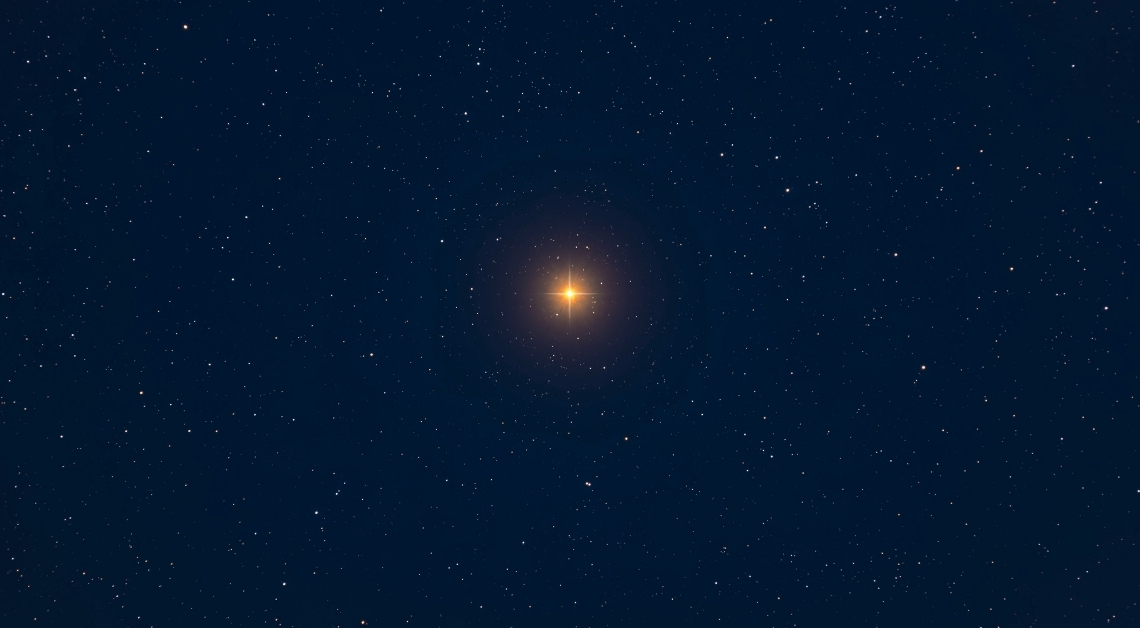
Betelgeuse (not Beetlejuice) is a red supergiant in space whose brightness fluctuates. It does this because one set of rhythms made sense to scientists, and another set that they didn’t quite understand. Well, we might finally know why: for all these years, it had a small hidden celestial companion.
Astronomers knew that Betelgeuse pulses roughly every 400 days, swelling and shrinking due to internal processes common to aging stars. The real problem was a second cycle, repeating every about 2,100 days, which didn’t make much sense given everything we know about how stars work.
It happened regularly, so it wasn’t some random blip, and it happened too slowly to be explained by any currently understood pulses it could be emitting. The leading theory suggested that a dim companion star orbiting close enough to it was causing it that we couldn’t detect.
That theory has been confirmed. This whole time, Betelgeuse has had a little tiny tagalong buddy that we could never fully catch a glimpse of until now.
Betelgeuse Has Had A Companion Star Friend All This Time
After nearly eight years of observations using the Hubble Space Telescope and ground-based observatories in Arizona and the Canary Islands, researchers detected a dense trail of gas moving through Betelgeuse’s thick atmosphere. This “wake” is caused by the companion star, officially named Siwarha, as it moves through the red giant’s outer layers like a freighter ship cutting through fog.
Instead of dimming Betelgeuse directly, Siwarha subtly alters the star’s ultraviolet light, especially emissions from ionized iron. When the companion passes in front of Betelgeuse, astronomers see a sharp spike in its light. As it moves along and its gas trail drifts behind, that same material absorbs the radiation, shortening the peak. The pattern repeats every 2,109 days, neatly matching the mysterious long-term cycle.
In an official NASA release, the study’s lead author, Andrea K. Dupree, compared the companion stars’ movement to a boat moving through water.
“The companion star creates a ripple effect in beetle dices atmosphere that we can actually see in the data,” she said. “For the first time, we’re seeing direct signs of this wake, or trail of gas, confirming that Betelgeuse really does have a hidden companion shaping its appearance and behavior.”
Siwarha has now slipped back behind Betelgeuse and won’t reappear until August 2027. Until then, astronomers will keep watching the ripples, finally knowing what’s making them.
The post Betelgeuse Has a Massive Secret Astronomers Just Discovered appeared first on VICE.