The day after an immigration officer shot and killed a woman in Minneapolis, the Trump administration reinstated limits preventing lawmakers from making unannounced visits to immigration facilities, according to a court filing made public over the weekend.
In a memo dated Thursday, the homeland security secretary, Kristi Noem, said that she would once again require lawmakers to give seven days’ notice before conducting oversight visits to Immigration and Customs Enforcement facilities.
Ms. Noem’s new guidelines on lawmaker visits are virtually identical to a policy that a federal judge halted last month after ruling that it appeared to violate a provision of the appropriations law that funds ICE.
But Ms. Noem said that she would bypass that ruling by using another source: the injection of funds given to the agency through the One Big Beautiful Bill Act, President Trump’s signature domestic policy law, which more than tripled ICE’s annual budget.
Ms. Noem’s memo, filed in court on Saturday, is all but certain to further stoke the conflict between Democrats and the Trump administration over its deportation push. As federal officials have increased immigration enforcement efforts, they have been met with increasingly hostile protests, including in Minneapolis, where an ICE agent fatally shot Renee Good, 37.
Ms. Good’s killing provoked a widespread outcry and protests across the United States, and intensified ongoing demonstrations in Minneapolis.
Tricia McLaughlin, a spokeswoman for the Department of Homeland Security, said that Ms. Noem issued the new limitations directly in response to that rising unrest, which she referred to as “escalating riots and political violence.”
Democrats, who had sued the department over the earlier guidance, vowed to challenge Ms. Noem’s new policy in court. Representative Joe Neguse of Colorado, a party to the lawsuit, called the memo “ a clear attempt to subvert the ruling” made last month.
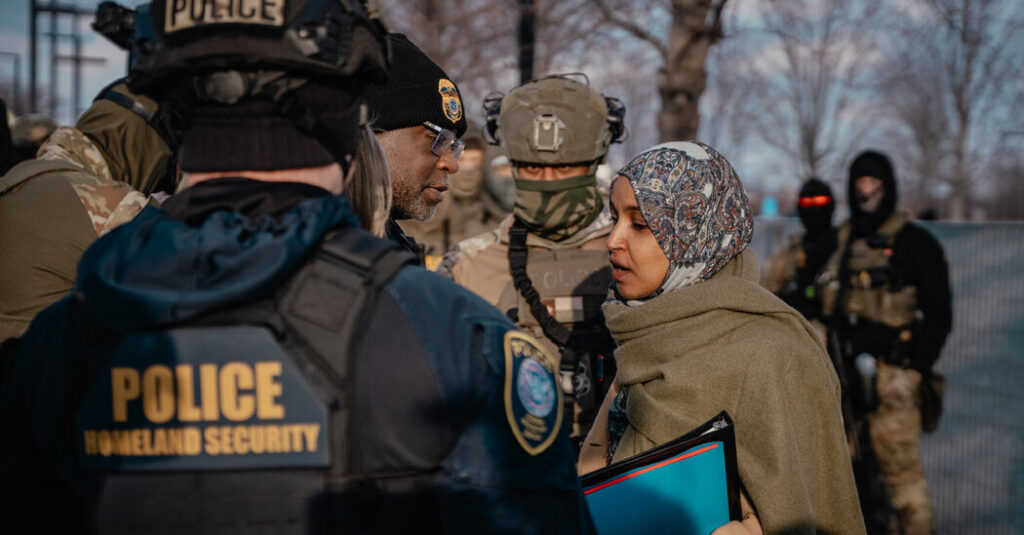
Federal immigration officials on Saturday used Ms. Noem’s guidance to deny Representatives Angie Craig, Ilhan Omar and Kelly Morrison, all Minnesota Democrats, from entering a detention facility in Minneapolis.
The three lawmakers said that they were stopped after having initially been granted access to the building, with federal officials citing the new guidance.
“This is a blatant disregard of the law,” Ms. Omar told reporters on Saturday.
Ms. McLaughlin said that the lawmakers had led a group of protesters to the facility and that they were “out of compliance with existing court orders and policies.”
Democratic lawmakers across the country have been turned away from ICE facilities repeatedly over the past year as they have tried to conduct oversight visits.
“It is our job as members of Congress to make sure that those folks detained are treated with humanity,” Ms. Craig said.
In her memo filed last week, Ms. Noem characterized the visits as “circuslike publicity stunts” that pulled immigration officers away from more important duties.
Since 2020, the federal appropriations law that annually funds ICE prohibits it from using congressionally appropriated funds to deny lawmakers physical access to their facilities.
Congress has not yet passed a law to fund the Homeland Security Department this year, and it faces a Jan. 30 deadline for doing so to avoid a partial government shutdown.
Spending bills cannot be enacted by the Senate without the support of some Democrats. In the wake of the Minnesota shooting, some have suggested that their party refuse to back a budget for the department that does not put restrictions on immigration enforcement policies that they characterize as aggressive and abusive.
Senator Chris Murphy, Democrat of Connecticut, said in an interview on NBC’s “Meet the Press” on Sunday that he believed his party needed to press for changes to rein in “the most lawless Department of Homeland Security in the history of the country.”
Michael Gold covers Congress for The Times, with a focus on immigration policy and congressional oversight.
The post After Minnesota Shooting, ICE Again Limits Congressional Visits appeared first on New York Times.