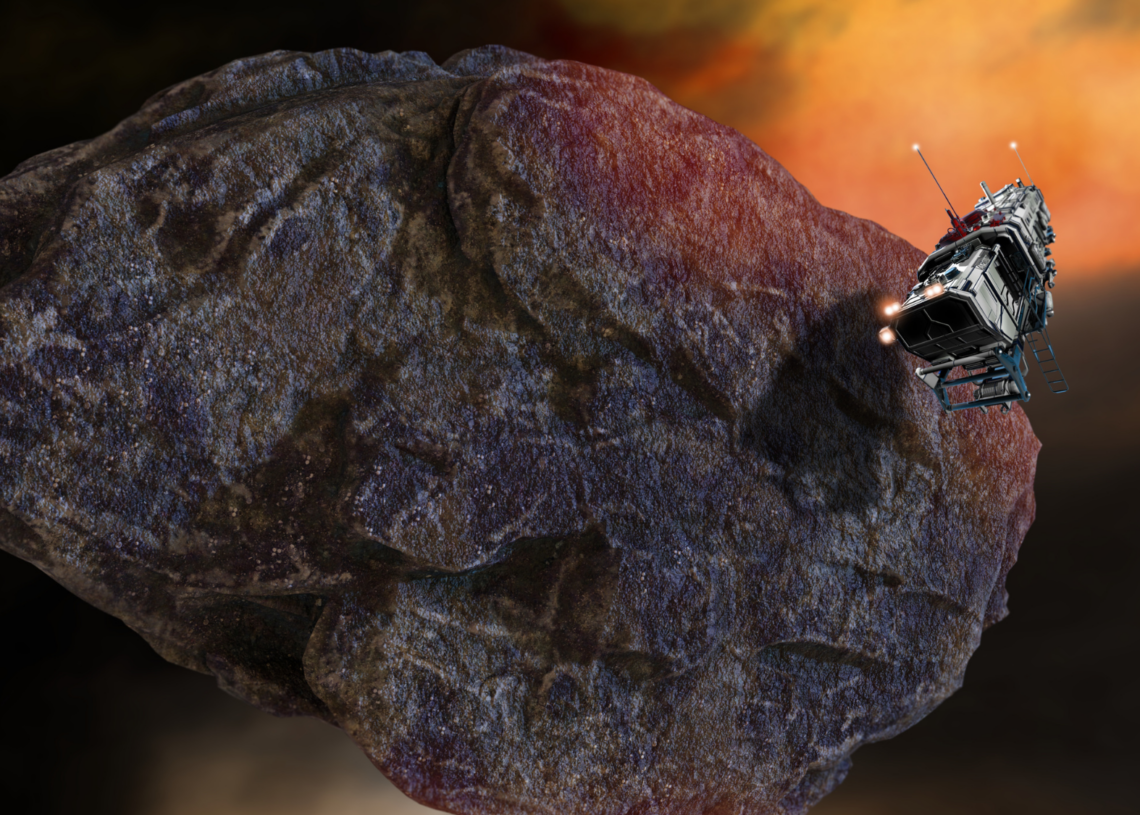
The idea of mining an asteroid is simultaneously plausible and so out there that it feels like it should only exist in the realm of science fiction. Landing people on a moving asteroid was the stuff of Michael Bay movies, not reality. A new study suggests that this notion of asteroid mining being the stuff of fantasy is largely correct…for now. It’s more out of reach than it is impossible.
Researchers from the Institute of Space Sciences in Spain analyzed carbonaceous chondrites, rare meteorites that come from C-type asteroids. These asteroids make up about 75 percent of those we know about and are considered some of the most primitive remnants from the Solar System’s formation. Using mass spectrometry, the team examined six major classes of these meteorites to see whether they actually contain materials worth mining.
The answer is a little messy. Most undifferentiated asteroids, the kind that produce these meteorites, aren’t treasure chests of precious metals that will net some mining company trillions of dollars worth of rare resources. They are, basically, hunks of junk that would be economically pointless to dig into.
Others are rich in very specific minerals, like olivine and spinel, while others still are loaded with high concentrations of water-bearing compounds that could make for valuable targets. The ones with water, in particular, could be the real prize, even over asteroids loaded with metals we find precious here on earth, like gold and platinum. In space, water can be broken down into rocket fuel or used to support a long-term mission. For this reason, the researchers say that future space/asteroid mining efforts should focus more on practical resources that support exploration and less on the sci-fi vision of infinite wealth.
The study also harps on a running through line through most space research, regardless of the specific field: we don’t know much of anything about space in the grand scheme of things. We may have learned a lot about asteroids over the past century, like how they are chemically messy and shaped by billions of years of collisions and solar radiation, but we generally don’t know how one will react when you start drilling into it.
Before we start doing that, it’s probably wise to conduct several more sample return missions just to confirm which asteroids out there are worth the risk. That initial groundwork is already being done by space agencies around the world, including China, and by NASA in the United States.
The post Will Astronauts One Day Be Sent to Space to Mine Asteroids? appeared first on VICE.