Two recent shootings by federal immigration agents have cast a fresh spotlight on incidents in which police open fire on moving vehicles, a tactic that has fallen out of favor with the LAPD and many other law enforcement agencies across the country because it often turns deadly and puts bystanders at risk.
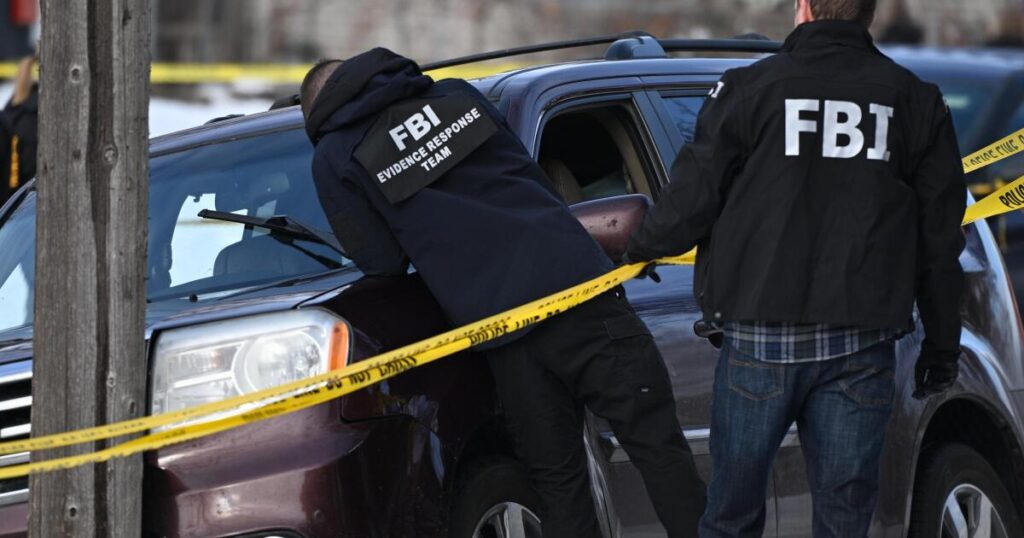
On Thursday, a U.S. Immigration and Customs Enforcement agent shot and wounded a man and woman inside a vehicle in a medical clinic parking lot in Portland, Ore., prompting protests and calls from local leaders for the Trump administration to end ICE operations in the city until a full investigation is completed.
A controversial killing that occurred Wednesday in Minneapolis also involved an ICE agent shooting at a car. Bystander footage showed an agent drawing his sidearm and firing at 37-year-old Renee Nicole Good after trying to prevent her from driving away in her SUV. Good had reportedly stopped to film ICE’s crackdown in the city.
Trump administration officials have said the officers in both shootings defended themselves and feared for their lives after motorists tried to “weaponize” their vehicles. Multiple investigations are ongoing, including by the FBI, and prosecutors have said no decisions will be made until those inquiries are complete.
Although public perception — driven by Hollywood shootouts that often feature good guys with guns firing at moving cars — is that police shootings of vehicles are common, the reality is many agencies now advise against officers using deadly force on motorists unless it’s necessary to save their life or prevent others from being killed.
The LAPD adopted its own rules along those lines about 20 years ago, after a controversial shooting of a young teenage boy who was killed while fleeing police in a stolen vehicle.
Many policing experts say having to shoot at a moving car is among the most dangerous and unpredictable situations an officer can face.
The risk, they say, is that a driver who is shot will lose control. The New York City Police Department was among the first to adopt limits, following a 1972 shooting that killed a 10-year-old passenger in a stolen car and sparked protests. In the decades since, dozens of other departments have adopted similar policies. Influential policing organizations such as the Police Executive Research Forum and the International Assn. of Chiefs of Police have recommended restrictions, which in the past have also been pushed by the Justice Department.
Bill Essayli, who leads the U.S. attorney’s office in Los Angeles, said at a news briefing Friday that the recent incidents involved “agitators” who were “trying to create a situation that causes chaos, and they want to trigger a response from law enforcement because they disagree with our immigration laws. “
“If you use your car to ram a police officer or a federal agent, they are gonna use deadly force, so people need to know this is not a game. This is not a game. Do not ram your car into an officer. If an officer gives you an instruction, comply, and no one will be harmed or hurt,” he said.
Experts acknowledge that cars can be deadly, pointing to the scores of officers who have been run over and killed nationwide while working accident scenes or writing tickets. But they also say that stray gunfire is a major concern, given the challenges of trying to hit a moving target.
Over the last decade, LAPD officers have fired at motorists an average of nearly four times a year, police data reviewed by The Times show. In all but one of the cases, officers were reprimanded or ordered to undergo retraining because they had erred in actions leading up to the shootings. And yet in more than two-thirds of the cases, police officials concluded that officers had been justified in opening fire.
In 10 cases, police officials concluded that the officers’ decision to use deadly force had been so faulty that the shootings had been “out of policy” and should not have occurred.
Since January 2015, LAPD officers have fired their weapons at least 36 times at vehicles, killing seven motorists or passengers and wounding 12 others in that span, according to a Times database. In 22 of the cases, police say at least one of the people in the vehicle was in possession of a weapon, most often a firearm.
But in 12 of the cases, the person targeted was not armed, including several people who were later found in possession of replica firearms.
On Thursday, the Department of Homeland Security released what it called new statistics about a significant increase in “vehicular assaults” — saying there were 66 such incidents between Jan. 21, 2025, and Jan. 7, compared to the two from the same period the year before against ICE personnel.
Ruben Lopez, a retired LAPD SWAT lieutenant who now teaches use-of-force techniques to officers across the country, said that departments have discouraged car shootings because of the potential danger it creates.
“Bad tactics always lead to bad shootings,” he said. “Even if you’re trying to arrest someone who’s trying to flee, that should not result in an automatic death sentence.”
Jim DeSimone, a longtime civil rights attorney who has filed scores of wrongful death and excessive force cases against agencies in the region, said that in watching and rewatching the video of the Minneapolis shooting it was clear to him that Good was trying to get away from officers, not strike them.
“At that point, you let her drive away,” he said.
Courts have long maintained that officers who fire at slow-moving vehicles are not entitled to qualified immunity. And yet, he said, law enforcement leaders often try to justify their officers’ actions after the fact by claiming that the person was using the vehicle as a weapon.
DeSimone is representing the family of Jose Juan Ayon Romero, 25, a father who was killed when San Bernardino County Sheriff’s Department deputies opened fire on his vehicle as it rolled back toward them during a traffic stop, the attorney said. Ayon Romero’s 4-year-old son was in the backseat, but wasn’t struck.
The shooting, of which there is audio but not video, occurred in January 2020. The trial is set to start in mid-February.
Times staff writer Sonja Sharp and the Associated Press contributed to this report.
The post Why LAPD and other police agencies discourage shooting at cars — and why ICE still does appeared first on Los Angeles Times.