The Trump administration has released an outline of four options for dealing with ongoing water shortages along the Colorado River, as officials from seven Western states remain at odds in negotiations over how to address the water crisis.
Current rules for handling water shortages expire at the end of this year and the U.S. Bureau of Reclamation’s alternatives propose ways to determine water cutbacks after that. Federal officials stressed the importance of quickly putting a plan in place, ideally one the seven states can agree on.
“In the face of an ongoing severe drought, inaction is not an option,” said Andrea Travnicek, assistant Interior secretary for water and science.
Representatives of California and six other states that depend on the river have been meeting regularly over the last two years to hash out a long-term plan to address shortages after 2026.
Scott Cameron, the Bureau of Reclamation’s acting commissioner, has urged state officials to negotiate an agreement by mid-February.
As the Trump administration released its draft environmental review Friday, Cameron said his agency hasn’t chosen from among the five alternatives detailed in the report, “given the importance of a consensus-based approach.” An agreement is expected to “incorporate elements or variations of these five alternatives,” he said.
One of the four alternatives is just “basic coordination,” which federal officials say could be done absent an agreement among the states. Others include “enhanced coordination,” “maximum operational flexibility” or a “supply driven” approach, as well as a “no action” alternative.
JB Hamby, California’s lead negotiator, said the step by the federal government “underscores the seriousness and urgency of this moment.”
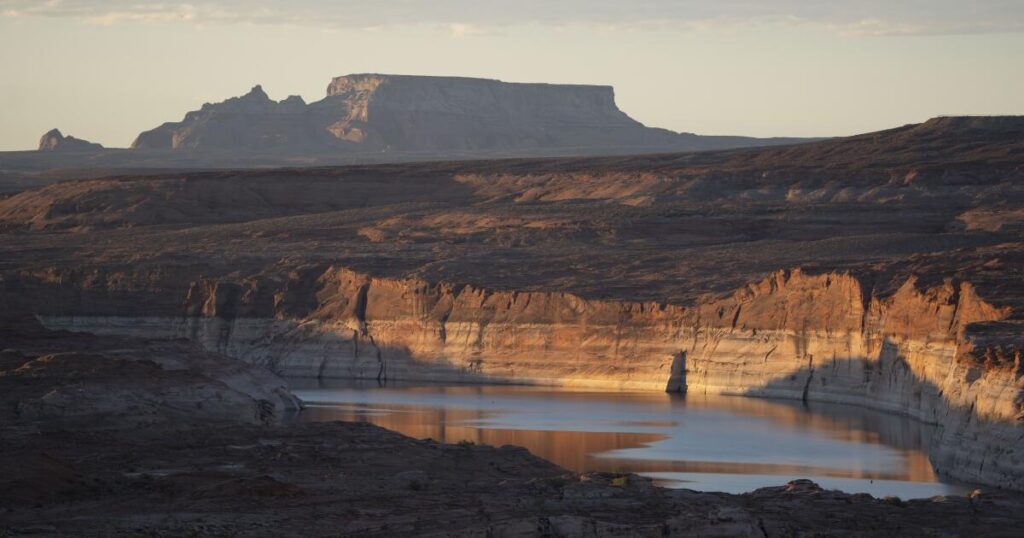
The Colorado River provides water for cities from Denver to San Diego, 30 Native tribes and farming communities from the Rocky Mountains to northern Mexico. It has long been overused, and its reservoirs have declined dramatically amid unrelenting dry conditions since 2000.
In the last quarter-century, the river has lost about 20% of its flow. Research has shown that the warming climate, driven largely by the use of fossil fuels, has intensified the long stretch of mostly dry years.
Lake Mead, the river’s largest reservoir, is now just 33% full. And Lake Powell, its second-largest reservoir, is at 27% of capacity.
Hamby said California is prepared to shoulder a portion of the necessary water cuts to help prevent reservoirs from declining to critically low levels, and said participation by other states will be key.
“The river will not wait. A sustainable solution requires all seven states to contribute,” he said.
The post Trump administration weighs how to confront Colorado River water shortfall appeared first on Los Angeles Times.