In 2013 Chrystia Freeland quit journalism and ran for Parliament as a Liberal in what was then seen as a significant endorsement of Prime Minister Justin Trudeau’s takeover of the party’s leadership. Once he was in power, Ms. Freeland became what Mr. Trudeau called his “minister of everything.” Then just over a year ago, she began the end of Mr. Trudeau’s career in politics with a resignation letter as finance minister that contained a stinging rebuke of his policies.
On Friday, Ms. Freeland’s political career came to its slow end as she officially stepped down from the House of Commons to take on an unpaid, part-time role as an adviser to Ukraine on economic development.
[Read: Zelensky Taps High-Profile Canadian Politician as Economic Adviser]
For the last five years of Mr. Trudeau’s time in office, Ms. Freeland served as his deputy prime minister. It’s a post that is often left unfilled, as is currently the case under Prime Minister Mark Carney, and one that first appeared in 1977.
It has sometimes been a title given to honor a long-serving minister. But Ms. Freeland, who was also finance minister at the time, took it on as an actual job and frequently spoke for the government on key matters like foreign affairs that Mr. Trudeau had delegated or in which he lacked her expertise.
My first encounter with Ms. Freeland came not long after the Liberals’ surprise win in the 2015 election. She had not been international trade minister long enough to have hung anything on the many picture hooks on the walls of her new office on Parliament Hill, where we met for an interview.
With many cabinet ministers, interviews are stage-managed affairs and the ministers’ responses, more often that not, sound like lines from a tired script.
There was none of that. Ms. Freeland rushed in — around Parliament she always seemed to be rushing — kicked off her shoes and put her feet up on a sofa. The interview had an easygoing air.
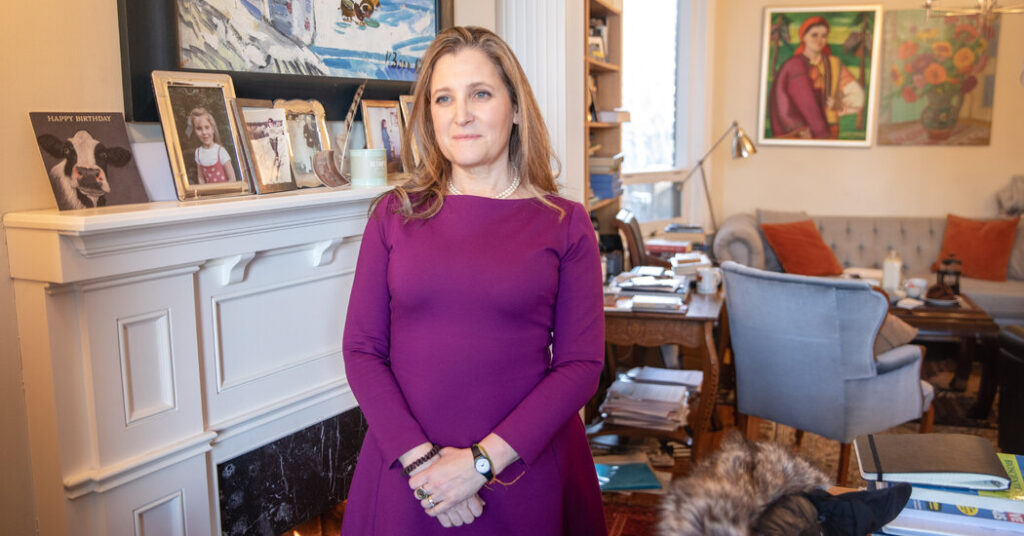
Even in power, Ms. Freeland continued to ride her bike rather than use a limo. Stacks of papers consume most of the surfaces in her home, which is furnished with a lot of secondhand pieces. (Ms. Freeland is married to a reporter from The New York Times.)
She was off to a prominent start as trade minister. When the French-speaking region of Belgium balked at the terms of a Canada-Europe free-trade deal, Ms. Freeland walked away from the talks.
“It is evident to me — evident to Canada — that the European Union is incapable of reaching an agreement,” she said. The bluff worked, and Canada closed a deal.
During President Trump’s first term in office, Ms. Freeland led Canada’s successful effort to renegotiate the North American Free Trade Agreement. (The result, known here as the Canada-United States-Mexico Agreement, will be formally up for review this year.)
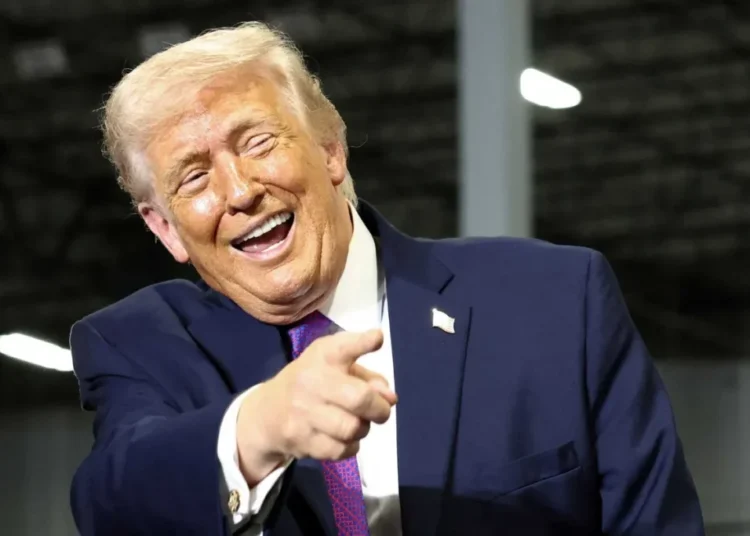
While she was able to strike a deal with Mr. Trump, he is no admirer. She appeared to take pride in his slights, which included calling her, among other things, “a whack” who is ”absolutely terrible for the country.”
She also made Canada a staunch supporter of Ukraine even before the Russian invasion.
Her mother, Halyna Freeland, was a lawyer and activist who was born to Ukrainian parents in a displaced persons’ camp in Germany after World War II. She raised Chrystia and her sister in a bilingual Ukrainian-English household in Peace River, Alberta. Ms. Freeland gave her three children a bilingual upbringing as well.
Ms. Freeland could at times seem like she was out of touch. When the rising cost of living became a growing worry for Canadians, she said that her family had dropped its Disney+ subscription as a budget measure.
She was also a frequent target for Conservatives in the House of Commons and their supporters online, particularly after she remained loyal to Mr. Trudeau long after many Canadians had soured on him.
Trump Administration: Live Updates
Updated
- Judge bars Trump from withholding election funds to states.
- Trump calls for a 10 percent cap on credit card interest.
- Consumer bureau leader requests $145 million for an agency he wants to eliminate.
While Mr. Carney and Ms. Freeland are friends, her time in politics seemed headed for its end after she lost the race to lead the Liberal Party to the former governor of the central banks of Canada and England.
[Read from 2025: Chrystia Freeland Steps Out of Trudeau’s Shadow as She Goes for His Job]
First she stepped down as minister of transport, the relatively minor cabinet post Mr. Carney had given her. Mr. Carney then made her Canada’s special representative for the reconstruction of Ukraine, an informal position.
In November, she announced that she would become the chief executive of the Rhodes Trust at the University of Oxford this July. (Both she and Mr. Carney were recipients of its scholarship.)
The final step in her departure brought one last political storm. While Ms. Freeland agreed to volunteer for Ukraine in late December, she initially said this week that she would step down from Parliament in a few weeks.
Several Conservative politicians and others immediately said that being both a member of Parliament and an adviser to a foreign government, even an ally, was a conflict of interest.
On Friday, Ms. Freeland’s resignation letter was with the speaker of the House of Commons.
Trans Canada
-
Canada and Venezuela were once competitors in the world market for heavy oil. If President Trump’s seizure of Venezuela’s oil industry leads to an increase in production, some experts say that Canada must look for new export markets.
-
The Times’s 52 Places to Go in 2026 include touring the Canadian Rockies by train.
-
After joining European leaders in rejecting President Trump’s calls for an American takeover of Greenland, Prime Minister Mark Carney said that Canada will open its first consulate there this year.
-
The residents of Gander, Newfoundland, once again came to the aid of stranded airline passengers.
-
“KPop Demon Hunters,” the stylish animated hit film by the Korean Canadian director Maggie Kang, is a leading contender in several Oscar categories. Melena Ryzik has compiled an oral history of how it came to be.
Ian Austen reports on Canada for The Times. A Windsor, Ontario, native now based in Ottawa, he has reported on the country for two decades. He can be reached at [email protected].
How are we doing? We’re eager to have your thoughts about this newsletter and events in Canada in general. Please send them to [email protected].
Like this email? Forward it to your friends, and let them know they can sign up here.
Ian Austen reports on Canada for The Times. A Windsor, Ontario, native now based in Ottawa, he has reported on the country for two decades. He can be reached at [email protected].
The post The Former ‘Minister of Everything’ Quits Office Amid One Last Political Storm appeared first on New York Times.