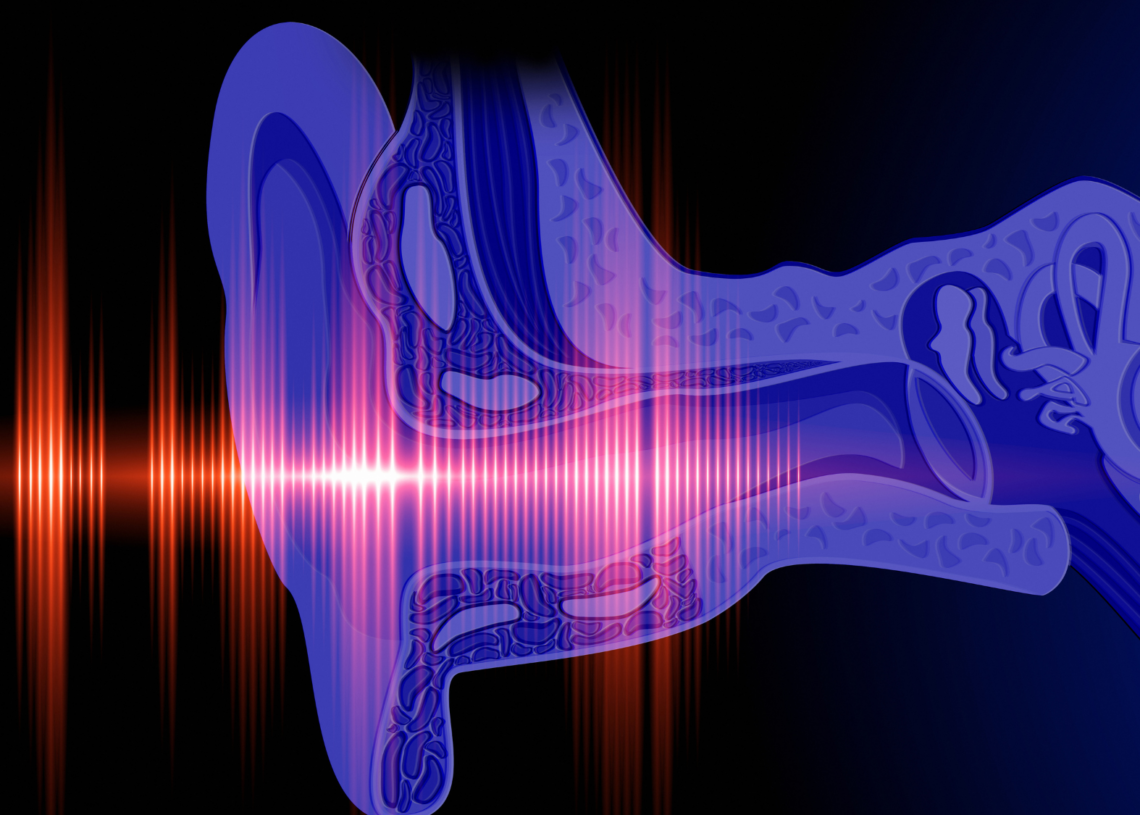
Inside that cramped real estate of our inner ears live the cochlea, which turns vibrations into electrical signals, and the vestibular system, which keeps us constantly falling over. Two vital systems that are almost impossible to observe at work.
That’s starting to change. Scientists at Rockefeller University have figured out how to remove a mammalian inner ear, keep it alive outside the body, and observe the earliest moments of hearing in real time. In two new papers, one published in PNAS and another in Hearing Research, the research team details how they even pulled that off, and what they saw after pulling off a feat that sounds like it’s straight out of a sci-fi novel.
Gerbils have a hearing range that closely overlaps with our own. That made them pretty good test subjects. Researchers carefully removed half millimeter slice of cochlea before it fused to the skull and placed it in a controlled chamber filled with nutrient-rich fluids that mimic the ear’s natural environment. The goal is to watch the cochlea’s 16,000 hair cells that are topped with microscopic stereocilia do their job of amplifying sound and converting it into neural signals.
The researchers found exactly what they were looking for, confirmation of a long-suspected idea that in mammalian hearing, tiny vibrations are amplified instead of lost, thus making even the faintest sounds audible. This is called Hopf bifurcation, the point at which the critical point of equilibrium is lost, leading to changes in stability. Had been previously observed in frogs but had never been observed in mammals until now. And all they had to do was nurse and in her ear and a box to see it.
Obviously, this raises the question of why they even need to do this at all. Because sensorineural hearing loss affects millions, and no drug currently exists to reverse it. That’s largely because researchers haven’t been able to fully understand how hearing works in real time. An observable inner ear, unattached to a person, gives researchers the perfect studying tool to observe how the ear works, and how we might be able to fix it if it becomes damaged.
The post Scientists Kept an Inner Ear Alive Outside the Body—But Why? appeared first on VICE.