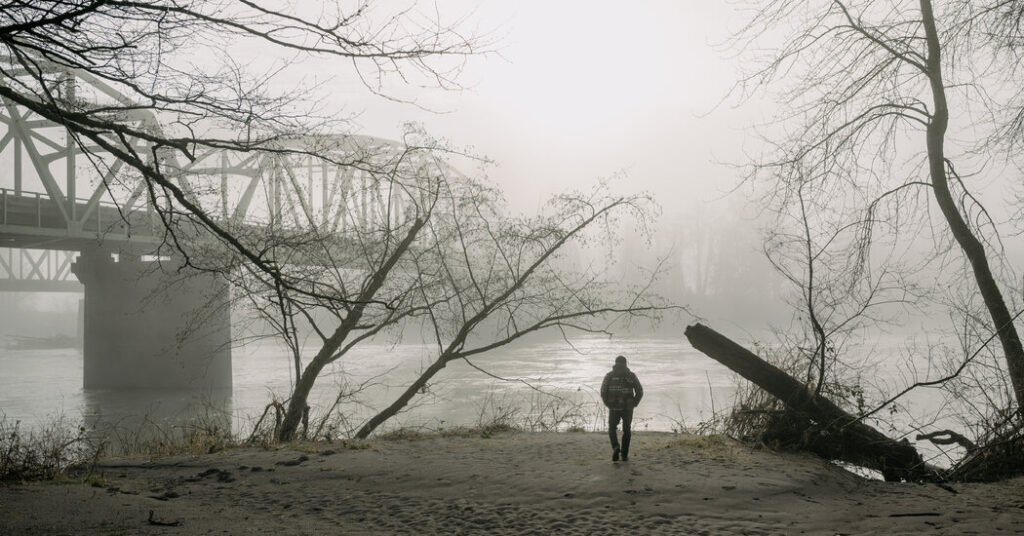
For the tribal nations of the Pacific Northwest, water has been a through line, bringing spirituality and sustenance that have sustained communities for generations.
Now, as climate change drives rising sea levels and increasingly brings devastating floodwaters to native lands, that same water is forcing coastal villages located in Washington State to adapt to protect their heritage.
The scope of the change needed was made clear by the flooding across the state this past December, which forced 100,000 people to evacuate from low-lying areas, required 600 rescues and took at least one life. Many of those who fled the rising waters were members of the Indigenous fishing tribes positioned on the front lines of the storms, east of the Puget Sound.
“We hopefully never will see this magnitude again,” said Scott Schuyler, 61, an elder and policy representative of the Upper Skagit Indian Tribe.
During the flooding, Mr. Schuyler evacuated his home in Skagit County near the Gages Slough, which is in a 100-year floodplain. That means the federal government estimates that every year, there is a 1 percent chance of a flood, a high enough risk that it requires homeowners to have flood insurance.
Mr. Schuyler’s mother, Doreen Maloney, chose not to leave her home, which sits atop a hill in Clear Lake, Wash. As the water rose, she found her home surrounded by water.
“Well, it’s a lake,” she said at the time. “No matter where you look, it’s a lake.”
Northwest Tribal Nations are widely recognized as leaders in climate adaptation, putting in place educational programs, rebuilding reefs, moving to higher ground and rebuilding wastewater systems. But the scale and the pace of change is overwhelming their ability to adjust. And they say that more grant money from the federal government is needed to protect their communities from rising floodwaters.
Those who evacuated after Governor Bob Ferguson declared a statewide emergency on Dec. 10 returned home to find varying degrees of damage. They soon faced renewed emergency declarations, brought on by levee breaches and flash flood warnings in Western Washington. Around noon on Dec. 15, the National Weather Service had urged residents: “Move to higher ground now. Act quickly to protect your life.”
Those types of warnings are a new phenomenon for the tribes, which have long had a symbiotic relationship with the water. Less than 50 years ago, rising waters were not a concern for the coastal dwelling communities.
The rivers were “in great shape, water was abundant, there was not a rising sea level issue at all,” said W. Ron Allen, the chair and chief executive of the Jamestown S’Klallam Indian Tribe, which is located on the North Olympic Peninsula.
There were no conversations about climate, he said, when he took over in the late 1970s. But as the pace of change accelerated, people began to ponder what future generations would inherit.
“I work for the future of our children,” Mr. Allen said. “We have high hopes and high expectations for them as we continue to teach them about what’s changing in our society, in our environment, and how do we find balance?”
While water is a significant part of tribal culture, flooding can cause lasting damage to their way of life.
When a flood occurs, the increased velocity and volume of water can disrupt the sediment at the bottom of rivers, making it difficult for salmon to spawn. Salmon is a vital food source for local wildlife and the Native American communities.
While the tribes’ primary concern is for the safety and well-being of the people, the flooding “scours out our salmon run spawning for the year,” Mr. Schuyler said. “It impacts historical cultural sites that could be damaged because of the flooding, being washed away or eroded away.”
Habitat restoration for salmon has been a longstanding priority in the Skagit River. Work to increase the salmon population is ongoing, including ensuring cool and clean water, removing barriers that prevent the fish from migrating and restoring wetlands, according to the Skagit County Salmon Strategy.
Blending traditional knowledge with modern science, tribes have taken steps to slow the affects of climate change, including rebuilding reefs; restoring channels essential for salmon, shellfish and plant life; and educating members on climate-related health risks.
As such, many of the Northwest coastal tribes have published climate change vulnerability assessments and action plans, detailing persistent concerns about public health, species and habitat protection and sea level rise.
To put those plans in action, tribal leaders say, more funding is needed. A 2020 Bureau of Indian Affairs report estimated that U.S. tribes would need $1.9 billion over the next 50 years to adapt their infrastructure for climate change.
“The tribes have been making really incredible progress in relocating in response to sea level rise and coastal flooding,” said Meade Krosby, a senior scientist with the UW Climate Impacts Group, which works closely with communities in the Pacific Northwest. “But at the same time, they have really struggled to receive the funding needed to accomplish these big, expensive adaptation projects like relocating buildings and roads and other infrastructure out of harm’s way.”
The federal government has been relatively responsive to the need, although that some of that funding has now been curtailed.
Grant funding for climate resiliency projects intended to ‘benefit disadvantaged communities’ was cut by the One Big Beautiful Bill Act, signed into law by President Trump on July 4. But some money has flowed to the tribes along the coast.
In 2022, the National Science Foundation awarded a $20 million grant to Haskell Indian Nations University to create a research hub for scientists from diverse coastal regions to study the impacts of a warming planet on coastal Indigenous communities. It was the largest grant ever given to a tribal college.
In 2024, the Bureau of Indian Affairs provided a $32 million grant to tribal nations and organizations to mitigate the continual effects of the climate crisis. These funds went to several critical projects, aimed at relocating residents and facilities to higher ground, constructing new wastewater infrastructure and researching ocean acidification.
In May, the Skokomish Tribe, located north of Olympia, received more than $1 million from the Department of Housing and Urban Development to carry out affordable housing activities.
The Skokomish have several projects underway including river restoration and the relocation and elevation of infrastructure to mitigate flood risks.
“Over the decades, we’ve taken a lot of different precautions and different projects to try to give our folks as much relief as possible,” said Tom Strong, 47, vice chairman and chief executive of the Skokomish Indian Tribe.
Flowing from the Olympic Mountains to the Hood Canal drainage basin, the Skokomish River is one of the most flood-prone rivers in the Pacific Northwest. The Skokomish, or “big river people,” are accustomed to flooding as a fact of life.
“We have a responsibility to ensure that our folks can continue to enjoy their lives here,” Mr. Strong said. “Just like our ancestors laid down their lives for. So it’s important. And we take that responsibility very seriously.”
Georgia Gee contributed research.
The post For These Tribal Nations, Water Is a Through Line. And Now, a Threat. appeared first on New York Times.