A House Oversight Committee vote to subpoena journalist Seth Harp over his reporting on the U.S. military operation in Venezuela has raised concerns among press freedom watchers, who say the action disregards First Amendment guarantees.
On Sunday, the day after the capture of President Nicolás Maduro and his wife, Harp shared on X a photograph and biography of a military officer he identified as the commander of the Army’s elite Delta Force unit, which played a central role in the Caracas operation. Harp later wrote on X that the social media site locked his account until he deleted the post.
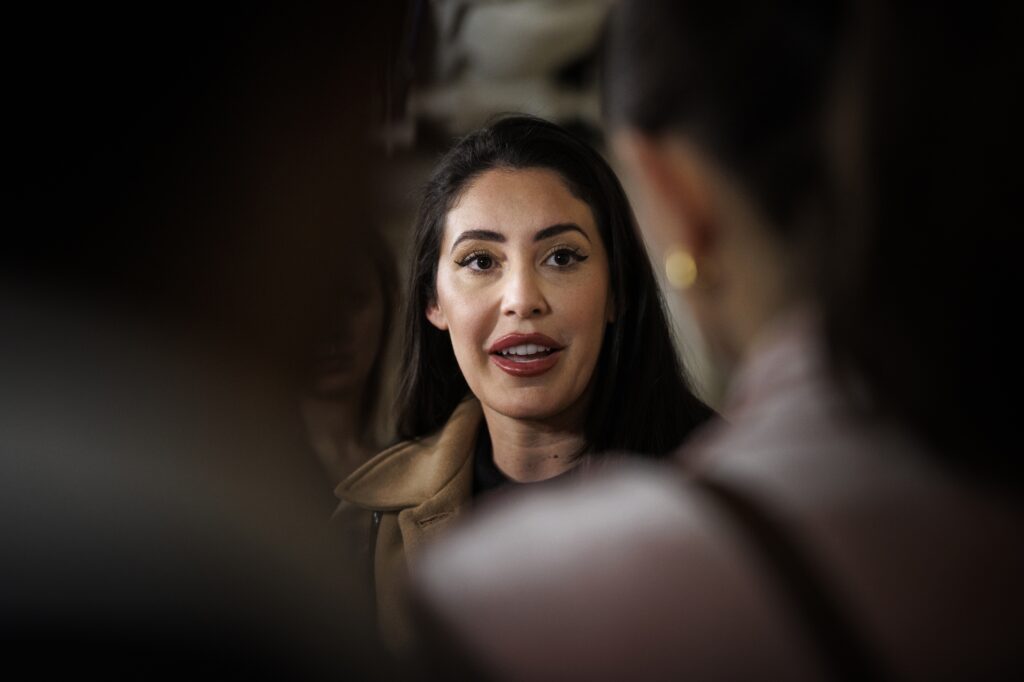
Rep. Anna Paulina Luna (R-Florida), a member of the Oversight Committee, accused Harp of “doxing” the reputed Delta Force commander and “leaking classified information.” In a voice vote Wednesday, the committee adopted her motion to subpoena the journalist. Luna called for a criminal investigation into Harp’s reporting and said the subpoena would hold him “accountable for his actions.”
“Putting a service member and their family in danger is dishonorable and feckless,” Luna wrote on X after the vote, which drew support from both Republicans and Democrats on the committee.
“The First Amendment does not give anyone a license to expose elite military personnel, compromise operations, or assist our adversaries under the guise of reporting,” she said in a statement Thursday to The Washington Post. “Congress has a constitutional duty to investigate when national security is endangered, and no one is above oversight.”
The subpoena had not been issued as of Thursday, according to a spokeswoman for Rep. James Comer (R-Kentucky), chairman of the committee. Luna said Harp had been referred to the Justice Department, which didn’t immediately respond to a request for comment.
Rep. Robert Garcia of California, the committee’s top Democrat, told colleagues in the hearing that he supported Luna’s motion after adding an amendment to also subpoena two co-executors of Jeffrey Epstein’s estate, Darren Indyke and Richard Kahn. Garcia’s office did not respond to a request for comment.
Harp, a Rolling Stone contributor and author of the book “The Fort Bragg Cartel,” which is being developed into an HBO series, denied that he disclosed any nonpublic information.
“The idea of a reporter ‘leaking classified intel’ is a contradiction in terms,” Harp said in a statement to The Post on Thursday. “The First Amendment and ironclad Supreme Court precedent permit journalists to publish classified documents. We don’t work for the government and it’s our job to expose secrets, not protect them for the convenience of high-ranking officials.”
“It’s not “doxing’ to point out which high-ranking military officials are involved in breaking news events,” added Harp, who served in Iraq as a U.S. Army Reserve member and was an assistant attorney general in Texas. “That’s information that the public has a right to know.”
The identities of Special Operations forces, including Delta Force, are heavily safeguarded and, in many cases, classified by the military, said a person familiar with the matter, speaking on the condition of anonymity to share sensitive details. A spokesman for the Defense Department declined to comment.
Press freedom advocates and experts were quick to defend Harp, saying that his reporting — even of potentially classified information — is probably protected by the First Amendment.
“Reporters have a constitutional right to publish even classified leaks as long as they don’t commit any crimes to obtain them, but Harp merely published information that was publicly available about someone at the center of the world’s biggest news story,” said Seth Stern, advocacy director at the Freedom of the Press Foundation.
Clay Calvert, a legal scholar and nonresident senior fellow at the American Enterprise Institute, said the committee’s vote is an example of the Trump administration and its allies in Congress trying to “control the narrative when it comes to the military and military actions.” He pointed to the recent press restrictions at the Pentagon, which led to a mass walkout of military and defense reporters, including from The Post, who chose to turn in their credentials rather than agree to the new policy.
Taxpayers funding the military “have a right to know who’s running the show in Venezuela and who’s really in charge,” Calvert said.
Gabe Rottman, vice president of policy for the Reporters Committee for Freedom of the Press, said congressional subpoenas of journalists are extremely rare and are often walked back. In 2021, the Reporters Committee urged the House committee investigating the Jan. 6, 2021, attack on the U.S. Capitol to drop a subpoena for phone records from photojournalist Amy Harris. It was left unissued when the committee wound down in 2022.
In 1992, a special Senate counsel investigating leaks around Anita Hill’s sexual harassment allegations against Supreme Court Justice Clarence Thomas sought to subpoena phone records of NPR’s Nina Totenberg and Newsday’s Timothy Phelps, but that request was rejected by Senate Rules Committee leaders.
“Anytime that Congress tries to get in the business of inquiring into or interfering in constitutionally protected newsgathering, it’s a problem,” Rottman said.
Tara Copp and Razzan Nakhlawi contributed to this report.
The post House votes to subpoena journalist over report on Delta Force commander appeared first on Washington Post.