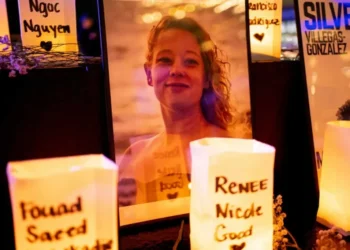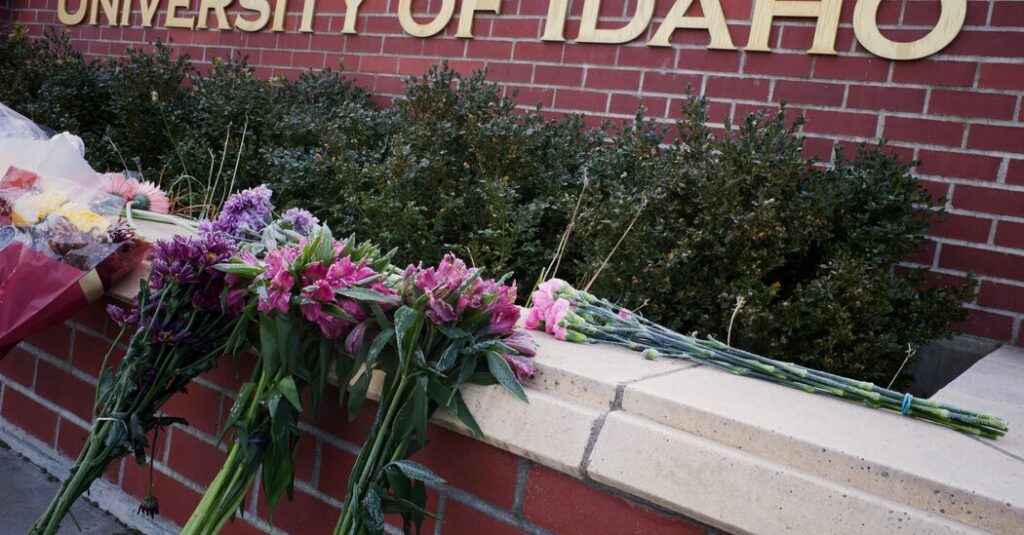
The families of four University of Idaho students who were stabbed to death in 2022 by a student at nearby Washington State University have filed a civil suit against that school, claiming that officials there failed to act on numerous warning signs about the killer’s inappropriate behavior.
The four victims’ families argue that administrators at Washington State, where the killer, Bryan C. Kohberger, studied criminology and worked as a teaching assistant in the months leading up to the grisly attack, failed to take meaningful action after receiving reports that he was stalking students and other women.
The lawsuit, filed on Wednesday in a Washington State court, argues that the university’s alleged inaction caused or contributed to the deaths of the students, Kaylee Goncalves, Madison Mogen, Xana Kernodle and Ethan Chapin. The families are seeking damages for violations of Title IX, the federal law that prohibits sex discrimination at public universities, and for negligence in the university’s duty to protect the community.
“The victims’ families have come together with a shared purpose to seek transparency, accountability, and meaningful reform,” the families’ lawyers said in a statement. “This effort is not about vengeance or speculation. This is about ensuring that institutions entrusted with the safety of young people take threats seriously and act decisively when warning signs are present.”
Pam Scott, a spokeswoman for Washington State University, declined to comment on the allegations on Thursday. “Our hearts remain with the families and friends impacted by this horrific tragedy,” she wrote in an email. “Because this is a legal matter, we are declining further comment at this time.”
The lawsuit comes about six months after Mr. Kohberger pleaded guilty to first-degree murder and burglary. A judge sentenced him in July to life in prison with no chance of parole after he signed a plea agreement that spared him from the death penalty.
The four students were found dead in a home near the Idaho campus in the city of Moscow, about seven miles from the Washington school, in November 2022. Three of the victims resided there and the fourth, Mr. Chapin, had been there visiting his girlfriend.
After Mr. Kohberger was sentenced, law enforcement agencies released files from their investigations that the families’ lawyers said helped paint “a disturbing picture of institutional inaction in the face of repeated and dire warnings.”
“These failures were not the result of a lack of authority or available safeguards, but rather a breakdown in accountability and responsibility at critical moments,” the families’ lawyers said in a statement.
The lawsuit states that Mr. Kohberger “developed a reputation for discriminatory, harassing, and stalking behavior” that Washington State University “allowed” to continue.
As early as mid-September of that year, it said, professors were talking about doing an “intervention” with Mr. Kohberger because of his treatment of female students, and by September or October, a professor believed he was stalking people.
The lawsuit claims that the university received at least 13 formal complaints and that women feared for their safety around him. Some requested escorts to their vehicles when he was present and developed informal warning systems to protect one another when they had to interact with Mr. Kohberger, the suit said.
Less than two weeks before the killings, Mr. Kohberger was called to a meeting with faculty members to discuss concerns about his behavior, The Times has previously reported. The university’s concerns about his behavior at school escalated after the Nov. 13 killings, though the authorities had not yet identified him as a suspect. In response to those concerns, the university terminated Mr. Kohberger from his teaching assistant role in early December, shortly before he was arrested at his parents’ home in Pennsylvania during the university’s winter break.
The decision to terminate him was based on his unsatisfactory performance as a teaching assistant, The Times’s reporting showed, including his failure to meet the “norms of professional behavior.”
Pooja Salhotra covers breaking news across the United States.
The post Families of Slain Idaho Students Sue the University the Killer Attended appeared first on New York Times.