How much alcohol should you drink? The US government now vaguely, in effect, says just don’t drink too much. And what qualifies as too much? Well, that’s up to you.
As part of the new federal dietary guidelines released this week, the Trump administration eliminated the previous specific recommended limits on alcohol consumption — two drinks or less per day for men and one drink for women. Now, the new guidelines say “consume less alcohol for better health. (It maintained the prior guidance discouraging a few certain groups — pregnant women and people who have a history of alcohol abuse — from drinking at all.) It’s a major change that defies a growing public health consensus that people should drink as little alcohol as possible, because no amount of drinking is actually safe.
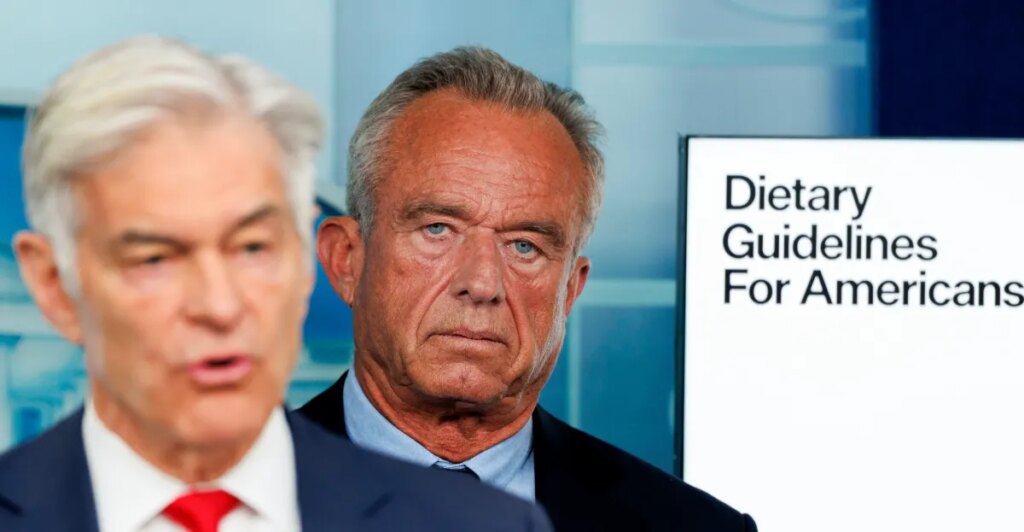
To justify the change, Dr. Mehmet Oz, who oversees the Medicare and Medicaid programs, argued that there was no scientific evidence to justify specific limits on drinking alcohol. “So there is alcohol in these dietary guidelines, but the implication is, don’t have it for breakfast,” he said during the announcement of the new guidelines.
“The general move away from two glasses for men, one glass for women — there was never really good data to support that quantity of alcohol consumption,” he added.
That’s not true.
There is such data — evidence commissioned by the federal government that the Trump administration itself tried to bury ahead of the dietary guidelines’ release, as Vox reporteda few months ago. But instead, Oz and Health Secretary Robert F. Kennedy Jr. have handed the alcohol industry a long-sought win in its battle against public health critics.
Trump and Kennedy shelved a study on alcohol’s harmful health effects
For the whole sordid saga, you can check out our feature story from September. But here is a brief recap: In early 2022, the Biden administration launched the Alcohol Intake & Health Study, a new report on alcohol and its health effects to inform the next dietary guidelines due in 2025, a response to the increasing evidence that no amount of alcohol is safe. The World Health Organization had made such a declaration in 2023; in the US, more than 170,000 people die every year from alcohol-related causes.
Almost as soon as that project began, the alcohol industry started pushing back and soliciting Congress in its efforts.
In response to this pressure, Congress approved in fall 2023 an alternate study to be overseen by the National Academies of Science and Medicine. Congressional hearings held by the lawmakers, who represented states where alcohol is a major industry, and letters they sent to the Department of Health and Human Services under President Joe Biden on behalf of their constituents framed the original report as a witch hunt against alcohol.
Nonetheless, both studies were undertaken, and their respective authors got to work. In December 2024, the National Academies report came out and stated that, with some very important limitations, the health effects of alcohol were marginal. But a draft version of the Alcohol Intake & Health Study was posted in January 2025, shortly before the end of the Biden administration, and it came to very different conclusions, as I wrote recently:
They broke out their findings by different drinking levels — from one drink per day to three — and focused on health outcomes that have been proven to be associated with alcohol use.
Their big-picture conclusion: Among the US population, the negative health effects of drinking alcohol start at low levels of consumption and begin to increase sharply the more a person drinks.
A man drinking one drink per day has roughly a one in 1,000 chance of dying from any alcohol-related cause, whether an alcohol-associated cancer or liver disease or a drunk driving accident. Increase that to two drinks per day, and the odds increase to one in 25.
That is precisely the kind of evidence that would suggest a specific limit on alcohol consumption would be appropriate — the kind of evidence that Oz claimed does not exist.
The final version of the Alcohol Intake & Health Study was shelved — and still has not been published by the Trump administration. They decided to squash its public release, as I reported last fall, even as they claimed it would be taken into consideration for the forthcoming dietary guidelines.
There was such a furor over that decision that even the authors of the National Academies report later published a commentary in the journal JAMA to make clear that their study should not be over-interpreted to justify more drinking or eliminating limits on drinking alcohol.
Nevertheless, that is exactly what happened in the new dietary guidelines — a policy victory cheered by beer, wine, and liquor manufacturers. The limits are…whatever you want them to be.
“Dr. Oz must have thrown back a few cocktails for breakfast before making that comment,” Mike Marshall, president and CEO of the US Alcohol Policy Alliance, told me. “The federal government’s own report, the Alcohol Intake & Health study, made it clear that there is overwhelming evidence that reducing consumption to less than 2 drinks per day dramatically reduces the chance of dying due to alcohol. Just because the industry, via Congress, said ‘don’t read it’ doesn’t mean the report never existed.”
The post Dr. Oz claims there’s no data to support reducing alcohol consumption. That’s not true. appeared first on Vox.