Abigail Marsh, a professor of psychology and neuroscience at Georgetown University, studies extraordinary altruism — people who jump in to rescue strangers in emergencies or donate a kidney to someone they don’t know. Marsh spoke with Cristina Quinn, host of The Washington Post’s podcast “Try This,” about what her work has uncovered, and what brain science reveals about people who habitually engage in selfless acts. The conversation has been edited for length and clarity.
You often trace your research back to a scary incident when you were 19. How did that influence what you study now?
Many years ago, I was driving late at night when a dog ran into the highway. I swerved, my car spun across traffic, and I ended up facing backwards in the fast lane with no way to move. I truly thought I would die.
A stranger — a man I’d never met — stopped his car, ran across six lanes of freeway and got into my stalled car to steer me to safety. He checked that I was okay and then disappeared into the night. I don’t know his name. I know nothing about him. I don’t think I said thank you.
Many details of the evening haunt me. But the biggest one is that I think I would have died if it hadn’t been for the actions of this stranger who made a split-second decision to try to save my life.
It’s one thing to read about heroism. It’s another thing to know that you owe your life to this kind of a decision. And so that really stuck with me.
What is an altruist?
Most people engage in acts of altruism. So we’re all altruists, at least some of the time. But altruism is generally defined in psychology as a behavior that helps somebody, and that was the intention of the behavior. Or you helped somebody specifically because you wanted to help them, not for some underlying reason.
The group you’ve studied most closely is people who donate a kidney to a stranger. What makes them different?
Genuinely altruistic people are very humble and less selfish than other people. And it turns out that humility and being unselfish go hand-in-hand because if you think that you’re the most special person around, why would you want to help less-special people? And so truly altruistic people do not think of themselves as special.
And when we bring them to our lab, we find differences in their MRI scans. One of the most striking is that altruistic kidney donors tend to have a larger amygdala, a part of the brain critical to processing emotions, particularly fear in others. They are especially sensitive to others’ distress and responding empathically.
In your earlier research, you found the opposite pattern in people with psychopathy?
Yes, we found that the amygdala tends to be smaller in individuals with psychopathic traits. They have difficulty recognizing fear and distress in other people. Most people with psychopathic traits report not feeling fear as often as other people do. And what’s interesting about that is that if you don’t really feel an emotion, it’s very difficult to empathize with it in other people.
So we asked, is altruism the inverse of psychopathy? And it turns out that yes, altruistic kidney donors are more reactive than typical people to the sight of others in distress. And they are relatively better at recognizing other people’s fear, as well.
Beyond brain structure, are there personality traits that distinguish extreme altruists? And are there other ways that they’ve expressed altruism?
I can’t tell you how many altruists I’ve talked to over the years who said their decision to donate their kidney was sort of automatic. The altruists I’ve worked with said that their decision was very kind of intuitive. And it almost seems like not donating is the choice that needs an explanation. And some of the exact phrases they used were, “It’s not about me” or “It felt like a no-brainer.”
But they’re not supernatural humans. They’re not perfect, they’re not saints. I’ve had people, when I’ve asked questions along these lines, be like, “No, I flipped somebody off in traffic on my way here.” [Laughs.]
I would add that the most common thread is that almost every one of them is also a blood donor. I think it’s much easier to make the mental transition to donating a kidney if you’ve already donated blood, plasma and maybe bone marrow.
Are there ways the rest of us ordinary mortals can become more altruistic?
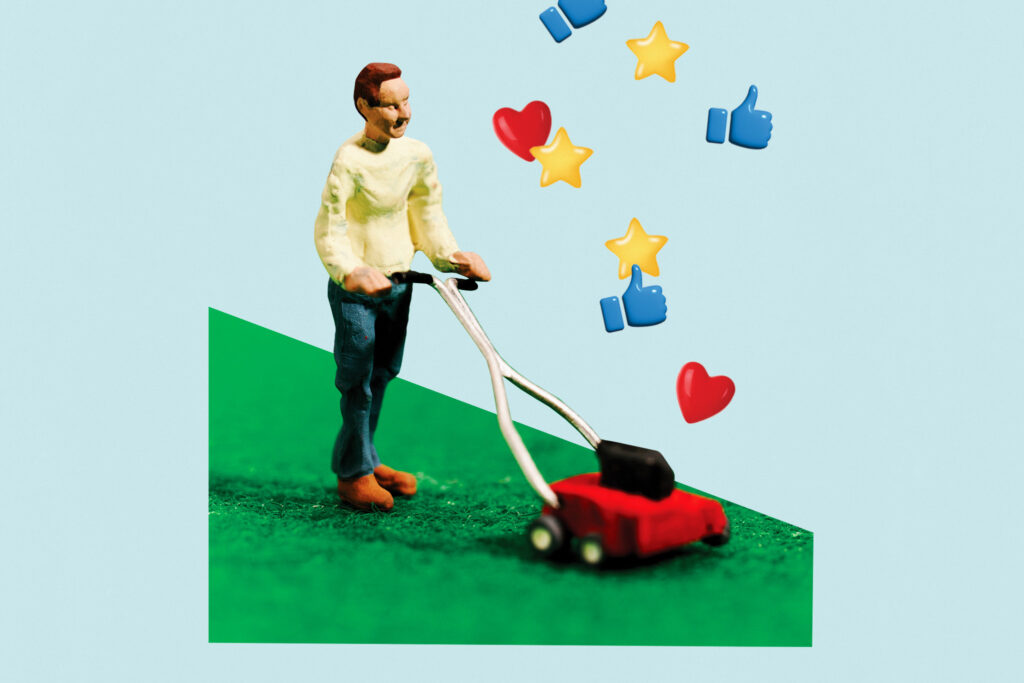
Start with something that seems easy for you and is consistent with your values, whether that’s just picking up trash in your neighborhood or giving change to a stranger who asks for it. And for some people that’s donating blood, which is relatively easy, but it’s amazing how few people do it regularly. And make it fun! I think there’s a mental rule of thumb where people think the more unpleasant something is, the more virtuous it must be. And that’s not always true. Doing exercise that you find joyful is just as beneficial as exercise you hate.
Find something that feels like a good fit and is gratifying. If you enjoy spending time with other people, help in ways that are extroversion-friendly, like volunteering at a soup kitchen. If you’re somebody who really cares about aesthetic beauty, do community cleanups and make the landscape around you more beautiful in a way that will benefit everybody. If you love animals, volunteer at an animal shelter.
You also have tips for making sure you commit to the plan. Many of us have great intentions and then sometimes don’t follow through.
There’s strong science around “implementation intentions,” which are detailed plans tied to when, where and how an action will happen. So when this Friday rolls around, I am going to hop onto the local bus that comes at 3:35. Then I’m going to go to that kitchen, I’ll stay for two hours, and then I’ll go get myself a special dinner as a treat or something. And the more precisely you plan out the details, the more likely you will follow through.
What about people who have very limited time or money?
Well, you’ve always got a kidney. [Laughs.] There are small acts that benefit other people and have ripple effects on the social fabric.
For example, putting your phone away while you’re out for a walk allows you to be fully engaged in the world around you. If somebody’s lost, you can help give them directions. You can just smile, maybe compliment a passerby. I mean, those are all little things that are so easy for all of us to do but can change the opinion of each person you interact with a little bit, in terms of thinking that other people are a little nicer than you realize. And that’s the kind of community change that can lead to big changes in the long-term — increasing trust and reducing cynicism. So even little positive interactions with strangers or people you don’t know very well day-to-day can make a big difference.
The post Why some people are wired to help strangers, and what their brains reveal appeared first on Washington Post.