Donald Trump’s strike on Venezuela and the arrest of President Nicolas Maduro and his wife by U.S. Special Forces shocked governments around the world. Observers in the U.S., Europe, China, Russia, and elsewhere are left to wonder what Trump’s bold use of force might mean for other countries: Colombia, Cuba, Iran, even Mexico and Denmark (read: Greenland).
But what about Venezuela itself? What do the strikes, arrests, and trial of Venezuela’s President mean for that country’s future?
[time-brightcove not-tgx=”true”]
First, the good news, at least for those who fear Maduro’s capture will create a power vacuum that can only be filled with violence. The apparent ease with which U.S. soldiers found and arrested Maduro reflects an inside job, one coordinated in advance between the Trump Administration and Venezuela’s military. It matters that Maduro’s Vice President, Delcy Rodriguez, was quickly sworn into power with the backing of the country’s defense and interior ministers—a signal of continuity that Washington has accepted.
Rodriguez has shaken a defiant fist at the U.S. attack—saying she was pained by the “kidnapping” of Maduro and his wife—but Trump’s clear willingness to use force and the need to stabilize her government, in part by removing the current U.S. oil blockade of Venezuela, will force a pragmatic approach.
Trump insisted on Jan. 3 that the U.S. will “run Venezuela” for now and refused to rule out American boots on the ground. That’s less a likelihood than a pressure tactic. The U.S. President has not demanded that an opposition-led government take power, waving off questions about Maria Corina Machado, the Nobel Peace Prize winner whose exact whereabouts are unknown, and whom he has called a “very nice woman” who “doesn’t have the respect within the country.” For now, Trump appears to trust a military-backed government that needs his support more than an opposition movement with ideas of its own for Venezuela’s future.
Read More: Trump’s Goals in Venezuela Don’t Add Up
Nor does Trump want to involve the U.S. in the kind of “nation-building” project that a complete transfer of power would demand, or that the American public is likely wary of after two decades of chaotic interventions in the Middle East. All of this suggests that, though the situation remains fluid, Trump and Rodriguez can help Venezuela avoid a surge of dangerous chaos.
Then comes the hard part. Though Trump is in no hurry to push for true regime change in Venezuela, it won’t be long before pressure begins to grow, inside and outside Venezuela, for new elections. Making sure they happen will be a priority for Secretary of State Marco Rubio, other members of Trump’s cabinet, and both Republicans and Democrats in Congress. This will also be a key concern for governments in Europe, which will be crucial players in helping Venezuela with financial support, including from the IMF. Demands for free and fair elections will, of course, also come from Venezuela’s opposition and its supporters, both inside and outside the country.
New elections would likely take a year to organize. Only hardball negotiations between the Trump Administration and Venezuela’s remaining military and security power players can clear a path for them, but any sort of power-sharing deal that undermines the opposition’s ability to win as much power as voters allow will surely trigger protests and risks of violence. The Maduro regime’s security forces have typically responded to anti-government protests with a closed fist, but a still fragile, military-backed government will need a normalization of relations with the Trump Administration that can restore flows of oil revenue and other forms of help.
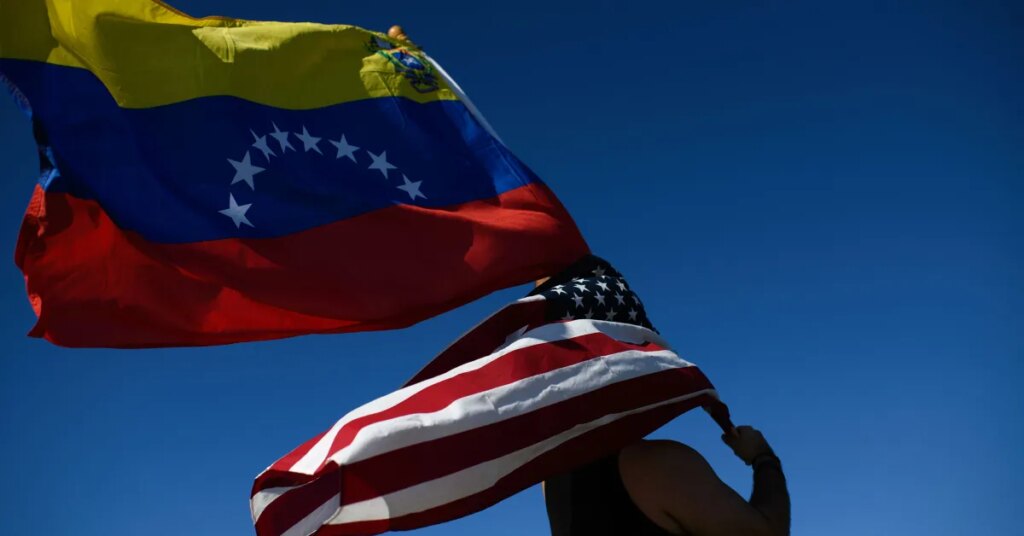
There are also, according to the U.N., nearly 8 million people who’ve fled Venezuela in recent years in search of a better life. Many of them already face pressure to return home, particularly from the Latin American and Caribbean countries that house the vast majority. More than 1 million have moved to the U.S., most of them with “temporary protected status.” In the coming months, all of these people will become players—in both the politics of their adopted countries and the future of Venezuela.
The post Where Venezuela Goes From Here appeared first on TIME.