CARACAS, Venezuela — After seizing Venezuelan president Nicolás Maduro, the Trump administration is increasing the already substantial pressure on the country’s new president, Delcy Rodríguez, demanding she cut ties with U.S. adversaries before a blockade on Venezuelan oil is lifted.
The economic pressure campaign has emerged as central to Trump’s vow that the U.S. would “run” Venezuela. In an apparent indication of early compliance, Rodriguez’s government agreed to a deal under which Venezuela would hand millions of barrels of oil over to the United States.
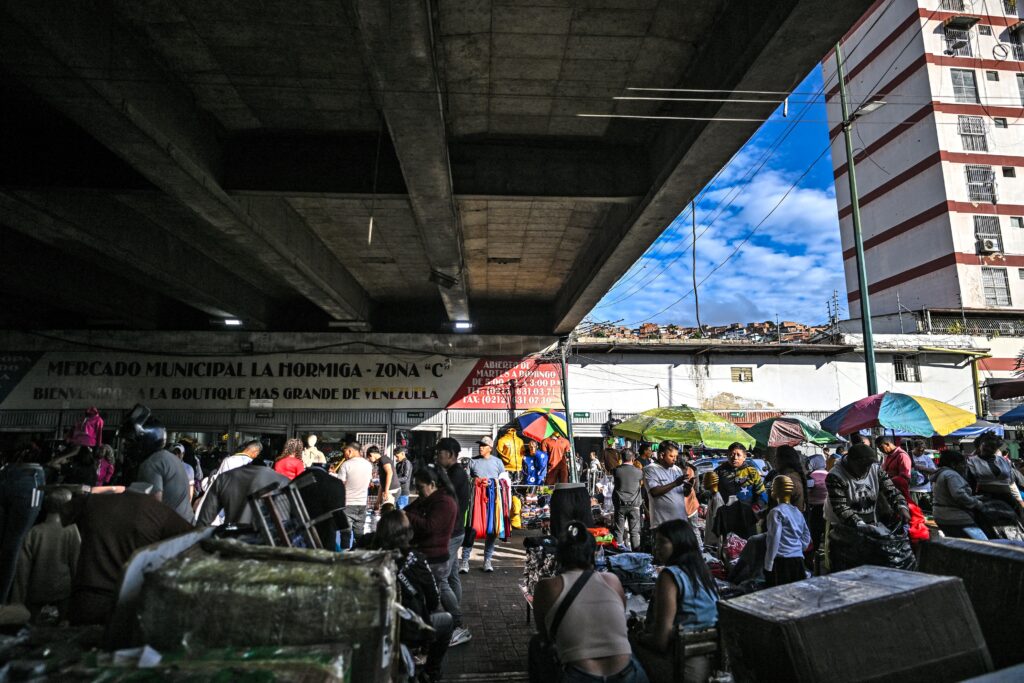
Inside Venezuela, a nervous quiet has descended on many parts of the capital as people grapple with the aftermath of the U.S. attack and a widening government crackdown against dissent. For now, Caracas residents report no shortages of goods in markets, but inflation is up, normally busy streets are now empty and the businesses that do open, only do so for set periods of time.
Under the current conditions, Trump administration officials say the Venezuelan government only has a few weeks before they “go broke” if it doesn’t “play ball,” according to two U.S. officials briefed on the matter, who spoke on the condition of anonymity to discuss internal policy deliberations.
Analysts and economists said that timeline likely describes how long the U.S. assesses that the government in Caracas has before its cash reserves run out and it is left unable to make critical payments, like salaries for security forces.
“The president is speaking about exerting maximum leverage with the interim authorities in Venezuela and ensuring they cooperate with the United States,” said a senior administration official. “As the president stated, the embargo on sanctioned Venezuelan oil remains in full effect,” the official said, speaking on the condition of anonymity because they were not authorized to speak publicly the matter.
Trump has said he’s demanding the United States get “total access” to Venezuela’s oil reserves and “other things.” Among those is a demand that Venezuela cut ties with China, Iran, Russia and Cuba and agree to partner exclusively with the United States on oil production, according to one of the U.S. officials briefed on the matter.
Under the deal, Venezuela would hand over 30-50 million barrels of oil to the United States, to be sold by the United States. The proceeds can be spent “at the discretion of the U.S. government,” and the funds will “be disbursed for the benefit of the American people and the Venezuelan people,” the Department of Energy said in a statement. Venezuela has not disputed the plan.
U.S. Secretary of Energy, Chris Wright told CNBC Wednesday, “we’re just going to control the flow of those funds so we have leverage over the people in power.” In the short term, he said his priority is “to stabilize the economy in Venezuela, stop the collapse of the Bolivar, prevent Venezuela from becoming a failed state.”
Also Wednesday, the Department of Defense announced the seizure of two additional tankers under U.S. sanctions carrying Venezuelan oil. This comes after four ships were observed leaving Venezuelan waters in apparent defiance of the blockade on Saturday and Sunday, according to analysis from TankerTrackers.
Because Venezuela’s economy is so reliant oil exports, the U.S. blockade has likely already brought national revenue close to zero, according to Francisco Rodríguez, an expert on the Venezuelan economy at the University of Denver and author of “The Collapse of Venezuela.”
“They were basically living day-to-day and only paycheck to paycheck. And the checks are the oil exports,” he said.
Once one of the wealthiest countries in the world, Venezuela experienced stunning economic collapse within a matter of years as U.S. sanctions, corruption and government mismanagement hollowed out the economy. Throughout the crises, Venezuela repeatedly dipped into its reserves and now has little accessible cash left.
Venezuela’s cash flow problems emerged within days of the imposition of the blockade, said Andrés Martínez-Fernández, a Latin America policy analyst with the Heritage Foundation, a right-wing think thank in Washington. He cited reports that Venezuela had fallen behind on debt repayments to China and Russia.
“There was quite a bit of scrambling and concern after those initial actions against the tankers,” he said. Venezuela uses much of its oil transfers to Russia and China to pay down country to country debts, according to Martínez-Fernández, and once the oil flows ceased, the government in Caracas had no other way to settle the accounts.
Venezuela’s government also faces the possibility that it will be unable to pay the salaries of its own employees, the military and police. Martínez-Fernández and Rodríguez, the economist, both estimated that this could happen as soon as the end of January or early February, after which government functions could begin to break down and food shortages could surge.
“I think famine is a real possibility now in Venezuela. But it’s a large country with porous borders. And, usually before people starve, they try to leave,” Rodríguez said.
Economic collapse has already triggered massive waves of migration from Venezuela. Since 2014, nearly 8 million Venezuelans have fled the country, according to United Nations figures. Those who stayed have already faced widespread hunger for years, causing infant mortality to soar and most adults to lose weight, a phenomena drying referred to as “the Maduro diet.”
Rojas, a 47-year-old owner of a small chocolate business in Caracas, said he’s living from one sale to the next, terrified that another economic downturn could bring hyperinflation with it.
“With the money I just received, I’m going to buy food. I have to work miracles with what I’ve saved and what I can earn,” he said, to stretch his earnings to support his mother and father, as well as himself.
So far, apart from business being down slightly, he hasn’t experienced a dramatic economic shock since the ramped up U.S. pressure on Venezuela, but he fears it’s coming any day now and that’s made it impossible to plan.
“Uncertainty is the worst thing that can happen to a human being,” he said.
John Hudson and Dan Lamothe contributed to this report.
The post Venezuela’s economy nears collapse under U.S. blockade appeared first on Washington Post.