I don’t watch TV the way you do. I don’t mean that I watch smarter or better or with greater discernment. (Many readers, I assume, would argue the opposite.)
But I watch TV professionally, which means I have different habits. The biggest difference is that I usually get multiple episodes of a new season, sometimes all of them, and screen them as fast as possible.
At least that used to be the difference. Netflix changed that, with its strategy of dropping full seasons and letting viewers watch them for as long as they could pry their eyes open. For the past year, however, the talk of TV has been around a show that aims to restore the weekly viewing pattern that the television gods once intended.
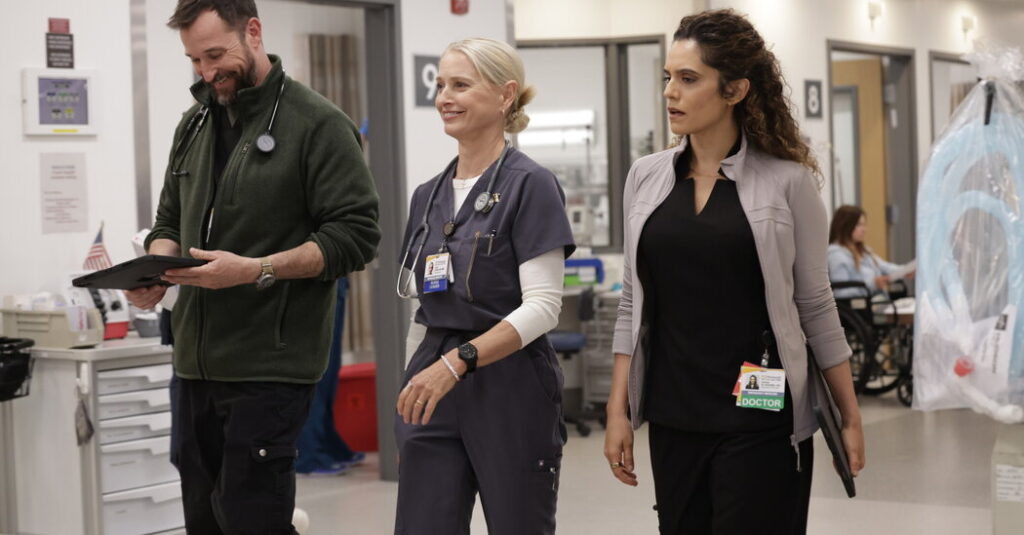
“The Pitt,” on HBO Max, is a throwback in many ways: a big hospital procedural about medical heroes, full of audacious lifesaving maneuvers, heartbreaking losses and unabashed melodrama. But as a media property, “The Pitt,” which releases new episodes once a week — Thursdays at 9 p.m., as if this were NBC in the ’90s — is also a bet on the value of old habits even when streaming technology no longer requires them.
Casey Bloys, the chief executive and chairman of HBO and HBO Max Content, has said the streamer sought to create “15 weeks of engagement” — month after month of media publicity, fan buzz and waiting on cliffhangers — to sustain the show at the front of its audience’s mind.
The success of “The Pitt” suggests HBO Max made a smart business decision. So does at least some research: A study from Carnegie Mellon University found that weekly releases lead to greater subscriber retention. Platforms like Disney+ and Apple TV have largely avoided the binge, with weekly mini-batches of episodes (as with “Andor”) or hybrid schedules that follow a multi-episode premiere with weekly installments (“Severance”). HBO Max also releases other series weekly, like “Heated Rivalry.”
But the weekly release has also gotten support from commenters who argue that “The Pitt,” and maybe TV generally, is simply better watched in single installments. A Vulture essay on “The Pitt” argued that “Bingeing robs us of the extended collective-viewing experience that is one of the television medium’s greatest pleasures.” The star of “The Pitt,” Noah Wyle, said the schedule makes room for “the water cooler conversation that used to take place at the office or at the garage.”
Season 2 of “The Pitt” begins on Thursday. It is very good: not an advance on the excellent first season, just a consistent continuation of the idea of emergency rooms as the stitching that holds a wounded society together. I can tell you that because I’ve seen nine episodes, which I shotgunned one after another in a couple days’ time.
And while HBO Max may not want to hear this, “The Pitt” is an excellent binge.
Its real-time storytelling format gives it a natural momentum. Its imbricated story lines — patients coming in for a few hours each, so plots are constantly beginning, developing and resolving — keep you on the serial hook. If you’re just catching up on the first season, the only limit on its binge-ability may be your tolerance for medical gore and life-or-death stress. (Perhaps consult your cardiologist before beginning.)
But all this raises a question for a critic: If I didn’t watch “The Pitt” the way most of its fans will and the way its makers intended, am I really reviewing the same show? And is one experience better or worse than the other?
I’ve written before that I think of the binge vs. weekly models simply as different tools, suited for different kinds of story. Shows with mystery elements, for instance, can benefit from a drawn-out watch to make room for theorizing.
Inevitably, changing the tempo of a show changes the experience. Story arcs unfold faster in a binge; on “The Pitt,” that emphasizes how deeply the characters are affected by this one intense day on the job. (For some viewers, I suppose, those changes might seem unrealistically fast, in a way that’s less evident if you take four months to watch it.) Making full seasons available at once also feeds a frenzy to avoid spoilers, though I am a firm believer that spoilers can’t ruin a good story.
But the argument against bingeing can also take on a moral overtone, as if it were a form of gluttony. (Food metaphors come up a lot with bingeing; just look at the name.) As a critic, I’m loath to say that while binge watching is fine and safe for me, a trained professional, the rest of you need to exercise restraint for your own good and that of the larger culture. Binge or don’t binge! Just be conscious of what the choice does for the story, and for you.
The weekly model, after all, was not set down by God or Aristotle as the ideal vehicle for narrative art. It was conceived by early TV executives who needed to accommodate production calendars, inculcate viewer habits and sell floor wax.
Still, the anti-bingers have a point. When I think of the series that have given me the most pleasure, like “Lost” or “Mad Men,” part of that often came from knowing a mysterious package would arrive in my living room once a week and sharing the anticipation with others awaiting the same delivery. Those shows are still etched on my consciousness, whereas I power-watched the last season of “Stranger Things” over the holidays and have already all but forgotten it.
I suspect that, deep down, the nostalgia for the old TV Guide days of viewing comes from the same angst that leads people to install screen time-limiting apps on their phones and to dust off their vinyl LPs: The sense that our everything-everywhere-anytime culture is not good for us.
Algorithms have stunted our taste; screens have made us into doomscrolling basket cases; the Babel of the internet has left us speaking different tongues. The more satisfied our demands for content, the less satisfied we feel as people. Introducing friction points, making ourselves wait for things, can feel like a corrective. (Yes, I am talking about watching a TV show as a means toward recapturing the contemplative life, but here we are.)
“The Pitt,” always attuned to the culture’s existential as well as physical ailments, seems to speak to this feeling too. The new season depicts the intrusion of A.I. into hospitals and involves a midseason plot twist that involves the staff having to rediscover the value of old-school, analog medical practices in a digital era.
Want to know more about it? You’ll have to find out one week at a time.
James Poniewozik is the chief TV critic for The Times. He writes reviews and essays with an emphasis on television as it reflects a changing culture and politics.
The post ‘The Pitt’ Asks: Is TV Better in Small Doses? appeared first on New York Times.