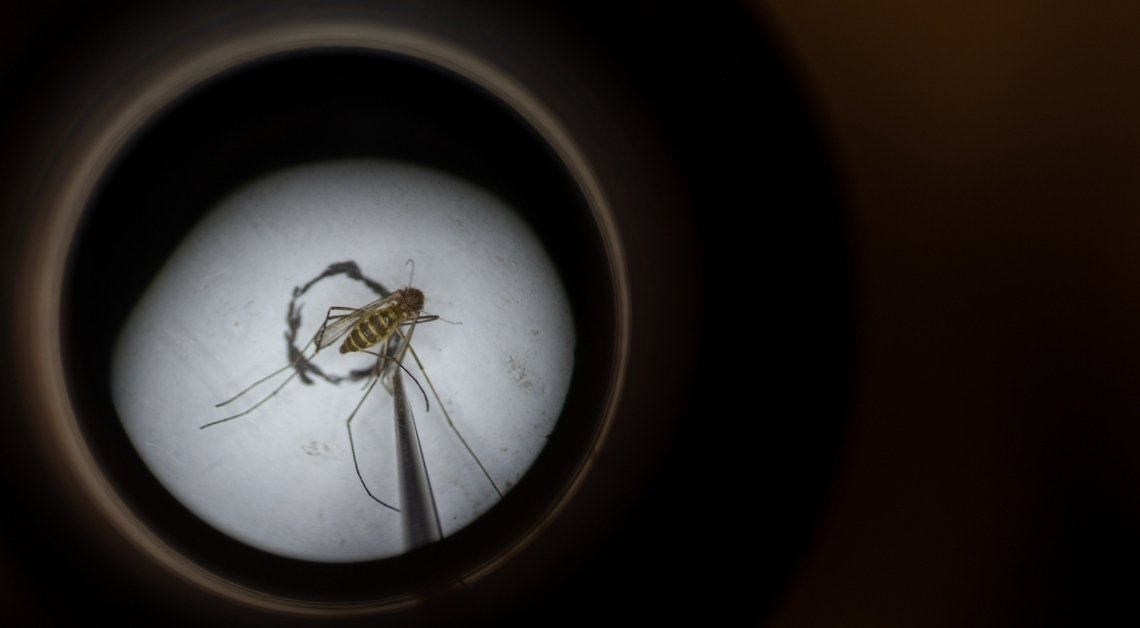
I grew up loving Jurassic Park, knowing it was pure fantasy. Fun fantasy, sure, but still nonsense. Amber-trapped mosquitoes reviving entire ecosystems was very much in Hollywood science territory, heavy on confidence and light on truth. And yet, decades later, we’re learning that mosquitoes really do carry shockingly detailed biological records of the worlds they move through. No dinosaurs, obviously. But something almost as strange.
A team of researchers in Florida spent months collecting more than 50,000 mosquitoes across a protected reserve, then analyzed the blood meals inside a fraction of them. What they found wasn’t cinematic exactly. It was better. From those tiny samples, they identified DNA from 86 different animals, covering roughly 80 percent of the vertebrate species the mosquitoes were known to feed on. Frogs, birds, livestock, invasive species, native species. The ecosystem, basically, told through bites.
Entomologist Lawrence Reeves, one of the researchers, summed it up neatly. “They say Jurassic Park inspired a new generation of paleontologists, but it inspired me to study mosquitoes,” he said. He and his colleagues explained how mosquito blood can reveal animals with wildly different lives and movement patterns, from arboreal to amphibious to migratory. One notable absence was the endangered Florida panther. Subterranean animals like moles were missing, too.
‘Jurassic Park’ Wasn’t Totally Wrong. Mosquitoes Really Do Archive Animal DNA.
What makes this approach compelling isn’t novelty. It’s efficiency. Traditional wildlife surveys cost a lot, take time, and depend on terrain, visibility, and human presence. Mosquitoes don’t care about any of that. They sample indiscriminately, move constantly, and gather data whether researchers are ready or not.
A second study from the same team found that collecting mosquitoes during peak activity produced results comparable to direct animal surveys, especially outside dry seasons.
No one’s pretending this will replace boots-on-the-ground conservation work. It still needs testing in different regions and climates. But as biodiversity keeps shrinking faster than scientists can document it, tools that gather broad data with minimal intrusion matter.
Reeves acknowledged the obvious irony. Mosquitoes are universally hated, and with good reason. “They don’t do much to give the impression they’re an important element of ecosystems,” he said. And yet, here they are, accidentally archiving the living world as it exists right now.
Jurassic Park gave mosquitoes a starring role in science fiction. In real life, they’re doing something far less glamorous and far more useful.
The post It Turns Out Mosquitoes Really Do Archive Animal DNA, Just Like ‘Jurassic Park’ appeared first on VICE.