When it comes to prepping, look to the Mormons. It’s right there, in the official name of the religion: To be a “Latter-day Saint”’ is explicitly to believe in, and prepare for, the end times. This is why, on a calm morning last September, I arrive just outside Salt Lake City in a place called American Fork and knock on the door of Tyler Stapleton, the chief product engineer for off-grid power products at 4Patriots, one of the biggest companies pushing preparedness into the mainstream. Church members play outsize roles in this multibillion-dollar industry—a global concern where politics and technology collide, with sales fueled by social media and conspiracy theories, in addition to the undeniable rise in world chaos.
Stapleton is a bit sheepish but very nice, a nerdy mechanical engineer with degrees from Brigham Young University who lives with his wife and three young children. Inside their tidy home is a big clock, a bright kitchen, and the Book of Mormon on the shelf. After exchanging pleasantries, Stapleton begins showing off new products and prototypes, including a sleek “James Bond-like” solar generator that packs up like a briefcase. All the while, he sticks to the company line, telling me that the typical owner of a 4Patriots power product is not some zealot in camouflage preparing to live in a bunker “for days on end” but rather a family man seeking “energy independence” for the occasional moments when the grid goes down. It’s a well-placed piece of rhetoric, though the line loses some of its luster an hour later, when Tyler lets slip that his childhood home nearby does, indeed, feature a modest bunker, then reluctantly agrees to take us to it.
Today, the US government advises every citizen to build a disaster kit and concoct plans for an array of cataclysms. According to a 2023 survey from the Federal Emergency Management Agency, 51 percent of Americans are in some way “prepared for a disaster.” This helps explain why the prepping industry’s market cap is forecast to be nearly $300 billion by the end of the decade. Two of the firms competing for market share have nearly identical names and offer the same basic slate of products: power generators, dehydrated food, and water filtration. There’s Stapleton’s employer, 4Patriots, and its rival, My Patriot Supply. While exact revenue figures are difficult to pin down, officials at My Patriot Supply tell me that, before the pandemic, they rented part of a 45,000-square-foot space; today, the company built and fully utilizes a 428,000-square-foot warehouse not far from Stapleton’s home.
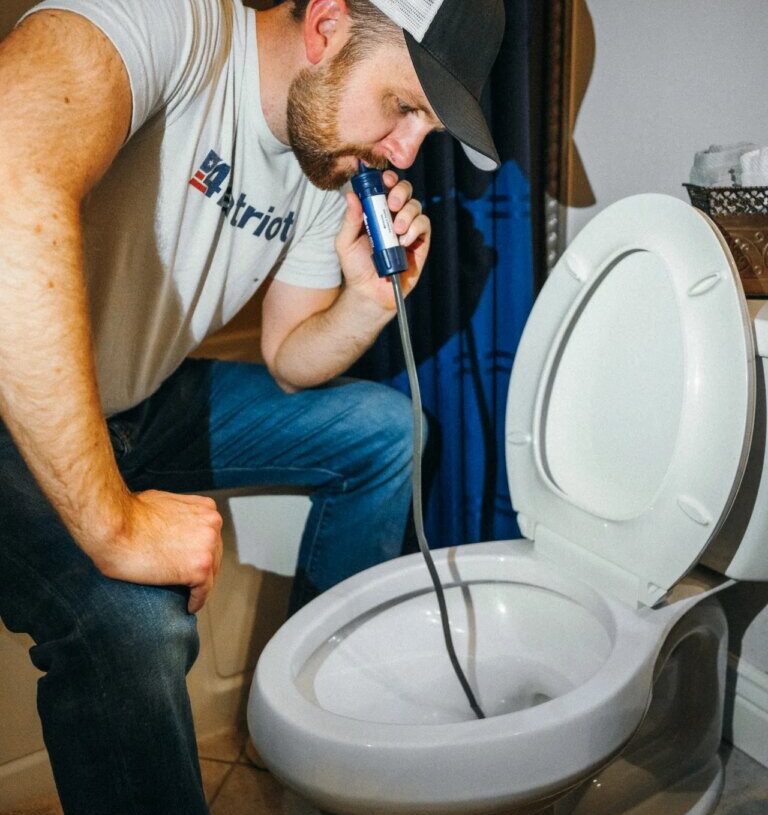
These two firms are aggressively jockeying to be the industry’s true patriot prepping company, with one official from My Patriot Supply claiming that 4Patriots is their “archnemesis.” My Patriot Supply is particularly bellicose, deeming the other company and its competitors “fake patriots”in a video. Meanwhile, both firms have notched their share of consumer complaints with government and business watchdogs over the years. 4Patriots customers have alleged that the company produces faulty water filters, defective generators, and dubious food. One person said their order was rife with roaches, while another claimed the company’s Aztec Chili with Mango made them “can’t leave the bathroom sick” for a week. (According to the Better Business Bureau website, someone associated with 4Patriots replied to this alleged complaint a day later, adding, “I’m so sorry that you had many issues after consuming the survival food kits.”) In 2016, the company voluntarily recalled a couple thousand generators due to an unforeseen fire hazard, and consumer complaints allege their generators continue to suffer from potentially dangerous electrical defects. (After putting 4Patriots’ 1,800-watt solar generator through lab testing, Consumer Reports rated it 46 out of 100.) Certainly, recalls and bad reviews are part and parcel of many businesses today, though an explicit part of the pitch from 4Patriots and its competitors is the rock-hard reliability of their goods when disaster strikes.
In a comment to WIRED, a 4Patriots official said the company shipped over 5 million products to consumers over the past three years and that it places “product quality and customer safety above all else.” He declined to detail the company’s return or refund rates, asserting that to equate those numbers with “product failure or customer dissatisfaction would be inaccurate.”
Stapleton, for his part, is bullish about the current generation of 4Patriots’ generators. We end his house tour in the kitchen, where he volunteers to demonstrate the company’s AlphaCase suitcase-sized generator, a product that is “powerful enough,” he says, to run his refrigerator. As he shimmies it out from a kitchen wall, Stapleton talks excitedly about the incredible advances in battery technology pioneered in recent years by firms like Tesla. “It’s competitive, and that’s a good thing,” Stapleton says. “There’s a lot of people pushing the envelope on what’s possible. And so we are working hard to stay ahead of that.”
As the climactic moment arrives, Stapleton unplugs his fridge and hooks it up to the 4Patriots power pack. It buzzes quietly for a few seconds, then emits a beeping sound. At this point, a message shoots up on the screen. “That’s just the overload message,” Stapleton awkwardly explains, adding that “this guy”—meaning his generator, which he had just said would run a refrigerator and which the website claims, too—is “a little bit small for powering fridges.”
When, in the mid-1800s, the Mormons first fled west to the Utah Territory, they viewed prepping as a means of survival and autonomy from government persecution. They subsequently formed an off-grid society, with the church operating its own bank, printing its own currency, and directing a militia. In an October 1980 speech before thousands in Salt Lake City, church leader Ezra Taft Benson articulated a far more practical ethic of preparedness. A well-studied farmer, Benson spearheaded the reintroduction of missionary work in Europe following World War II. In his speech, Benson recalled the “terrible physical and social side effects of hunger” he witnessed in the wake of the war, his voice breaking with emotion. “Too often,” he said, “we bask in our comfortable complacency and rationalize that the ravages of war, economic disaster, famine, and earthquake cannot happen here.”
Mormons, of course, were not the only group of Americans to worry about the future; Boy Scouts who hope to become Eagles have long needed to earn an Emergency Preparedness Merit Badge. In their 2024 book, Be Prepared: Doomsday Prepping in the United States, Robert E. Kirsch and Emily Ray trace how American prepping has long been wed to consumerism through its alluring pitch to “purchase your way to safety.” Today, America’s roulette wheel of routine calamity includes extreme heat, power grid overload, crop failure, water contamination, climate-change-induced natural disasters, climate-change-induced disease, government shutdowns, political corruption, troops in the streets, fervent militia activity, mass shootings—and, new for 2026, regime change in Latin America. It also seems that every few years an asteroid just barely misses Earth.
Founded in 2008, 4Patriots initially focused on food, appealing to people who started stocking emergency rations after the election of Barack Obama. Its unlikely founder is Allen Baler, who has an English degree from Obama’s law school alma mater, Harvard, and a corporate marketing background, traits that My Patriot Supply has spoofed in YouTube content showing a Baler-esque figure in a Harvard half-zip who resorts to “scarcity” tactics and other cynical sales tricks.
The face of the firm back then was Frank Bates, a slick pitchman and Vietnam veteran living near Nashville, Tennessee, who wrote about how Obama’s policies had hurt his family, his business, and America. He alleged various government plots, including one that the FEMA was hoarding food because “it knows that if you control the food supply, then you control the people.” When the company’s emergency offerings expanded into power supplies, 4Patriots teased the “dirty little secret that President Obama and the big energy monopolies have been trying to bury.”
4Patriots once described its core customer base as “55+ year-old conservatives in ‘red’ states with a strong sense of self-reliance.” Baler first tapped into this constituency in 2011, with an ad buy at a then-fledgling conservative news outlet called Newsmax, a hub, in his words, of “affluent, conservative men who surprisingly like to buy a lot of stuff online.” He subsequently expanded his messaging to The National Review, Glenn Beck’s conservative news network, The Blaze, and then Fox News, which has repeatedly plugged 4Patriots products on air.
In 2014, ThinkProgress alleged that Bates wasn’t real. They could find no one in Nashville with his name and background. Then the site discovered his likeness on a stock image site, captioned “friendly man with arms crossed.” 4Patriots denied any deception and, to this day, occasionally features materials signed by the mysterious Mr. Bates. (On its FAQ page, 4Patriots assures longtime customers that Bates is, indeed, real but that he uses a pen name “to protect his privacy.”) In general, 4Patriots has toned things down, presumably to reach other constituencies, like crunchy off-gridders, tailgaters, campers, and people living in hurricane zones or tornado alley. Still, according to Stapleton, the firm’s customer base continues to include “a lot of conservative individuals.”
Both of the patriotic prepping companies promote their products through traditional TV ads and active YouTube channels. My Patriot Supply also produces podcast-style content about the various dangers that necessitate a prepping mindset, while its competitor has launched 4Patriots University, a set of preparedness master classes taught weekly by Seth Weller, a wiry former Boy Scout (and scoutmaster), who has been working in preparedness for a quarter-century. Weller insists that his curriculum focuses strictly on developing contingencies and building community support networks, not pushing product. He argues that too many Americans use prepping as a form of “retail therapy,” buying products “to remove that fear” without building the requisite expertise to actually use them.
Weller’s long career on the front lines of American prepping has made him a canny diagnostician of the emotional currents fueling the phenomenon. In his estimation, many of his clients have experienced some sort of profound loss, whether it’s heartache, the death of a loved one, or a storm. “It’s not necessarily some major catastrophic event, but it’s something that changed their lives,” he tells me. “And in that process, they realized that this happened because, well, they had a dependency. And then they turn around, like, ‘I don’t ever want to feel that again.’ So, they realize they have to gain some control. They’ve got to gain independence.”
When I ask Weller what thrust him into this world, he points not to an earthquake or a flood but to the painful and unexpected loss of his luxury port-a-potty and shower trailer business. He seems genuinely driven to help people secure calm from their anxieties, arguing that it’s interpersonal prepping networks and skills that can best meet this challenge, not simply gear from prepping companies, which, Weller candidly admits, doesn’t always work.
Unprompted, Weller invokes a hypothetically wonky generator, bought “under the guise” that it can power a critical household appliance, only for the lights to go out and the consumer to realize that the product “doesn’t work.” Obviously unaware of my prior experience in Stapleton’s kitchen, Weller claims that 4Patriots has risen above this shoddy consumerism. “It’s not just about selling products for us,” he assures me. “It’s about truly helping them out.”
One of Weller’s longtime protégés is Gary Eiler, an Air Force veteran who, in the fall of 2018, was caught in the vortex of Hurricane Michael. At the time, Eiler owned an 800-unit climate-controlled storage facility in Panama City, Florida, called HBO Storage. (It stood for Home, Business, Office.) While Michael was initially predicted to make landfall in Louisiana, it hooked north at the last minute, rapidly intensified to a Category 5, and barreled directly toward Panama City where Eiler was standing watch. As winds topped out at 160 miles per hour, the storm stripped the roof off Eiler’s business like a sardine can. Then the walls started collapsing. Eiler found cover under a bolted-down service counter, where he huddled for more than six hours. “It was very emotionally trying,” he confesses.
As the wind settled, Eiler became fixated on a question Weller had posed in a class he taught prior to his 4Patriots employment: “How long do you have in an emergency before societal breakdown ensues?” Eiler says Panama City turned to bedlam in about 20 minutes after the wind died down. Hordes of citizens began looting the stores around him, including a Goodyear auto shop, an off-brand rent-a-center, and a grocery store called Food City. Eiler went to sleep that night in the collapsed ruins of his business, the sounds of screams and gunfire punctuating the air. (News reports show that the storm indeed inflicted massive infrastructure damage and took the lives of 19 people. There were also sustained reports of armed looters, but also waves of fear that crashed across communities, leading one Florida state cop to shoot and kill a civilian who allegedly tried to steal a law enforcement vehicle.)
Eiler spent two months stationed at his destroyed store, overseeing his customers’ belongings with a stern face and a Taurus pistol. In the first two weeks, he collected and filtered water off the section of the roof that was still intact and prepared freeze-dried food, remembering Weller’s specific instructions to cook it in such a way as to avoid constipation, which, Eiler remarks, “you don’t want to deal with in an environment like the one I was in.” Indeed, he was then defecating in a bucket. Eventually his brother was able to breach the city in an RV filled with food, clothes, more weapons, and other survival gear supplied by Weller and friends. “It was a war zone,” Eiler concludes. “I’ve only been to Panama City two other times since the storm because of the anxiety it brings me. And that’s because my sister lives here.”
Another of Weller’s star students at 4Patriots University is Bill Knapp, whose worries, unlike Eiler’s, were crystalized by an event that never happened. In 1998, Knapp was at Deloitte, where he helped the firm prepare for Y2K, work that first exposed him to the grid’s fragility. Ahead of New Year’s Eve, Knapp stocked up on water and food and bought a generator. Nothing happened, though during one summer shortly after, he says, a hurricane came through his community on Long Island and knocked out power for 10 days.
Knapp connected with 4Patriots three and a half years ago when, during a routine Google search for a cell phone charger, he found the company’s solar-powered block. Knapp today estimates that he has spent roughly $60,000 on prepping, much of it to support the construction of an off-the-grid tiny house, but also more than $7,000 alone in 4Patriots gear. He grouses that people “accuse you of hoarding, but I’m not hoarding. I’m investing.”
Along the way, Knapp brought his new wife, Pat, into the fold. One of his first gifts to her when they were dating included a 4Patriots emergency kit for her car trunk, replete with thermal blankets and food should any chaos arise on I-95. When the two tied the knot last summer, they gifted some of their guests 4Patriots’ small device chargers. The couple has since converted the front lawn of their Maryland home to a flower garden, to support pollination, and grow food out back that doesn’t touch pesticides. After they discovered that their city water supply had allegedly been polluted with forever chemicals by the company that produces Gore-Tex fabric, they bought a new water filtration system.
Despite all this, Pat seems slightly more tentative of prepping than her husband. More specifically, she doesn’t love the constant vigilance that prepping culture can require. “Because of 4Patriots, whenever we go anywhere, we’re assessing,” she tells me, articulating the newfound hyperalertness that has suffused her life. “If it was not for 4Patriots, I would not be thinking this way. What are we taking? Are we going to a crowd? Are we staying away from a crowd? It’s dangerous to be out on the road, it really is. But we try to enjoy our lives. We try to balance—and we talk about this—how to balance out our negative vibes.”
Pat expresses especially acute concern about the have and have-not dynamics that pervade any major disaster. “I’m not so sure I’m gonna be strong enough to turn somebody away if they need food.” She continues: “I’ve just started learning how to shoot. And I’m thinking, am I gonna be able to pull a gun out and shoot somebody because they’re trying to … ”
“Steal from us,” Bill finishes.
“ … steal from us,” Pat echoes. “Or hurt Bill. These are the types of things we discuss in the chat rooms.”
The threat of atomic annihilation was the catalyzing fear of the boomer prepper, while many younger ones point to 9/11. Other major events in modern prepping lore include Hurricane Katrina, the Ebola outbreak, and then, in quick succession, the 2020 Covid pandemic, the 2021 Texas power grid outage, and Russia’s 2022 invasion of Ukraine. Sources from both Patriot companies told me that presidential elections also routinely goose sales. One explained that after Donald Trump was reelected in 2024, “we knew that sales were going to plummet, and they did.” He later muses, “I’m genuinely confused why the Left doesn’t start getting prepared.”
When I entered Stapleton’s home on the morning of September 10, all was normal. Thirty minutes later, though, news broke that right-wing activist Charlie Kirk had been gunned down at Utah Valley University, just nine miles south of American Fork. By the time I descended into the Stapleton family’s subterranean bunker, Kirk’s killer was still on the loose.
A few hours later, in front of the hospital where Kirk’s body was being held, I witnessed a vigil of grieving Americans. One was Kelsie Gruenewald, a member of the Latter-day Saints wearing a red, white, and blue T-shirt and holding an American flag. As it turns out, she owns various shelf-stable food products from 4Patriots. In a later interview, Gruenewald tells me that her prepping instincts have hardened in response to various forces, including the day of March 18, 2020, when a 5.7 magnitude earthquake shook Salt Lake City just as Covid-19 was shutting the entire country down. She was again shocked when her abundantly safe, generally moderate home state was struck by political violence. “Evil,” she said, “can creep up anywhere.”
Once Stapleton has awkwardly tested the generator, he calls over to the 4Patriots warehouse for a delivery of food and water supplies. While waiting, I get lunch nearby at the One Man Band Diner. The man running the register is pale and fixated on the television. His daughter was at Kirk’s speech, though by the time of my arrival, she has thankfully been accounted for. I eat next to a deeply tanned carpenter. He tells me he’s had plenty of clients ask him to build a bunker but that, generally, it’s more trouble than it’s worth. “It’s a secretive thing, but you still have to get it permitted,” he explains with a shrug.
The bunker has become the most conspicuous symbol of tinfoil prepping, a mindset nurtured by cynical prepping figures like Chris Turpin, the CEO of the Be Prepared Expo, located in Farmington, Utah. He told one reporter a couple years back that “preparedness helps you from eating your neighbor.” One lapsed Mormon working at a Utah prepping company, who requested anonymity to speak candidly about the industry, is conflicted over how his firm, and others, capitalize on fear. He says that some people “catch an extreme streak” and “go real wild with it,” then mentions a friend whose house not only holds a massive stockpile of food but is also outfitted with trap doors “filled with ammo and guns and precious metals.”
After lunch, it’s time to cook up and photograph some food back at Stapleton’s childhood home. It features the staples of Mormon self-reliance: a lush garden, apple trees, chickens, and a basement and bunker stocked with enough food to, in my layman’s estimation, last a lifetime. Stapleton is 4Patriots’ power guy, but still, he gamely navigates the stove while earnestly plugging the product. “Were talking actual recipes, meals,” he explains cheerfully, not simply “mashed potatoes and beans.”
When our recipe for chocolate pudding demands dairy, we dip into the bunker for dehydrated milk. There, amid 10-foot shelves of beans, corn, pineapple, and other essentials, I spot a 32-gallon can of chocolate milk powder called Morning Moo. I comment incredulously about the incalculable volume of pure happiness that powder must produce. “You never know, man,” Stapleton responds with a cheeky smile. The pudding is serviceable, but the macaroni and cheese is a bit chalky. The pasta is hard, though it’s quite possible we didn’t boil it long enough.
The next day, two Latter-day Saints in the employ of My Patriot Supply take me on a tour of their warehouse. Both have blond hair and goatees. The two strenuously emphasize the quality and value of their products over certain unnamed competitors. “A lot of companies will say ‘Look how many servings, look at the weight,’ but they don’t tell you how many calories,” Jared Arvidson, the company’s sales director, explains. “We build pretty much all of our kits 2,000 calories and up. Because you want to be able to live on the food, not just survive.” (4Patriots later tells me it includes caloric information on its food products and also that it harbors no ill will toward its major competitor. My Patriot Supply, for its part, didn’t respond to emailed questions or requests for comment, sent after the tour.)
As we walk the echoey warehouse, Seth McCausland, SVP of manufacturing and operations, also points to the durability, reseal-ability, and UV protective properties of the company’s food pouches, which, he notes, “could be buried under rubble at some point, or they could go through extreme heat or get buried in water from flooding.”
I am offered a sample of one of their higher-quality food products: a Tuscan sun-dried tomato and sausage pasta. It’s delicious. This, I’m told, is thanks to My Patriot Supply’s in-house food scientist, who they say previously helped invent Subway’s famous raspberry cheesecake cookies. He now formulates nutritionally effective end-of-world meals, in part by boosting them with a proprietary vitamin and mineral blend.
The staff at My Patriot Supply contend that they avoid fearmongering, a point the company emphasizes in a YouTube video showing the Baler stand-in cowering on the ground while warning about murder hornets. Near the end of the tour, however, I see, amid stacks of inventory, a series of books by a doomsaying prepper named Teddy Daniels. His titles include Devil’s Dollar: How to Survive the Final War on Christians and Final Famine: How to Keep Your Family Fat and Happy While the World Starves. Arvidson quickly clarifies that the firm no longer sells these products—and indeed they’re not for sale online—then shuffles us off to another section. Later, though, I find social media content from the company verging on conspiratorial, including a chart it shared on X depicting all the Chinese-owned farmland next to military bases. In later research, I also found a clip of Glenn Beck plugging the firm’s heirloom seed packets.
In 2022, the two companies leveled dozens of claims and counterclaims against each other before the National Advertising Division, an arm of the Better Business Bureau, regarding everything from the integrity of their online reviews to the quality of their products. In the end, the division dinged both companies on similar fronts, recommending, for instance, that 4Patriots avoid conveying to consumers that its survival food kits “provide consumers with the abundance of food depicted in the advertising for the full claimed duration,” while urging My Patriot Supply to stop indicating that its food kits included fresh fruit. Both companies were also criticized for how they sought to juice the review landscape, either by withholding negative feedback, in the case of My Patriot Supply, or, for 4Patriots, through failing to properly disclose its financial endorsements of certain product review videos.
Like siblings born in too-quick succession, My Patriot Supply and 4Patriots seem to be squabbling over their similarities as much as their differences. They both exist to sell a sense of security in a rapidly destabilizing world. The threats are certainly real, even if the exact solution—a new generator, a shelf stable meal—might not always be so satisfying.
What Say You? Let us know what you think about this article in the comments below. Alternatively, you can submit a letter to the editor at [email protected].
The post How Mormons Helped Make America’s Prepping Industry Into Big Business appeared first on Wired.