In 2023, there were over 34.9 million cosmetic procedures performed globally, a 40 percent increase from four years ago. As these procedures have become more common, the taboos against talking about them have weakened. The New York Times Opinion editor Meher Ahmad speaks to the columnist Tressie McMillan Cottom and the writer Jessica Grose on whether the growing affordability of Botox and fillers has driven this shift, and how an aging face is the new punk rock.
Below is a transcript of an episode of “The Opinions.” We recommend listening to it in its original form for the full effect. You can do so using the player above or on the NYTimes app, Apple, Spotify, Amazon Music, YouTube, iHeartRadio or wherever you get your podcasts.
The transcript has been lightly edited for length and clarity.
Meher Ahmad: I went to Istanbul on holiday, mostly to do sightseeing and hang out with my family. But the reason I bring it up is because I had always known that the city had become this destination for hair transplant procedures. When I used to travel there for work often, or even just passing through the airport, I would often see men with these bandages on their head recovering from getting hair transplants.
But this trip was my first after about 10 years of not being in Turkey, and I realized just how much of a plastic surgery destination Turkey has become. Walking down the streets in Istanbul, I’d see people with casts on their noses or bruises on their faces, and a lot of them were actually tourists from the United States who were there just to get those procedures. So, it made me realize just how mainstream these body modification procedures have become.
In 2023, there were over 34.9 million cosmetic procedures performed globally — and that’s a 40 percent increase from four years ago. And the more plastic surgery people are getting done, the more it seems like they’re talking about it openly too, as if the taboo around admitting that you’ve had work done is disappearing.
So, I wanted to talk to both of you today about whether the Overton window of what is considered socially acceptable with plastic surgery has shifted and what that shift means for our society.
Tressie, Jess, when did the two of you start clocking this shift toward more and more body modification?
Grose: I wrote this piece for the news side in 2021 about the rise of plastic surgery analysis videos. These are third parties analyzing how much plastic surgery a celebrity may or may not have done. They don’t have any inside information; this is just their suspicion.
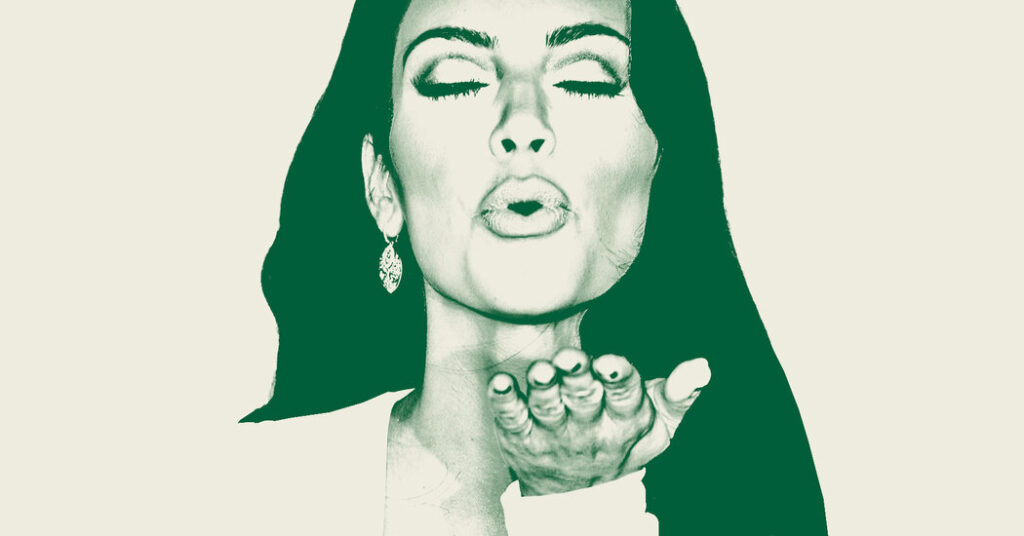
And when I talked to plastic surgeons and sociologists around this, they said the real turning point was reality TV — and, specifically, the Kardashians. There was a major moment where Kim admitted to having Botox, maybe 15 years ago, and social media just really ramped it up.
At some point, it becomes not only a badge of honor, but also says, “I can afford to do this.” The plastic surgeons I spoke to then said before, people would sneak in, they wouldn’t tell their family what they were doing — and now, most of his patients who are on the younger side ask to post their own journey of it.
That has been a huge shift over the past 10 years. But in the ’70s, ’80s, ’90s, you’d have a little bit of joking around it. I always think about Dolly Parton saying, “It takes a lot of money to look this cheap.” Joan Rivers would joke about her plastic surgery. There was a smattering here and there, but it was more for laughs. But this era, I would cite starting with the rise of reality TV.
Ahmad: And Tressie, what about you? When did you start seeing this shift toward this rise in body modification?
McMillan Cottom: There’s a difference between when it became democratized for me, and the people of my peer group. There’s a race dimension here, there’s a class dimension here.
African Americans, until 15 or so years ago, were not as likely to get plastic surgery, for example, as their white peers. Then there was also this huge social class dimension where plastic surgery and other aspirational body modifications were considered something of an upper-middle-class, if not a wealthy, leisure activity.
Like Jess said, one of the tipping points there is reality TV. I set the beginning of that, though, a little bit earlier than even the Kardashians — although I think the Kardashians absolutely democratized the idea of who should get plastic surgery and expanded our cultural awareness of what types of plastic surgeries were available. But if anybody remembers what I would call Reality Television 1.0 — the entire genre of reality television becomes popularized through shows that were makeover shows.
My first awareness that plastic surgery was something that “regular people” did was through television shows like “The Swan,” which was all about plucking an everyday American out of anonymity and exposing them to the glamorous world of making themselves over through plastic surgery and other extreme body modifications.
At that time, though, with Reality Television 1.0, it was still very aspirational. It was still almost like a “Beverly Hillbillies” approach to plastic surgery, which was to take the hillbilly and drop them into the world of the rich and the famous — by which we meant Hollywood.
But I find the race dimension really interesting because so much of what we do on body modifications is about making ourselves look like what we think is Middle America — which, in the United States of America, would mean white, Anglo-Saxon, Protestant, a WASPy understanding of the body.
That, for me, happened with “The Real Housewives of Atlanta,” which was absolutely targeted at an African American female viewer, but they talked about plastic surgery in a culturally responsive way, if there’s such a thing. Yes, you can get a nose job, but in a way that does not eradicate the African Americanness of your features, for example.
So, this conversation starts to become way more nuanced as reality television becomes more pegged to different kinds of minority groups.
Grose: I’m Jewish, and the idea of Jewish girls getting nose jobs has been around since the ’50s, ’60s — since nose jobs existed. But, again, not something you would probably brag about. It was something that was joked about, that was thought of as a thing that some people needed to do.
My mother always framed it as, “This is terrible and we don’t do this, but you may feel pressure to do this.” So, I think there’s a lot of different cultural elements into who’s getting plastic surgery and why and to look like what.
Ahmad: Tressie, you’re mentioning the democratization of it, and I find that super fascinating because it isn’t just that plastic surgery — like nose jobs and things like that are becoming more widespread — but there’s also the ubiquity of treatments like fillers and Botox: minimally invasive, nonsurgical ones that are a couple of hundred dollars. So, if you have this aspirational goal to change your face or body, that’s accessible to you instead of, like, a multi-thousand-dollar procedure.
But it’s made me realize that a lot of these types of faces — catlike, high cheekbones, yanked back eyebrows — even 10 years ago, 15 years ago, I associated with an upper-class society person. And now, that type of face is something that you see everywhere in the middle class, in the lower middle class. Do you see that as a fad or is that something that will morph into something else as more time goes past?
McMillan Cottom: There’s no way around the reality of, I think, two things. Technology, which makes these things easier and cheaper, so they become more accessible. I’m like you: I woke up one day and there’s a place to get fillers in almost every strip mall in America, irrespective of the buying power of the community around the strip mall.
Strip malls where I come from are highly classed. You have the high-end grocery store with the high-end drugstore and then the high-end shopping and on down the ladder. These retail outlets, however, for accessible body modifications really just tear down those walls. I can see them in a working-class community and you can see them in a wealthy enclave. Some of that is about technology. It is more available.
There’s also this piece that they are more affordable. Now, that doesn’t mean I think we have more money to spend on body modifications, but I think there are more avenues to finance access to these tools.
I notice how many of these body modifications, especially when you start talking about the wild, wild West of “cosmeceuticals” — this hybrid of cosmetics and pharmaceuticals, where a lot of these things like fillers exist — that a lot of people are financing them. You have this whole market of people doing a “buy now, pay later” scenario, which makes them more accessible and makes them feel more affordable.
So, technology and the ability to finance or pay for them are just these two macro changes in how Americans live every day. But there’s also the aspect that we have an expectation that we are supposed to be able to change the way that we look. There was this interesting moment in the early days of social media where the idea of democratizing beauty was somehow considered radical — that everybody should have access to all of the tools to make over their body however they want.
A lot of that narrative was about the technologies that allowed us to Facetune ourselves, which created this new sense of what was possible for us in our own homes, on our own phones. You used to have to go to a medical doctor who would tell you, “This is what’s possible.”
But now you’ve got an app that can say, “What would happen if you lightened your skin and raised your eyebrows? What if you got a little nip and a tuck?” I think the democratization of the tools to play with how we see ourselves made us believe that “if I can imagine myself this way, I should be able to access it.”
We almost start to think of beauty modification as a consumer right. Everybody should have access to this. Some of that was coming out of queer communities, but I think it got taken up by a broader section of society to say that everybody should be able to afford to like the way that they look.
Ahmad: I was in the subway and I saw an ad campaign for Facetune that was like: “You can just edit your face.” It was like, “This is the free way to do it.”
Grose: Tressie mentioned the democratization of things like filler and Botox. I have seen, in the past two to three years, a move to put those down and say: “Oh, no, what you really need is a deep-plane face-lift. You’re just playing around if you get Botox.”
McMillan Cottom: I’ve seen this too: “You’re just putting off a face-lift or it’s going to be so much harder to do your face-lift later because you’re going to be full of so much filler.”
I don’t know about your social media algorithm, Jess, but mine clearly knows what age I am. I’m getting these things like, “Have you been getting fillers? You might be ruining your chance at a face-lift. You better hold off.”
.op-aside { display: none; border-top: 1px solid var(–color-stroke-tertiary,#C7C7C7); border-bottom: 1px solid var(–color-stroke-tertiary,#C7C7C7); font-family: nyt-franklin, helvetica, sans-serif; flex-direction: row; justify-content: space-between; padding-top: 1.25rem; padding-bottom: 1.25rem; position: relative; max-width: 600px; margin: 2rem 20px; }
.op-aside p { margin: 0; font-family: nyt-franklin, helvetica, sans-serif; font-size: 1rem; line-height: 1.3rem; margin-top: 0.4rem; margin-right: 2rem; font-weight: 600; flex-grow: 1; }
.SHA_opinionPrompt_0325_1_Prompt .op-aside { display: flex; }
@media (min-width: 640px) { .op-aside { margin: 2rem auto; } }
.op-buttonWrap { visibility: hidden; display: flex; right: 42px; position: absolute; background: var(–color-background-inverseSecondary, hsla(0,0%,21.18%,1)); border-radius: 3px; height: 25px; padding: 0 10px; align-items: center; justify-content: center; top: calc((100% – 25px) / 2); }
.op-copiedText { font-size: 0.75rem; line-height: 0.75rem; color: var(–color-content-inversePrimary, #fff); white-space: pre; margin-top: 1px; }
.op-button { display: flex; border: 1px solid var(–color-stroke-tertiary, #C7C7C7); height: 2rem; width: 2rem; background: transparent; border-radius: 50%; cursor: pointer; margin: auto; padding-inline: 6px; flex-direction: column; justify-content: center; flex-shrink: 0; }
.op-button:hover { background-color: var(–color-background-tertiary, #EBEBEB); }
.op-button path { fill: var(–color-content-primary,#121212); }
Know someone who would want to read this? Share the column.
I find it all fascinating.
Grose: And a face-lift is so much more financially out of reach for most people. There was just a great article in New York magazine that went into deep-plane face-lifts, and at the high end they are hundreds of thousands of dollars. So, there is this sort of ratcheting up of what is aspirational.
When the masses can get filler, then, well, that’s déclassé. We don’t want that anymore. You need to have the next thing that is, of course, more expensive, more invasive, or you’re just not measuring up.
Ahmad: Well, it’s also interesting because I find that same exact thing that you’re saying just bleeds into the actual aesthetics at play. I think of Kylie Jenner, for example, who was, at one point, the epitome of Instagram face, the patron saint of lip fillers in 2016.
McMillan Cottom: Oh, yeah. I don’t even recognize her.
Ahmad: But now, she’s removed a lot of them. She looks a lot more natural. I think for sure she still had some intervention done.
But, for me, I find that really fascinating because it feels as though the more mainstream big lips, filled-up cheeks, whatever the procedures are — that in order for the elite to be at a different level, aesthetically, they also look different. Now, I think, the new tippy edge of what the aesthetic is less plumped-up and more subtle, which is more difficult to achieve and more expensive.
McMillan Cottom: This is the Catch-22 of democratization: Bodies are a status symbol. So, as a status good or a status symbol becomes more accessible, you need something else to become the status good — the signal that you are wealthy, that you are highly educated, that you are elite.
The power and the money, however, to shape what is considered accessible and what is considered elite is never going to be democratized.
I also think it’s worth pointing out that when these standards, these aesthetic goals, are associated with different types of people, they have different types of status.
The Kardashians are a great example of this. A lot of the aesthetic features that they popularized during their rise to global cultural dominance were ones that were associated with Black people, with Latino women, poor and working-class people. They popularize them by saying, “Oh, look, you can have big lips but not be associated with the racial group that naturally has big lips.”
But once those things become more accessible, then you have to change the beauty standard. In this moment, I find it really interesting to think about the rejection of things like B.B.L.s and lip fillers and what they’re saying about the groups of people that those things are naturally associated with.
Ahmad: Say more about that. You mean as though there’s more of a shift away from body shapes that are associated with women of color?
McMillan Cottom: Yes. I think there’s a reason why you take up an exaggerated B.B.L. profile, for example, or overfilled lips — if we want to talk about Kylie Jenner, for example — during a time of Obama’s America, when diversity has an extreme amount of capital, and Black women are highly visible in popular culture, then there would be a really good reason to abandon those things when the cultural moment has passed.
Now, everybody has Mar-a-Lago face and a makeover into Trump’s aesthetic ideal, which is not the same as “The Real Housewives of Atlanta.” So, this is why I question the extent to which the Kardashians are playing with beauty trends and how much they are just playing with our ideas about the people that are associated with those beauty trends.
Ahmad: Yeah. And for those listeners who don’t know, a B.B.L. is a Brazilian butt lift.
McMillan Cottom: Oh, yeah, thank you for that. I didn’t know I was so deep that I was just using the shorthand.
Ahmad: Well, I find that word has entered the mainstream lexicon for sure. B.B.L.
We’ve been discussing procedures and avatars that are mostly women. But we’re seeing this trend affect men too, right? In places like Turkey, the procedure you see most visibly is hair transplants. Now there’s also an increasing number of men getting face-lifts as well.
I’m curious whether you see there being a difference in these types of procedures when they’re done by men? How does the gender of it all factor in?
Grose: Ultimately, no. It’s about conforming to an ideal and looking younger. A lot of these procedures are just to look younger. I think, increasingly, men are held to stricter standards than they used to be. Again, it depends on culture, class, all of this. But all of us, if we want our ideas to be heard, we have to visually put ourselves out there along with our ideas.
If you own a business, if you are trying to get further in your career, in multiple different places now, your looks matter more, I would say, than they used to. They’re not everything. You can certainly not conform and still be successful. But I think that there is this pressure or at least this perception — and once you are putting yourself out there like that, there’s just so much more potential for self-consciousness. So, whether or not it actually does help you to have hair instead of not having hair …
Although, one of the most heartwarming things that went around the internet the past month was the r/bald subreddit. It was all these men accepting their baldness and cutting off their hair. They cut off their weird mullets or their comb-overs — and they look great! They look so much better!
So, there’s still some resistance in corners of the internet, but people have to put themselves out there more, and getting criticized by strangers affects you — it doesn’t matter who you are.
McMillan Cottom: The great pivot to video came for all of us and the tyranny of having tens of thousands of tiny angry bosses in commenters and social media posters to tell you that you do not look good enough came for all of us, men and women.
Ahmad: To that point too, a lot of people used to talk about, during the pandemic, staring at your own face on Zoom and how many plastic surgery procedures that spurred. So, a lot of it seems like it has to do with just seeing images of your own face.
McMillan Cottom: I don’t believe that we were meant to see ourselves as much as we do now. I really do think that the technology, in so many ways, has outpaced our social development.
The Covid experiment was an example of this happening, the dysmorphia of seeing ourselves when we are totally normal. This is how normal human beings look. This is how normal human beings emote. But there is something about seeing that refracted through your own eyes that I just don’t think was supposed to happen.
Ahmad: Speaking of “Housewives,” there’s a trend where between Season 1 and Season 2, a housewife almost always gets so many procedures done because you’ve watched an entire season of yourself and seeing yourself on television — nothing will prompt you to get plastic surgery more than that.
McMillan Cottom: And they all then start to look alike. One of the things that scholars have pointed out, that I really find fascinating, is the homogenization of our aesthetic ideals. They all start to choose the same procedures, which then limits you to a certain set of possible features. And what I find fascinating from like Season 1 to later is how much they will all start to look alike.
Ahmad: That’s so true. The airport in Beirut is called Rafic Hariri International Airport, and whenever I’m there, I always say “Rafic Hariri International Airport nose” because every woman has the same nose. It’s like, “I know you’re not related.”
It’s interesting too, especially with it being something that is so accepted now — we all know somebody who’s had something done if we haven’t done it ourselves — sometimes I lose sight of the fact that these are very painful and risky procedures.
I think seeing people walking around Istanbul with bruises and bandages on their face really hammered home the degree to which beauty is pain. We know this, it’s an adage, but it’s quite dramatic to get some of these procedures done.
It gave me a little bit of pause because I think I certainly fit in the camp of “Everyone should do what they want to, and it’s your right and if you want to pursue it, then you should.”
But on the flip side, this normalization, and also homogeneity of what is beauty and what the new beauty standards are, is putting pressure on people to put themselves in positions where they’re experiencing a lot of pain and discomfort to achieve this look.
For me, growing up as a teenager, I didn’t think that I would ever consider plastic surgery because I could achieve what I wanted to with makeup — and that’s all that was offered to me as a teenager. That’s what was promoted then.
I’m curious what the two of you see as being the end game of this. Are we heading in the right direction by making this completely ubiquitous to everybody? Or should we rein in what beauty standards are being reinforced by that look, especially?
Grose: There’s no way to rein it in. We have no control over any of this. But I will say, when I think about whether these procedures are actually going to make people happier or feel more secure in themselves, I have a lot of doubt that for many people they will — because you have to keep having them.
It’s not like you just get them once and then, “Oh, it’s done.” You also age, and every day, I’m reminded that I get further and further away from the beauty ideal. Sometimes people confuse happiness with the relief of conformity and the relief of other people treating you better because you look a certain way.
So, I worry about that from a mental health perspective without being infantilizing. You only have one body and you should get to do with it what you want. But, in general, I think more people feeling pressure to get elective surgery is not great.
McMillan Cottom: Yeah. It doesn’t seem like a positive social indicator to me either. I just think it’s something really perverse that there are parts of this country where it is easier to get filler and a nose job than it is to see a doctor about your diabetes.
There is something really perverse about that system, and I have to believe that good quality health care would do far more for making us feel better about ourselves than the democratization and full accessibility of plastic surgery.
Ahmad: Yeah.
Grose: When I say, “Are you doing this for conformity?” and “It’s not actually going to make yourself feel better,” I’m not trying to say that from a place of superiority.
There’s many things that I don’t like about myself and probably would change — when I was younger, for sure. It took time and maturity to embrace the way that I look without having to change it. For what, who is this for? And ultimately, it wasn’t for me.
Ahmad: It’s interesting. There’s one paradox to all of this, which is that as these procedures have made this smooth, glossy, plump, airbrushed face the norm, a wrinkled face almost stands out in a beautiful way sometimes.
I think about people like Pamela Anderson, who stopped wearing makeup on the red carpet, and certain actresses — especially in countries like France, where people are not as fillered-up as they are in the United States — and there’s almost a rare beauty to someone who is aging with an untouched face in this environment where we see that other type of face everywhere.
Grose: I think my reaction to it too, as Tressie mentioned earlier, we’re in a period of rising conservatism and gender essentialism — however you want to put it. And my punk spirit is like, “I’m just going to be ugly.”
McMillan Cottom: I’m going to ride it out.
Grose: If that’s what’s beautiful to them, I’m going to be ugly. I love it. Everyone can think I’m ugly, it’s great. Old and ugly and wrinkled.
McMillan Cottom: I’m with you, Jess. There are so many fantastic books about ugliness as resistance, about resisting the call to use beauty as your social identity. I am about it. I read just about everything that comes out in that area of research because even before age started to come for me, I just thought there’s something really perverse about trying to demand that I perform to a beauty standard that I cannot control.
Now, this might be my resistance to authority. I have a ton of authority issues, well documented, but I just don’t like this idea that I am supposed to conform to something over which I have absolutely no control.
So, there is something too, in refusal. You don’t have to make it part of your identity saying, “I reject fillers” or “I reject makeup.” But I think there’s something to just quietly refusing the demand that you perform to a standard that you do not control.
As I age into that dark night, I think that’s going to be my position. I just refuse.
Ahmad: Well, I really appreciate you both joining me for this conversation. It’s been super interesting.
McMillan Cottom: Thank you.
Grose: Thanks so much.
Thoughts? Email us at [email protected].
This episode of “The Opinions” was produced by Vishakha Darbha. It was edited by Alison Bruzek and Kaari Pitkin. Mixing by Carole Sabouraud. Original music by Pat McCusker and Carole Sabouraud. Fact-checking by Mary Marge Locker and Kate Sinclair. Audience strategy by Kristina Samulewski. The director of Opinion Audio is Annie-Rose Strasser.
The Times is committed to publishing a diversity of letters to the editor. We’d like to hear what you think about this or any of our articles. Here are some tips. And here’s our email: [email protected].
Follow the New York Times Opinion section on Facebook, Instagram, TikTok, Bluesky, WhatsApp and Threads.
The post Have We Reached Peak Botox? appeared first on New York Times.