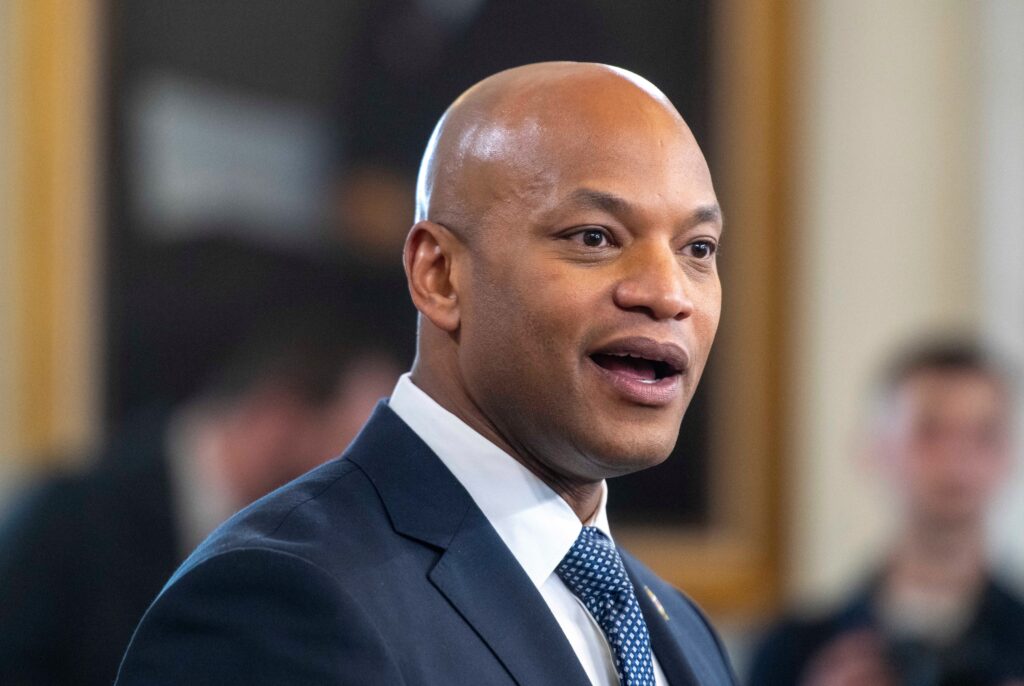
The administration of Maryland Gov. Wes Moore (D) on Thursday proposed legislation that would empower the state’s health secretary to issue vaccine recommendations and bypass federal guidance — the latest state to reject the Trump administration’s overhaul of the childhood vaccine schedule.
The bill would give Maryland Secretary of Health Meena Seshamani the authority to recommend vaccines, screening and preventative services after taking into account recommendations of medical associations such as the American Academy of Pediatrics, the American Academy of Family Physicians and the American College of Obstetricians and Gynecologists.
Seshamani said her recommendations would have implications for which vaccines are covered by some insurance plans and which vaccines pharmacists may administer. The Moore administration shared broad outlines of the bill, which has not yet been made public ahead of a legislative session starting on Jan. 14. Officials said they could not yet say when the provision would expire, if ever.
The move comes after the Centers for Disease Control and Prevention on Monday upended the closely-watched list of routine shotsrecommended for children, no longer advising shots for rotavirus, influenza, meningococcal disease and hepatitis A. These vaccinations are instead recommended only for groups of children and babies considered at higher risk or if a doctor recommends it. The new guidance came without consulting with CDC experts.
Seshamani has been an vocal advocate for vaccines and just this week urged residents to get vaccinated against the flu, as cases surge in the region.
“With the swirl and uncertainty at the federal level, evidence-based data will continue to be our North Star,” Seshamani told reporters Wednesday. “Vaccines remain one of the most powerful public health tools that we have to keep ourselves our families and our communities healthy and safe from disease.”
Maryland is one of multiple states with Democratic governors states and D.C. that in recent days formalized support for the previous vaccine schedule, which had been backed by their own public health departments and medical associations.
The D.C. immunization scheduleremains unchanged and continues to be covered by public and private insurers in the District, according to a statement from the city’s health department.
The District’s schedule mirrors recommendations of the American Academy of Pediatrics and American Academy of Family Physicians, including advice for children to get covid and flu vaccines to protect against serious disease. The Northeast Public Health Collaborative, of which Maryland is a member, also endorsed the medical associations’ recommendations.
The Virginia health department, which is in the final weeks of the Gov. Glenn Youngkin (R) administration, did not respond to a request for comment.
Days before federal health agencies under Health Secretary Robert F. Kennedy Jr. issued the new vaccine schedule, Illinois Gov. JB Pritzker (D) signed a law affirming the state’s public health department independence to issue vaccine guidance based on advice from its own expert advisory committee.
As the planned Maryland bill aims to do, the Illinois statue requires state-regulated insurers cover vaccines as recommended by the state panel, not federal health agencies.
In San Francisco, public health department officials on Wednesday reaffirmed their commitment to recommendations from the state of California and the West Coast Health Alliance, which both endorse the American Academy of Pediatrics schedule.
“It is a tragedy for any child to become seriously ill or die from an infectious disease that could have been prevented through vaccination,” San Francisco Health Officer Dr. Susan Philip said in a statement.
The childhood immunization schedule is important because pediatricians often rely on it to advise parents about which vaccines their babies and children should receive.
In addition, most states use the CDC-issued schedule to determine criteria for school admission, which vaccines pharmacists may administer, insurance coverage and requirements for hospitals and health care workers. There are hundreds of references to the federal agency’s guidance in laws or regulations of 49 states, according to an analysisby the Association of State and Territorial Health Officials.
Maryland officials have taken other steps to ensure vaccine access.
Last year, in anticipation of potential changes at the federal level, state lawmakers passed a bill requiring insurance plans to cover vaccines that had been recommended by the CDC’s Advisory Committee on Immunization Practices before the Trump administration took office.
“What this legislation would do would enable there to be a more dynamic determination of what are the recommended vaccines that insurance providers have to cover,” Seshamani said.
Moore last year also announced $2.8 million to cover vaccines for uninsured and underinsured adults, as programs for children already do.
State officials have also issued standing orders for covid vaccines for any Maryland resident six months and older, and cleared the way for pharmacists to administer covid vaccines to children 3 and older. Last month, after the ACIP recommended to stop giving newborns a hepatitis B vaccinewithin 24 hours of birth, Seshamani reiterated the importance of the vaccine as highly effective in preventing newborn infection.
Maryland Deputy Health Secretary Meg Sullivan acknowledged that dueling guidance can be confusing for parents.
“As a pediatrician, the most important thing for me is that for any recommended vaccine or medication or treatment that I, or a fellow healthcare provider, is recommending that parents have all of the information they need and have all of their questions answered.”
The post Gov. Wes Moore bill would let Maryland bypass federal vaccine schedule appeared first on Washington Post.